





Vintage Silver Butler Tray
A vintage silver butler tray brings practical proportion and polished metal to a room, serving drinks or holding glassware with enduring style.
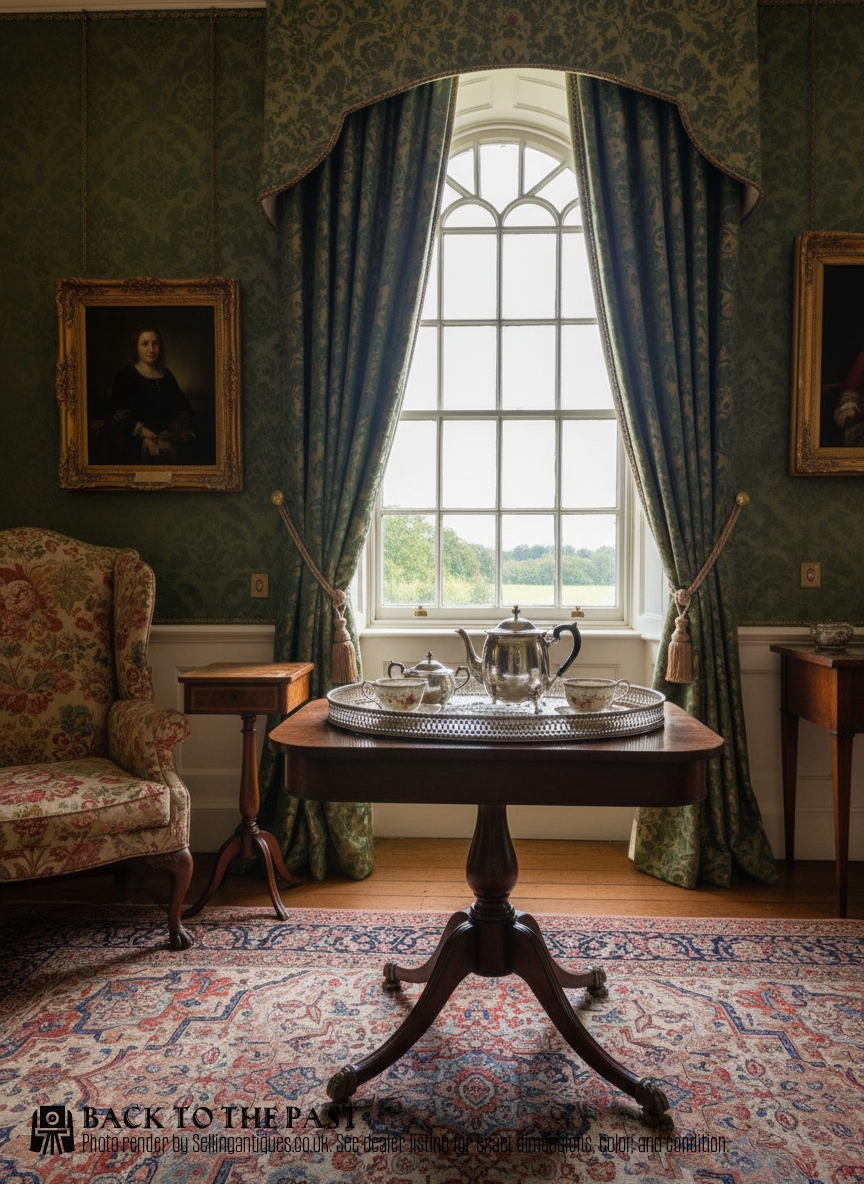
Vintage Silver Butler Tray
A vintage silver butler tray serves as a practical centrepiece for drinks and hospitality, drawing on traditional forms designed for carrying or display. These pieces combine metal surfaces with sturdy wooden frames or raised gallery borders to secure glassware and decanters. Such trays span several decades, offering versatile options for modern interiors.
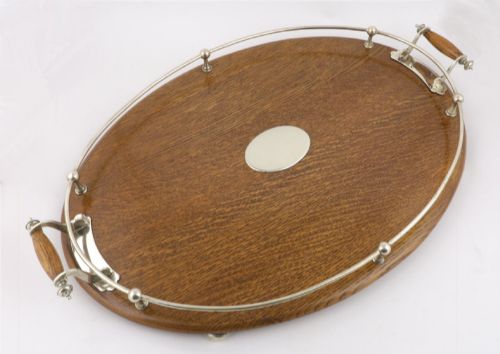
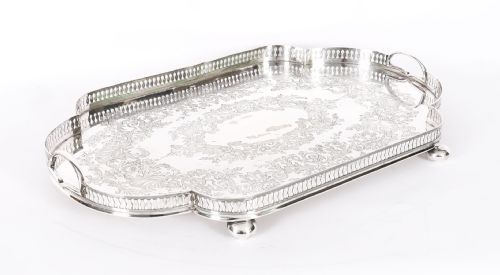
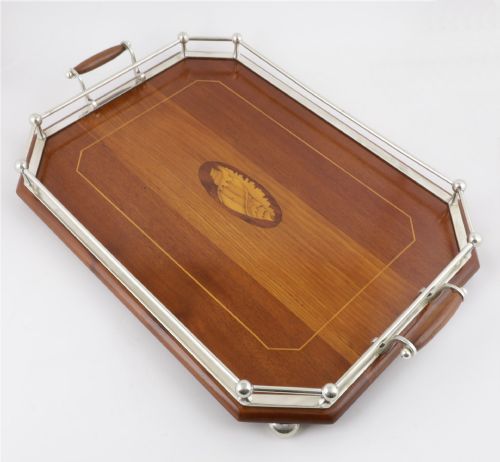
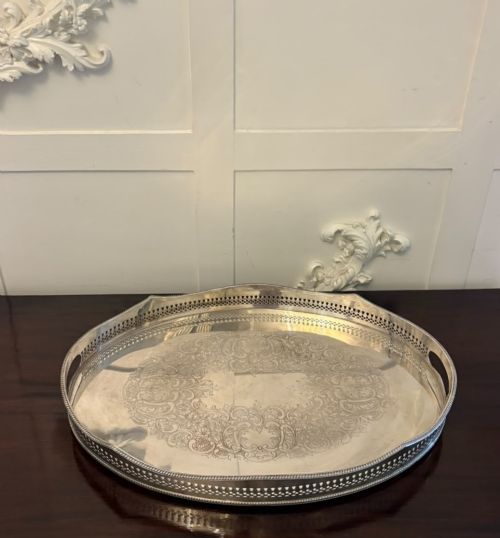
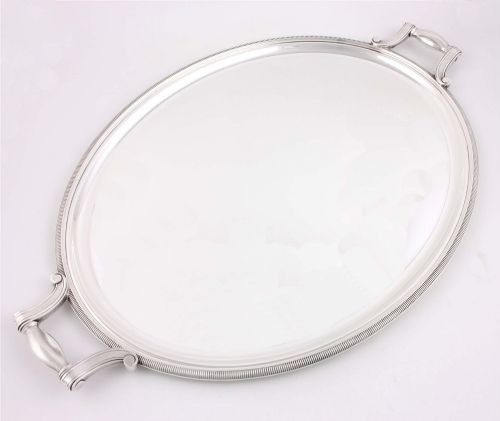
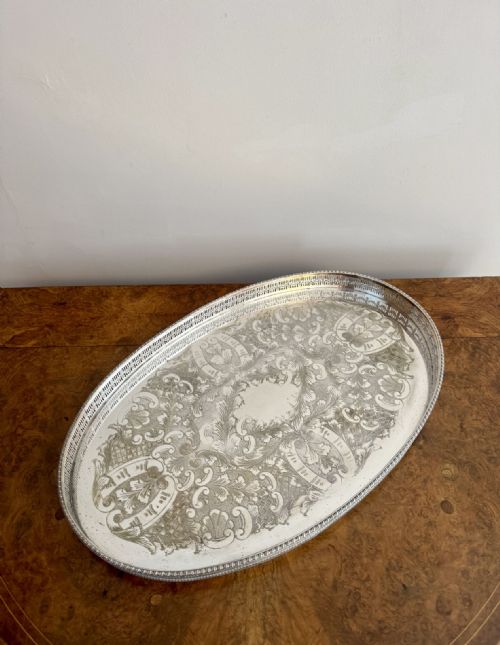
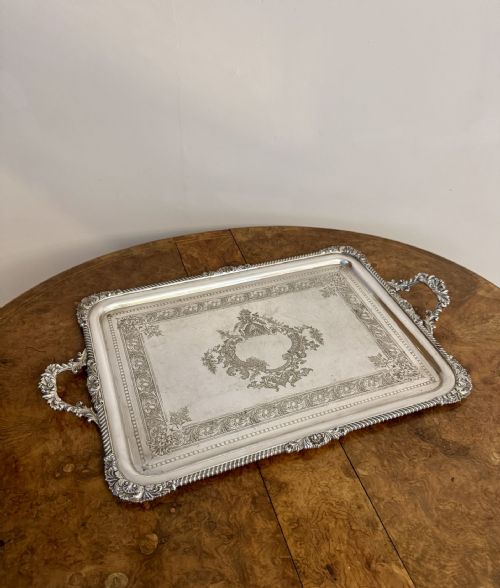
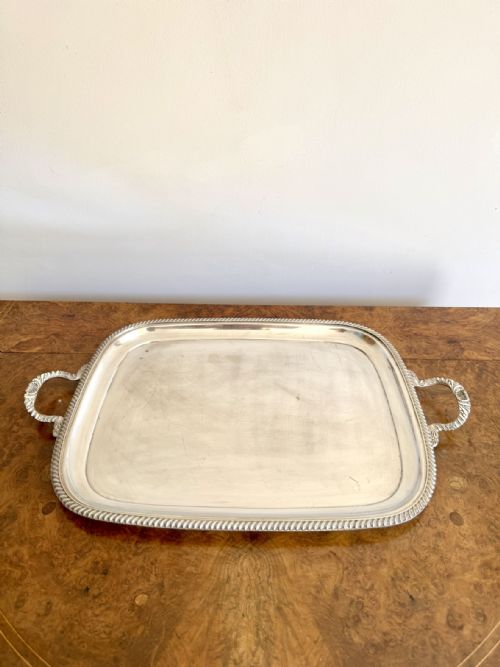
The pieces on this page are most commonly Edwardian and Victorian silver-plated designs, often featuring engraved surfaces or pierced galleries. Alongside these metal serving pieces, hybrid forms combining mahogany or oak with silver plate appear frequently. Larger cocktail and drinks trays dominate the selection, suited to side tables or deep sideboards.
Makers ranged from large Sheffield firms to Parisian silversmiths, producing substantial serving platters in oval and rectangular shapes. Pieces from the Interwar period and the mid twentieth century introduce simpler geometric lines and Art Deco influences. Each object reflects the social habits of its era, from formal afternoon tea to evening cocktail service.
Materials and construction
Silversmiths utilised silver plate, electroplated nickel silver, and base metals, applying a thin layer of silver over a durable core such as copper or nickel. This technique provided the visual weight and shine of solid silver at a more accessible cost. Sheffield plate and standard EPNS markings appear regularly across the pieces.
Wooden elements such as mahogany and oak provide structural strength for larger gallery trays, frequently joined with shell inlay or brass handles. Pierced galleries and raised borders were cast or pierced by hand before being soldered to the base. Engraving and embossed scrolls were then applied using hand chisels to create intricate surface patterns.
Listings feature pieces spanning the Victorian, Edwardian, and Art Deco periods, utilising silver plate, mahogany, and oak.
Distinctions in quality
Weight and gauge of metal separate robust serving pieces from lighter alternatives, with better examples offering a solid feel when lifted. The crispness of hand engraving and the depth of pierced galleries indicate the level of craftsmanship involved. Maker marks from established firms often correspond to superior finishing and heavier silver deposits.
The integration of wood and metal in hybrid trays reveals structural competence, where joints remain tight and inlay work sits flush with the timber. Bases reinforced with quality oak or mahogany maintain their rigidity over decades of use. Superior plating retains its depth evenly across handles and corners without showing the base metal beneath.
James Deakin·Mappin & Webb·Christofle·Hukin & Heath·J B Chatterley & Sons·Frank Cobb & Co·Asprey·Atkin Brothers·Orivit
The Vintage Silver Butler Tray Glossary
- Gallery tray
- A tray featuring a raised pierced or solid metal railing around its perimeter. This border prevents decanters and glasses from sliding off during transit.
- EPNS
- Electroplated Nickel Silver. A common base material consisting of a nickel alloy coated with a layer of pure silver.
- Sheffield plate
- An early method of fusing a thin sheet of silver to a thicker copper core. Pieces made this way display distinct durability.
- Salver
- A flat serving tray, traditionally mounted on small feet. These pieces were often used for presenting letters or calling cards.
- Pierced gallery
- An openwork pattern cut into the raised edge of a tray. This decorative technique lightens the visual weight of the metal.
Vintage Silver Butler Tray: Frequently Asked Questions
How were butler trays originally used?
These trays served as portable surfaces for carrying tea sets, wine, and spirits between rooms in large houses. Servants used them to clear glasses or present drinks to guests.
Over time, they transitioned from utilitarian servants' equipment to decorative furniture pieces placed on folding stands in reception rooms.
What is the difference between oak and mahogany trays?
Oak frames generally present a heavier, more rustic appearance with visible grain patterns suited to traditional interiors. Mahogany offers a smoother, darker surface that often incorporates fine inlay work.
Both woods provided the necessary rigid foundation for supporting heavy silver-plated surfaces and loaded decanters.
How do I care for a silver plated tray?
Regular dusting with a soft cloth prevents surface grime from accumulating in engraved recesses and pierced galleries. When polishing is necessary, use a dedicated silver cream and avoid abrasive materials that strip the plating.
Keep wooden components conditioned with appropriate wax to prevent the timber from drying out near the metal joinery.
Can I use these trays for daily serving?
Most pieces handle everyday use well, provided they are lifted with both hands and dried thoroughly after cleaning. Placing felt pads underneath heavy glassware prevents unnecessary scratching on the plated surface.
Larger cocktail and drinks trays function effectively as permanent display surfaces on sideboards or coffee tables.