


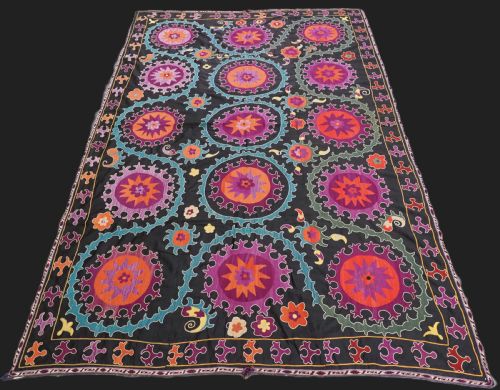


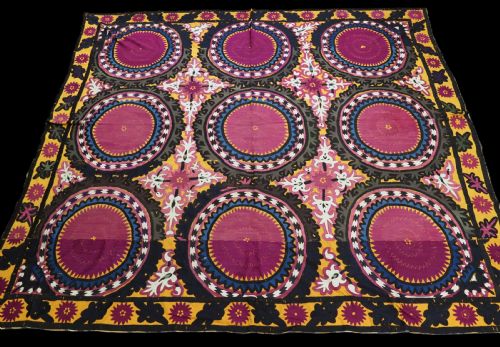


Vintage Silk Bedspread
A vintage silk bedspread brings rich texture and intricate needlework to a room, offering striking Central Asian and traditional Welsh textile artistry.
Vintage Silk Bedspread
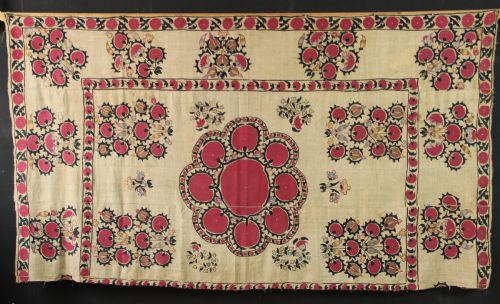
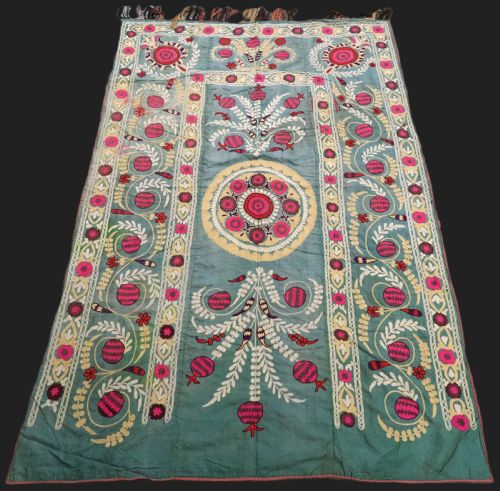
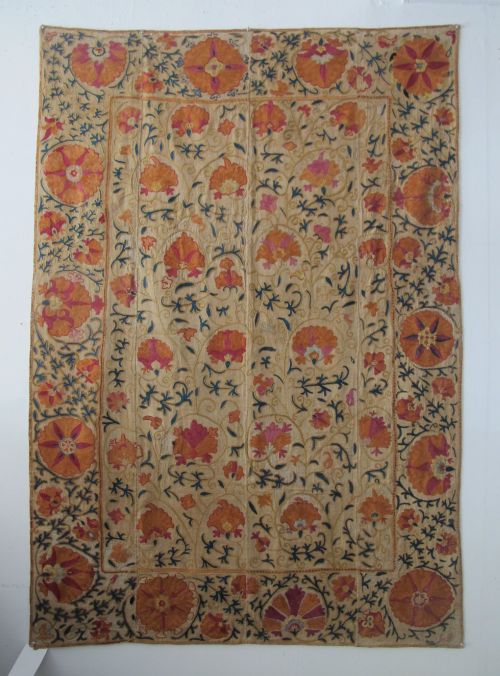
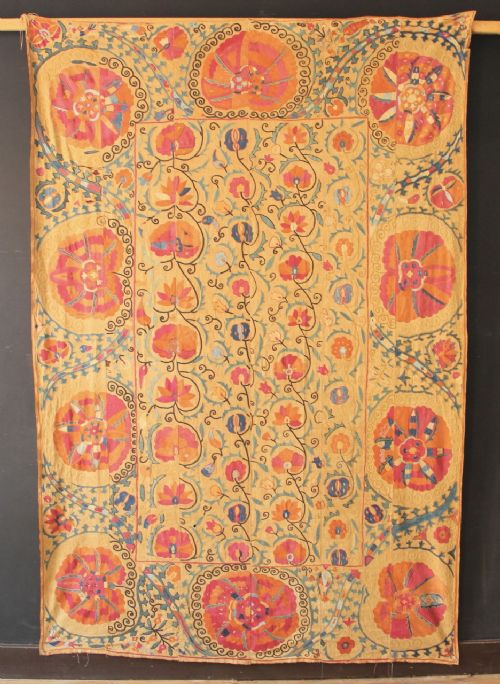
When searching for a vintage silk bedspread, buyers encounter richly decorated Central Asian suzanis alongside traditional hand-stitched Welsh quilts. These textiles function historically as domestic covers, wall hangings, and ceremonial pieces created within regional textile traditions.
The Central Asian examples dominate the selection, originating from cultural centres such as Bukhara, Samarkand, Shahrisabz, and Tashkent. Specific regional types like the Ura Tube suzani and the Tajik ru-i-jo bed cover form the core of what is available.
Materials and Construction
The makers utilised fine silk thread for dense embroidery, applying it directly onto ground fabrics made from silk, cotton, or mixed adras cloth. Cotton wadding occasionally provides internal structure and padding for quilted pieces.
Needlework techniques include full-work embroidery covering large areas of the ground cloth, executed by hand across various regional workshops and tribal groups such as the Lakai.
The listings span the nineteenth and twentieth centuries, incorporating materials like silk, cotton, and adras across Central Asian and Welsh styles.
Assessing Quality
Quality rests upon the density of the embroidery and the complexity of the design, with full-work pieces showing superior coverage compared to lighter stitchwork. The vibrancy and preservation of the dyed silk threads further distinguish finer examples.
Structural integrity of the ground fabric, whether cotton or adras silk, affects the overall durability and visual impact of the textile. Distinct regional drawing styles and balanced proportions elevate the artistic merit of individual pieces.
The Vintage Silk Bedspread Glossary
- Suzani
- An embroidered tribal or domestic textile from Central Asia, traditionally made as part of a bride's dowry. These pieces typically feature large floral medallions and intricate silk threadwork.
- Adras
- A traditional woven fabric made from a mixture of silk and cotton yarns. It provides a textured foundational ground for many Central Asian embroideries.
- Ru-i-jo
- A specific Central Asian term for a bed cover or face-to-bed textile used domestically. These items frequently display elaborate needlework designs intended to be seen upon the bed.
- Nim Suzani
- A smaller half-sized or partial suzani hanging, distinct from the full-scale covers. They were utilised for compact wall spaces or specific domestic settings.
- Full work
- An embroidery description indicating dense, heavy stitching that covers almost the entire ground fabric. This technique represents a higher tier of maker investment.
Vintage Silk Bedspread: Frequently Asked Questions
How were suzanis used originally?
Central Asian families used these textiles primarily as ceremonial bed covers, wall hangings, and dowry items. They formed a central part of domestic life and traditional gift exchanges.
Over time, many pieces transitioned from functional bedroom covers into decorative wall hangings prized for their intricate needlework.
Where do these textiles come from?
The pieces originate predominantly from historical craft centres across Uzbekistan, including Bukhara, Samarkand, and Tashkent. Various regional tribes, such as the Lakai, also contributed distinct artistic styles.
A smaller number of alternative regional textiles, including traditional Welsh hand-stitched quilts, appear alongside these Central Asian works.
How do I care for a silk bedspread?
These delicate textiles require gentle handling and protection from direct sunlight to prevent the silk threads from fading. Professional textile conservation cleaning is recommended when maintenance is necessary.
Mounting them properly on a wall distributes the weight evenly if chosen as a display piece rather than used flat on a bed.
How can I tell regions apart?
Regional identification relies on the distinct drawing styles, palette choices, and motif arrangements used in the embroidery. Towns like Shahrisabz and Bukhara developed characteristic floral patterns and compositions.
Tribal groups often introduced unique geometric elements or specific ground fabrics that separate their work from urban workshop productions.