


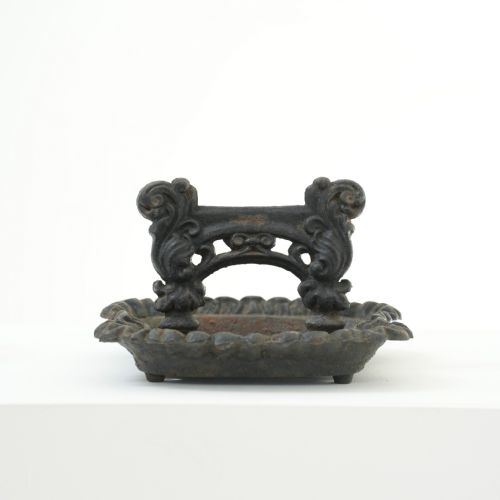


Vintage Shoe Scraper
A vintage shoe scraper clears the mud from your boots before you step inside.
Vintage Shoe Scraper
When you search for a vintage shoe scraper, you find iron scrapers designed to clean footwear before entering a house. These items originate from the Georgian, Regency, and Victorian eras, often taking the form of country house or townhouse boot scrapers.
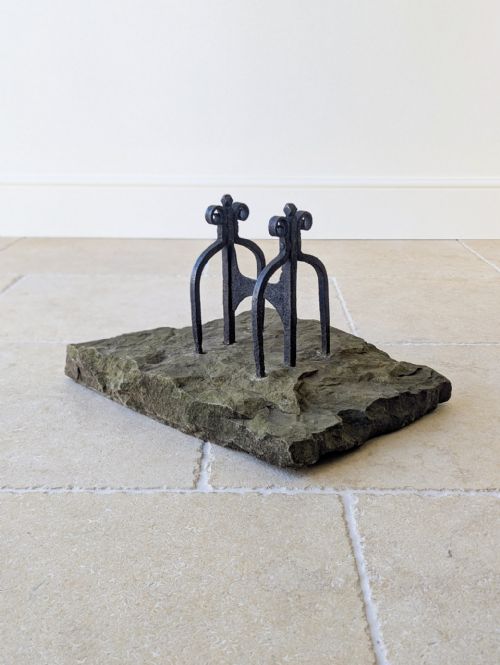
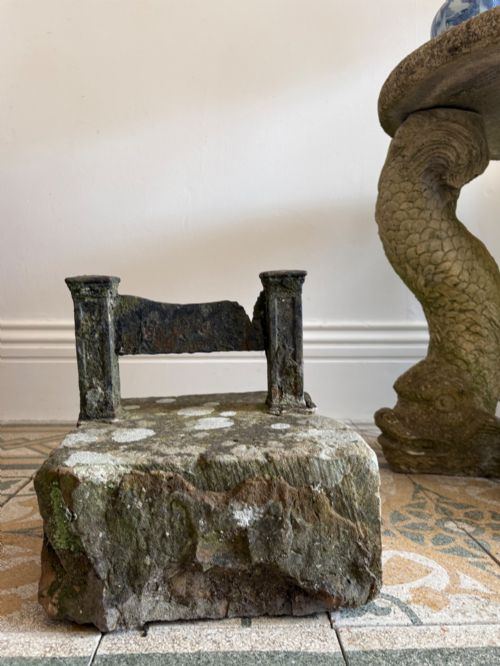
You are most likely to meet cast iron examples on this page, frequently inset into heavy stone blocks or Yorkstone. They range from simple doorway cleaners to substantial architectural pieces featuring shoe pulls.
How they were made
Maker's workshops relied heavily on cast iron and wrought iron to forge the durable blades and frames necessary for scraping mud from heavy boots. These iron components were then securely set into heavy blocks of stone or Yorkstone to anchor them firmly by the doorway.
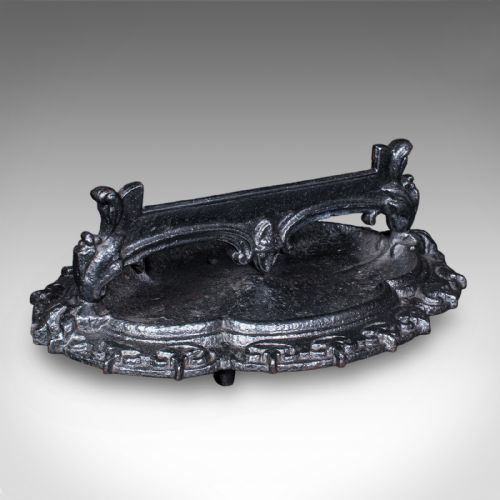
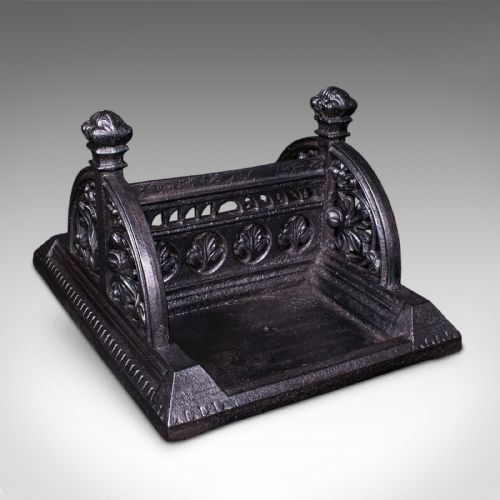
Foundries produced both plain utility items and more decorative designs such as Gothic Revival patterns. Some ironwork bears factory attributions like Coalbrookdale, demonstrating the high standards of nineteenth-century metal casting.
A sturdy iron blade ready to scrape centuries of mud from your boots.
What varies in quality
The distinction between a standard piece and a superior one lies in the weight of the stone and the ambition of the ironwork design. Large townhouse scrapers with integrated shoe pulls demand greater iron-working skill than simple blades set into modest blocks.
Architectural presence defines the better examples, particularly those retaining their original Yorkstone bases or displaying Gothic Revival ornamentation. Simpler pieces serve the same functional purpose but lack the sculptural weight of larger country house variants.
Coalbrookdale
The Vintage Shoe Scraper Glossary
- Boot scraper
- An iron blade fixed near a doorway for removing mud from footwear. They became essential outside nineteenth-century townhouses and country houses.
- Shoe pull
- A vertical loop attached to a boot scraper, used to steady the foot or pull off heavy boots. These appear on grander townhouse examples.
- Yorkstone
- A durable British sandstone traditionally used for paving and heavy bases. Scrapers are frequently inset directly into blocks of this material.
- Gothic Revival
- An architectural and decorative style popular during the nineteenth century. It influences the pointed arches and ornamental ironwork seen on certain period scrapers.
- Coalbrookdale
- A renowned nineteenth-century ironworks location in Shropshire. Pieces associated with this foundry represent notable quality in metal casting.
Vintage Shoe Scraper: Frequently Asked Questions
Where were vintage shoe scrapers placed?
These scrapers stood immediately outside front doorways, porches, or carriage entrances of houses. Their primary position ensured muddy footwear was cleaned before stepping onto interior floors.
Property owners anchored them securely beside the threshold so they could withstand the daily pressure of heavy boots.
How do I tell Georgian scrapers from Victorian ones?
Georgian and Regency examples often feature hand-forged wrought iron blades paired with substantial stone blocks or country house proportions. They tend to exhibit simpler, cleaner lines associated with eighteenth-century domestic architecture.
Victorian pieces frequently utilise mass-produced cast iron and may include more ornate stylistic elements like Gothic Revival motifs or integrated shoe pulls.
What is the loop on some scrapers for?
The vertical loop acts as a shoe pull or steadying handle. Users placed a hand or foot against it to keep balance while scraping thick mud off the sole.
Such additions are typically found on larger townhouse examples where residents required extra leverage.
Can I use an antique scraper outside today?
These items were built from heavy cast iron, wrought iron, and stone to withstand permanent outdoor placement. Rain and weather have little effect on their robust materials.
Positioning one by a modern doorway lets it perform its original function just as it did in the nineteenth century.