




Victorian Iron Scraper Tray
These heavy cast iron boot scrapers are sturdy doorway essentials built to keep nineteenth-century hallways clean.
Victorian Iron Scraper Tray
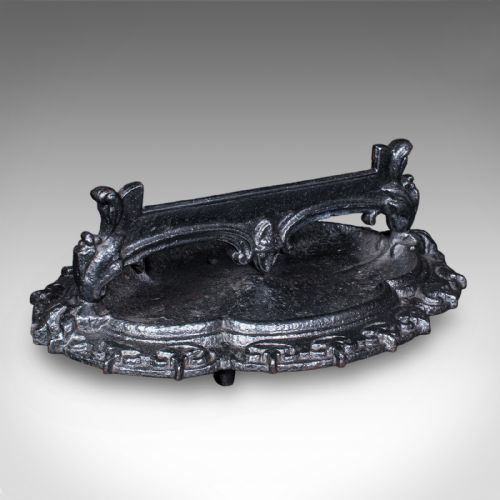
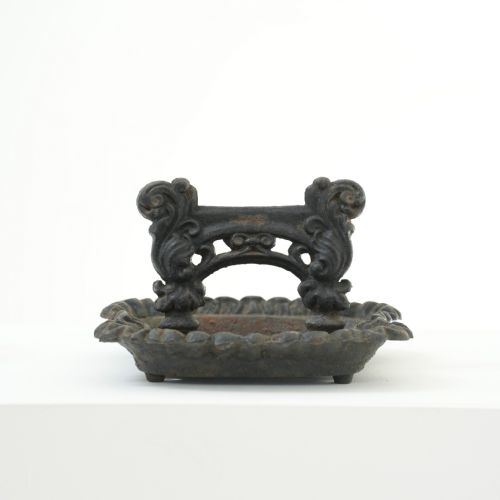
A victorian iron scraper tray is a functional threshold accessory designed to remove mud from footwear before entering the house. Most examples on this page date from the nineteenth century, encompassing Victorian, Georgian, and Regency periods.
The objects frequently combine a central metal blade for scraping boots with integrated side pulls for leverage. Forms range from simple small oval designs to large country house and townhouse editions, occasionally featuring Gothic Revival details.
How they were made
These pieces are constructed entirely from heavy cast iron, poured into moulds to achieve durable structural forms suited for exterior placement. Foundries utilised this robust metal to withstand constant weather exposure and heavy daily use.
Decorative elements and structural forms draw on Gothic Revival styles alongside simpler utilitarian designs. Makers integrated mounting plates or heavy base trays to keep the scraper stable during use.
Every muddy boot in the nineteenth century met its match in these unyielding iron sentinels.
What varies in quality
Quality rests in the crispness of the casting detail and the architectural ambition of the design, distinguishing standard utility items from grand country house iterations. Heavier pairs and those featuring integrated shoe pulls or specific period motifs represent the higher end of the range.
The survival of the original casting texture and the integrity of the ironwork dictate desirability. Pieces showing refined proportions and clean architectural lines stand apart from plain, utilitarian workshop output.
Coalbrookdale
The Victorian Iron Scraper Tray Glossary
- Boot scraper
- A metal blade fixed near a doorway for scraping mud from the soles of footwear. These practical devices were standard outside nineteenth-century entrances.
- Shoe pull
- An attached loop or handle designed to assist with steadying the foot while scraping. It provides leverage for the user.
- Cast iron
- An iron-carbon alloy poured into a mould to form rigid objects. This material provides the necessary weight and weather resistance for outdoor threshold use.
- Gothic Revival
- An architectural and decorative style drawing on medieval forms. Pieces in this style utilise pointed arches and ecclesiastical motifs.
Victorian Iron Scraper Tray: Frequently Asked Questions
Where were boot scrapers placed?
These items were positioned immediately outside front doorways, often fixed into stone steps or exterior walls. Their placement ensured visitors cleaned heavy mud from their boots before stepping onto the interior hall flooring.
They served as the first line of defence for nineteenth-century households against wet and muddy weather.
What is a shoe pull?
A shoe pull is a metal loop or handle cast alongside the scraper blade. It allowed individuals to steady themselves or hold their footwear firmly in place during use.
This feature is particularly common on larger country house and townhouse models designed for frequent visitors.
How do I date a cast iron scraper?
Dating relies upon stylistic markers such as Gothic Revival motifs, Regency proportions, or specific Victorian design characteristics. The weight and construction methods also point towards the manufacturing period.
Many examples span the broader nineteenth century, reflecting Georgian and Victorian architectural tastes.
Can I use these scrapers outside today?
Cast iron is exceptionally durable and handles outdoor conditions well. These pieces were originally engineered to endure permanent exterior placement.
Positioning them by a modern doorway maintains their traditional function while providing practical utility.