



Door Boot Scraper
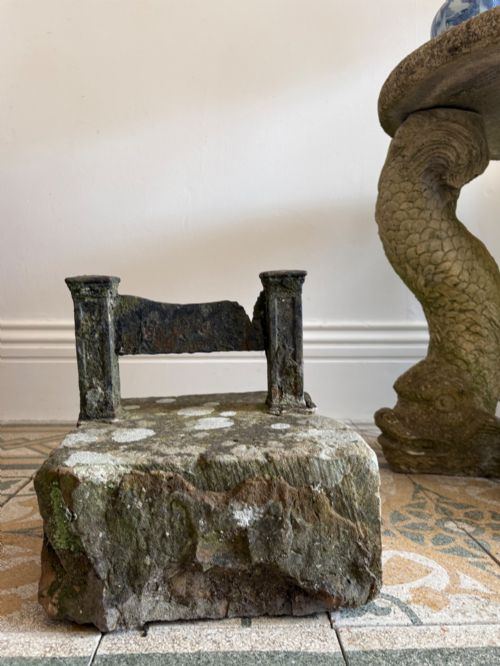
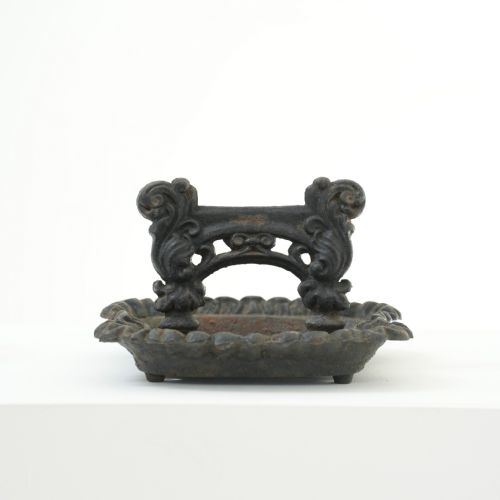
A proper door boot scraper clears mud from heavy soles before one steps inside, combining utilitarian ironwork with solid stone.
Door Boot Scraper
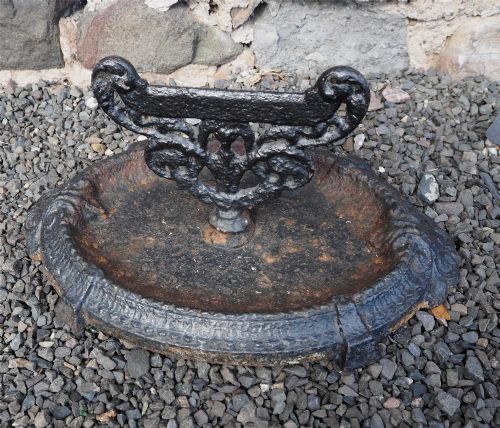
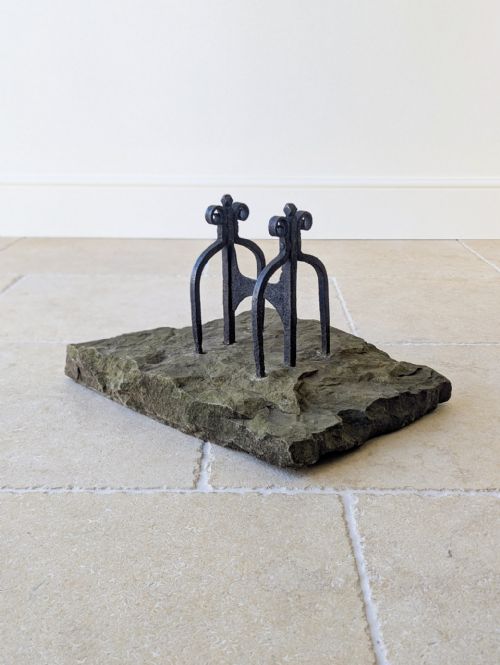
A door boot scraper is a sturdy exterior implement designed to scrape heavy mud and soil from footwear before entry into the house. These pieces appear most frequently from the Georgian and Victorian eras, often taking the form of iron blades fixed directly into foundations.
The buyer encounters these items in various domestic guises, ranging from simple town house models to substantial country house examples. Many combine a metal scraping blade with an integrated shoe pull or mounting block.
Originating largely from English domestic architecture, a door boot scraper reflects the practical necessity of nineteenth century street and country living. They survive as robust ironwork firmly anchored in stone or masonry.
How they were made
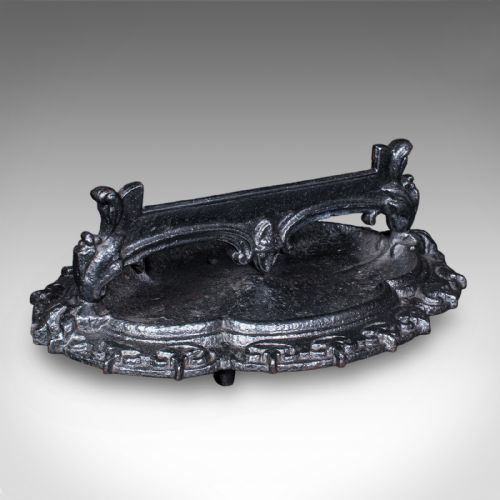
The manufacture of a door boot scraper relies upon durable metals shaped by foundry work and blacksmithing. Cast iron provides the rigid blades and decorative frames, whilst wrought iron offers tough, hammered resilience.
Many examples are inset directly into hewn stone blocks or Yorkstone bases to anchor the metal firmly against daily leverage. This combination of heavy stone and cast iron ensures the scraper remains stable when boots are pulled across it.
Some nineteenth-century visitors wiped their boots on a fierce cast iron lion.
What varies in quality
Quality in a door boot scraper reveals itself in the weight of the casting and the integrity of the stone base. Heavier ironwork and finely hewn Yorkstone indicate a superior domestic origin, whereas lighter pieces lack the same structural presence.
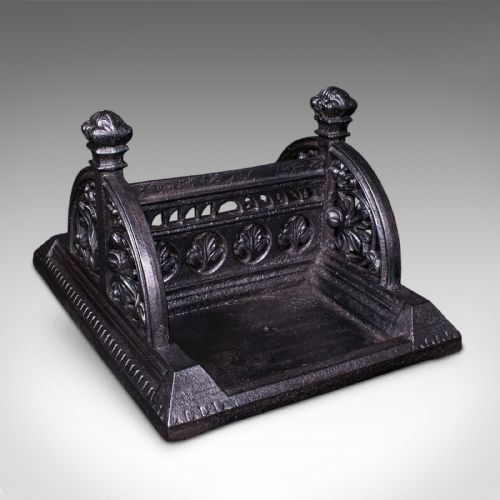
The distinction between standard utility items and finer examples also lies in stylistic details such as Gothic Revival motifs or integrated shoe pulls. Better pieces display careful proportion and clean casting lines rather than crude utilitarian mass.
Coalbrookdale
The Door Boot Scraper Glossary
- Cast iron
- Iron poured into a mould while molten to create rigid forms. This material defines the scraping blades and decorative frames found on most domestic examples.
- Wrought iron
- Iron beaten and worked by hand while hot to produce tough, fibrous metal. It appears in structural components and traditional fixings.
- Yorkstone
- A tight-grained sandstone quarried in Yorkshire, commonly used as a heavy foundational block for nineteenth-century scrapers.
- Gothic Revival
- An architectural and decorative style popular in the nineteenth century, characterised by pointed arches and medieval motifs seen on certain scraper designs.
Door Boot Scraper: Frequently Asked Questions
Where were door boot scrapers originally placed?
These implements are positioned immediately outside exterior doorways, often built into the masonry of town houses and country houses. Their location allowed visitors and residents to clear heavy mud before stepping onto interior floors.
Many sit directly beside the threshold or within recessed entrance areas to catch foot traffic before it reaches the main door.
How do I distinguish Georgian from Victorian examples?
Georgian models tend to show simpler, restrained lines or heavier wrought iron elements combined with early stone bases. Victorian pieces frequently utilise more ornate cast iron frames or incorporate Gothic Revival architectural details.
Examining the weight of the metal and the style of any decorative casting helps separate the earlier Georgian forms from late nineteenth-century iterations.
Can these scrapers still be used outside?
Most pieces are built from heavy cast iron and solid stone, making them inherently robust enough for exterior placement. Their original function was entirely practical, designed to withstand weather and heavy boots.
Placing one by a modern doorway requires ensuring the stone base is stable and level to handle daily use.
What is a shoe pull?
A shoe pull is an integrated loop or arm attached to the scraper frame, designed to help steady footwear while cleaning. It aids in removing tightly laced boots by providing leverage.
This feature is commonly found on entrance models intended for country houses and large town houses where footwear required extra effort to remove.