


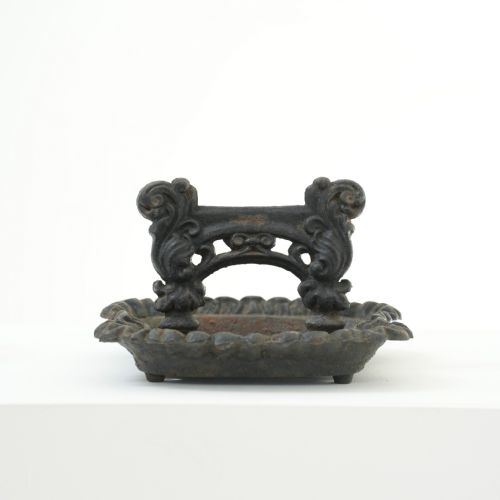


Iron Mud Scraper Tray
These iron mud scraper tray pieces are robust doorstep implements designed to clear heavy soil from footwear before entering the house.
Iron Mud Scraper Tray
When searching for an iron mud scraper tray, you are looking at substantial entryway accessories designed to scrape dirt from boots and shoes. These utilitarian pieces date primarily from the Georgian, Regency, and Victorian eras, reflecting the muddy carriage tracks and unpaved streets of their time.
The versions you are most likely to encounter on this page are cast iron examples from the Victorian period, often featuring integrated shoe pulls and heavy trays to catch the debris. They range from simple town house models to elaborate Gothic Revival and country house designs.
Construction and materials
These items are produced entirely from durable cast iron, a material chosen for its immense strength and ability to withstand heavy outdoor use and weathering. Foundries poured molten iron into moulds to create rigid scrapers, integrated trays, and decorative frames in various styles.
Many of these hardy Victorian doorstep guardians have outlasted the very muddy carriage tracks they were originally built to combat.
Understanding quality in iron mud scraper trays
Quality in these items is determined by the crispness of the casting detail and the complexity of the design, such as Gothic Revival ornament or classical proportions. Finer examples display clean lines and well-defined decorative motifs rather than crude, pitted surfaces.
The presence of integrated trays and functional additions like shoe pulls elevates the utility and design interest, separating standard utilitarian pieces from more ambitious townhouse and country house commissions.
Coalbrookdale
The Iron Mud Scraper Tray Glossary
- Cast iron
- A strong, hard alloy of iron and carbon poured into a mould to form solid objects. It forms the heavy foundation of all these entryway pieces.
- Boot scraper
- A metal blade or bar fixed near a doorway for scraping mud from the soles of boots. They often include side flanges or trays to catch the falling dirt.
- Gothic Revival
- An architectural and decorative style drawing inspiration from medieval forms. Pieces in this style feature pointed arches and ecclesiastical motifs.
- Shoe pull
- A handle or loop attached to a scraper to assist with removing tight footwear. It provides extra leverage for the user.
Iron Mud Scraper Tray: Frequently Asked Questions
What is an iron mud scraper tray used for?
These pieces sit outside doorways to remove heavy mud, clay, and dirt from footwear before anyone steps indoors.
The integrated tray catches the loosened debris, keeping the doorstep tidy and preventing dirt from entering the hallway.
Where were these placed originally?
They were positioned directly outside the front entrance of Georgian townhouses, country estates, and Victorian villas.
Many were fixed near the threshold or mounted by the side of the steps where visitors and residents could easily reach them.
How do I date a cast iron scraper?
Dating relies on stylistic clues, such as Gothic Revival details or clean Georgian proportions, alongside construction marks.
Victorian and 19th-century examples often show specific foundry work and design traits typical of the period.
How do I care for cast iron outdoors?
Keep the metal clean of accumulated dirt and moisture to prevent rust from forming on the surface.
Applying a suitable protective coating helps preserve the iron when placed in an exposed entranceway.