

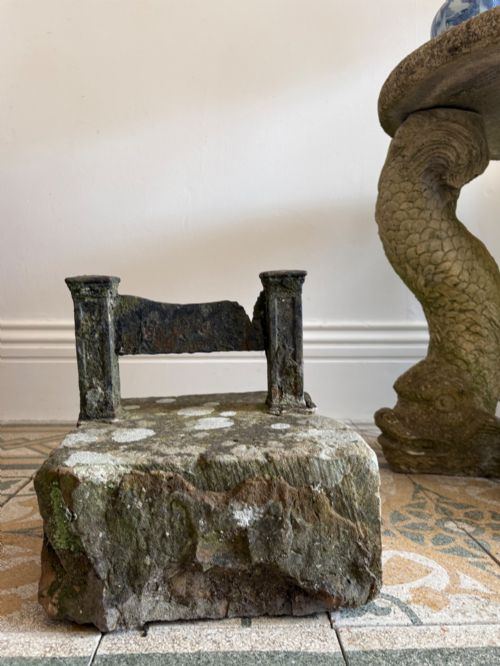


Victorian Cast Iron Shoe Cleaner
These robust victorian cast iron shoe cleaner pieces keep muddy boots at bay and bring heavy nineteenth-century utility straight to the porch.
Victorian Cast Iron Shoe Cleaner
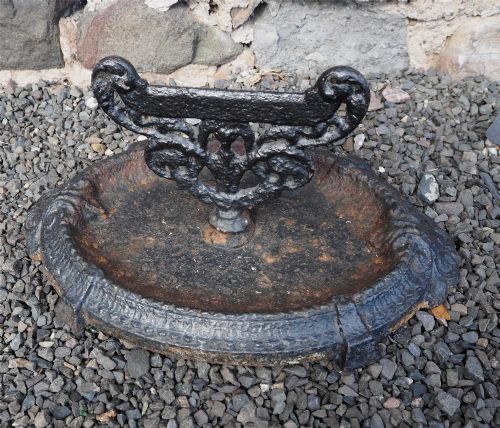
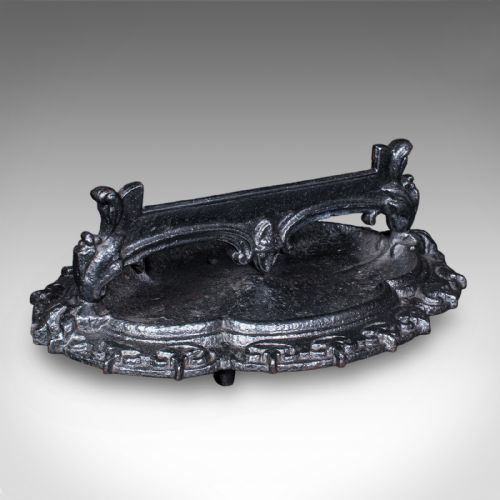
A victorian cast iron shoe cleaner is a heavy entryway accessory designed to scrape mud from footwear before entering the house. The forms found here range from simple domestic boot scrapers to grand townhouse pieces incorporating integrated shoe pulls.
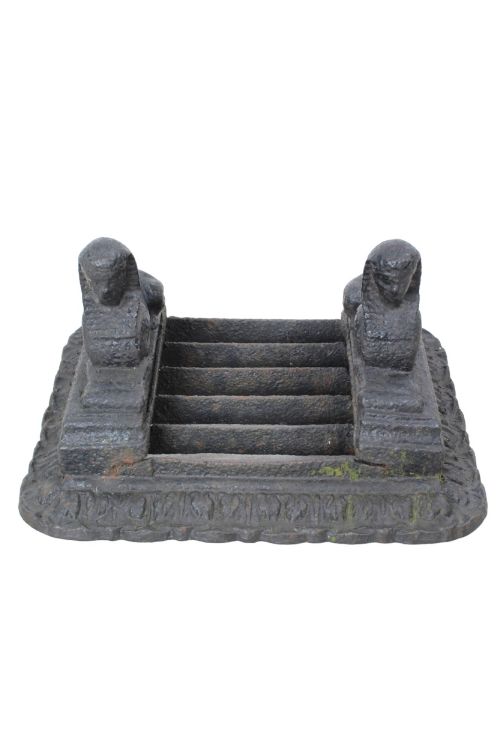
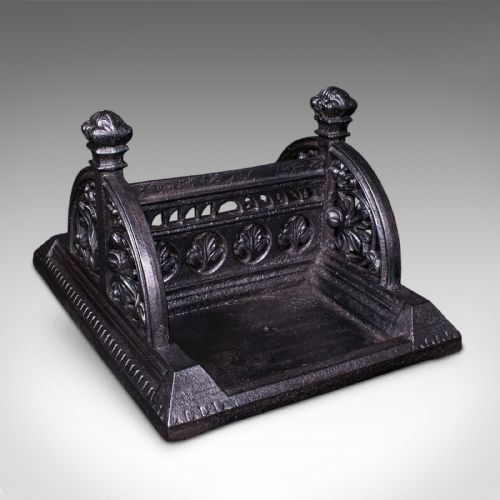
Most examples date from the nineteenth century, including Georgian and Regency periods, alongside later Victorian Gothic Revival and Egyptian Revival styles. Buyers will frequently encounter cast iron plates paired with hewn stone blocks or mounted as floor-standing country house pairs.
How They Were Made
Foundry workers poured molten iron into sand moulds to create these durable boot scrapers, capturing crisp architectural details and decorative motifs. This casting method produced dense, heavy objects capable of withstanding heavy daily use at the threshold.
Many heavy iron scrapers were permanently set into hewn stone blocks or secured directly beside doorways to provide the necessary leverage for cleaning muddy soles. Makers often integrated functional shoe pulls into the iron frames for removing tall boots.
Some nineteenth-century designers decided that scraping mud off your boots simply demanded an encounter with an Egyptian pharaoh.
What Varies in Quality
Quality depends on the crispness of the casting and the architectural ambition of the design, moving from utilitarian forms to elaborate revival styles. Pieces featuring sculptural elements like lions or specific revival ornamentation show superior foundry work.
The mounting also influences the character of the piece, particularly where original hewn stone blocks survive intact alongside the iron scraper. Finer examples display balanced proportions and integrated shoe pulls that remain structurally sound.
Coalbrookdale
The Victorian Cast Iron Shoe Cleaner Glossary
- Boot scraper
- A metal blade fixed near a doorway for scraping mud from the soles of shoes. These practical items became increasingly decorative during the nineteenth century.
- Shoe pull
- A handle or loop incorporated into the scraper frame to help draw off heavy boots. They are often found on townhouse and country house examples.
- Egyptian Revival
- An architectural and decorative style drawing on motifs from ancient Egypt. This aesthetic appears on specific nineteenth-century cast iron designs.
- Hewn stone block
- A solid block of quarried stone shaped by hand to anchor heavy metalwork. Many nineteenth-century boot scrapers were inset directly into these sturdy bases.
Victorian Cast Iron Shoe Cleaner: Frequently Asked Questions
Where were boot scrapers placed?
These pieces were positioned immediately outside front doors, entrance porches, and townhouse thresholds where visitors needed to clean muddy footwear.
They were often set directly into stone paving or mounted upon heavy blocks by the entrance to provide a stable scraping surface.
What is a shoe pull?
A shoe pull is an integrated loop or handle attached to the frame that assisted individuals in pulling off tight or muddy boots.
This feature is commonly found on larger townhouse and country house examples designed for heavy daily use.
How do I clean cast iron?
Cast iron items benefit from gentle brushing to remove surface dirt and loose debris without damaging the underlying metal.
Applying a light protective coating helps maintain the dark finish against moisture while preserving the historic character of the iron.
Are these pieces suitable for outdoor use?
These heavy metal objects were originally manufactured specifically for exterior placement beside entrance doorways.
Their robust cast iron construction handles outdoor conditions well, provided they are positioned on stable ground and checked periodically.