



Vintage Shield Back Chairs
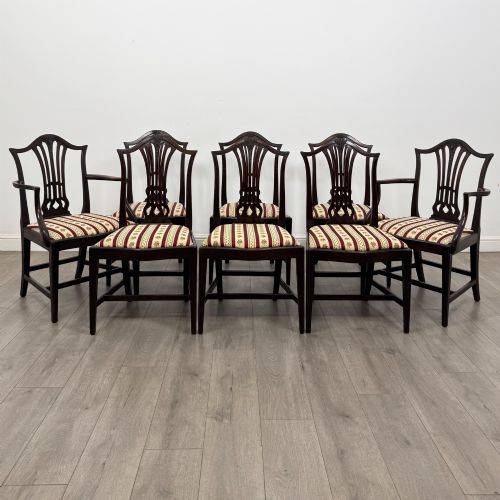
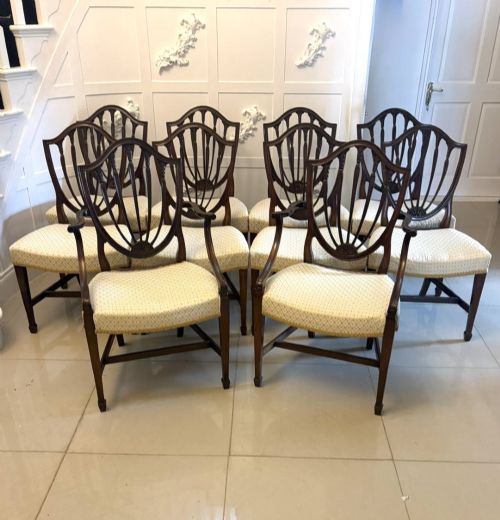
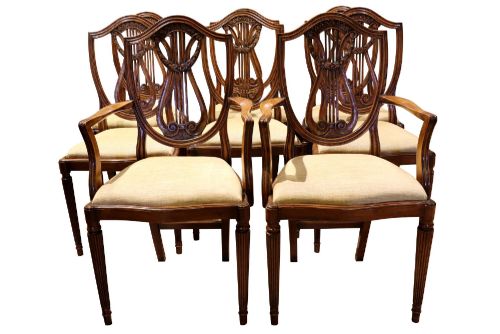
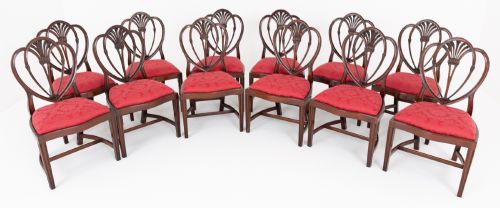
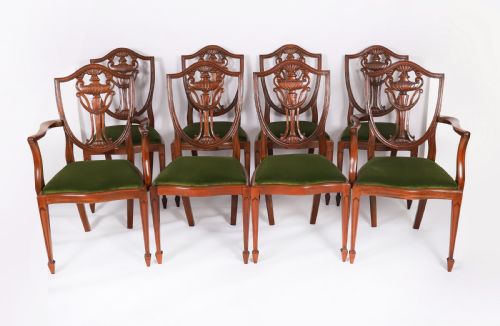
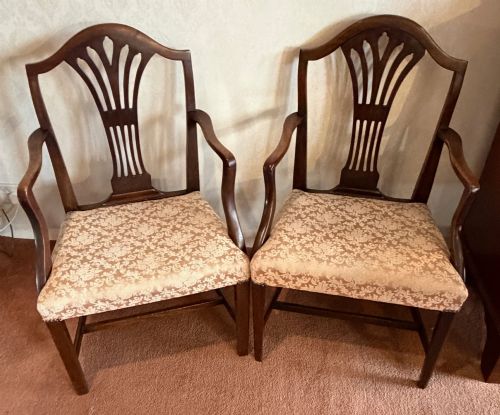
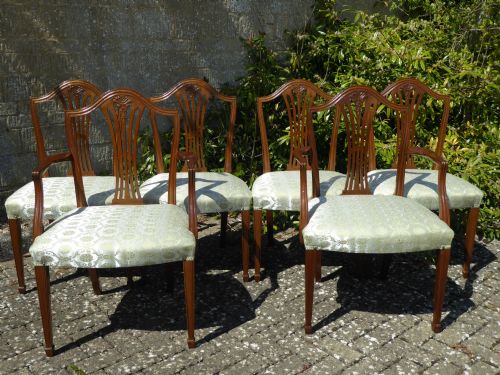
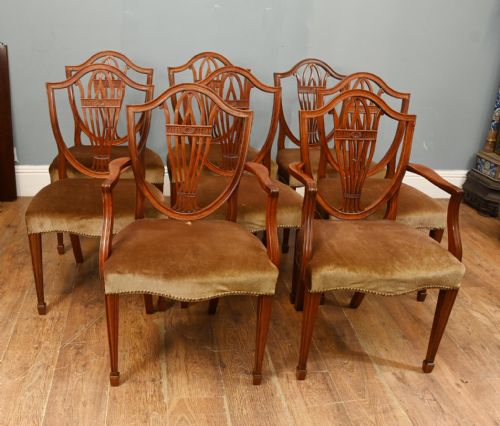
These vintage shield back chairs bring classic mahogany construction and Hepplewhite revival style to dining rooms and studies.
Vintage Shield Back Chairs
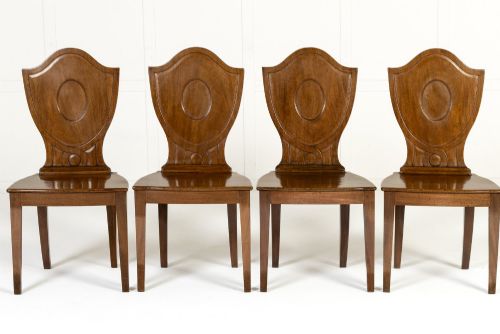
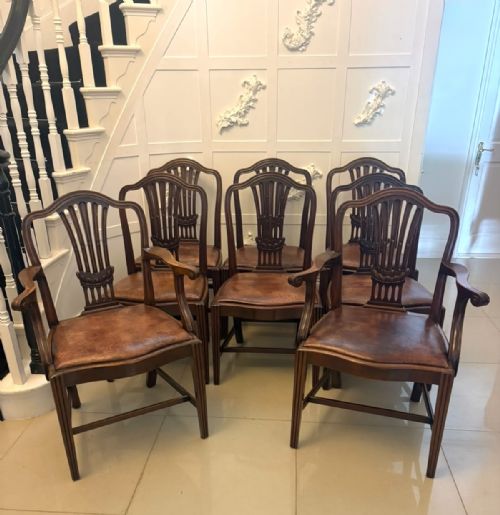
Vintage shield back chairs draw heavily on eighteenth century designs, appearing most often as dining chairs created during the Victorian, Edwardian and early twentieth century periods. When searching for vintage shield back chairs, buyers encounter sets and single pieces configured as side chairs, armchairs, carvers, and occasional hall or desk chairs.
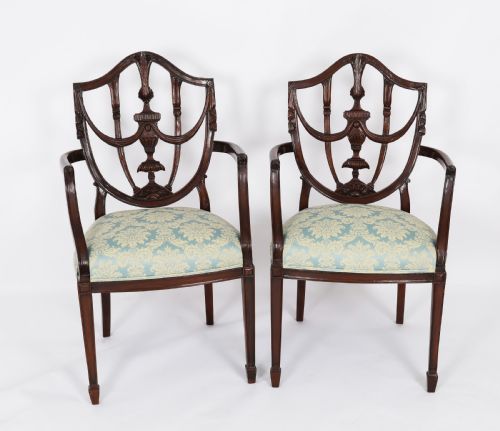
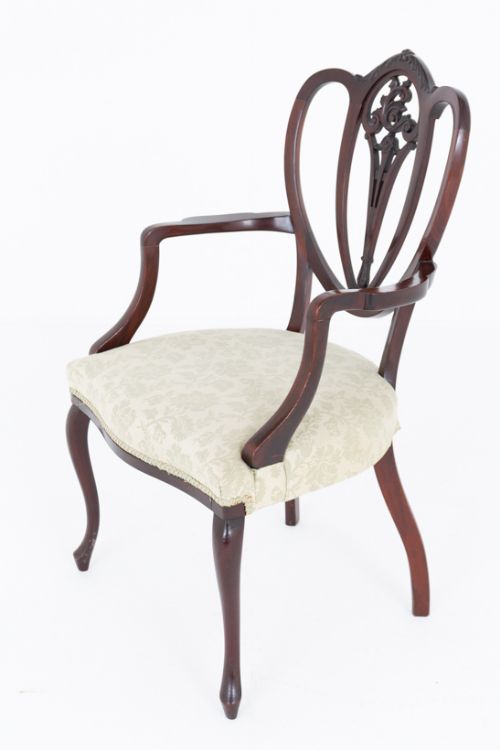
The prevailing form on this page follows the Hepplewhite style and its later revivals, characterised by the distinctive curved backrest resembling an inverted shield. These seating options emerge from periods spanning the late eighteenth century through to the nineteen twenties, constructed predominantly in mahogany with various upholstery formats.
How they were made
Makers constructed these chairs primarily using solid mahogany, frequently shaping the timber to form the complex curves of the characteristic shield backrest. Selected pieces incorporate inlaid decoration to accent the frame, whilst ebonised finishes appear on specific open-arm varieties.
Traditional joinery secures the framework, paired with drop-in or fixed seats finished in leather, fabric, or velvet upholstery. Brass elements occasionally accent the structural design, completing the standard production methods recorded across these periods.
What varies in quality
Quality in these chairs rests upon the crispness of the carved shield motif in the backrest and the selection of the mahogany timber. Sharply executed pierced splats and balanced proportions distinguish finer examples from simpler production pieces.
The integrity of the frame construction and the original condition of materials such as leather or velvet seat upholstery also dictate the standing of an individual chair or set within the range.
Maple and Co
The Vintage Shield Back Chairs Glossary
- Shield back
- A chair backrest shaped like an inverted heraldic shield, popularized by George Hepplewhite in the eighteenth century. This design defines the visual profile of the category.
- Carver
- An armchair designed to match a set of dining side chairs, usually placed at the head of a table. These often feature open arms curved to match the backrest.
- Hepplewhite style
- A neoclassical furniture style characterised by light proportions, tapered legs, and shield or oval backrests. Revival pieces reproduce these eighteenth century forms.
- Splat
- The central vertical slat within a chair back connecting the top rail to the seat. In shield back chairs, this element is often pierced and carved.
Vintage Shield Back Chairs: Frequently Asked Questions
How do I date vintage shield back chairs?
Dating relies on timber characteristics, secondary woods, and stylistic clues that point to either original eighteenth century production or nineteenth and twentieth century revival periods. Examining the construction methods underneath the seat provides further indication of the manufacturing era.
Revival pieces often display machine-assisted joinery alongside hand finishing, whereas older examples show entirely hand-cut joints and distinct patina accumulation on the mahogany surfaces.
Are shield back chairs comfortable for daily dining?
Most shield back chairs provide firm support through upright backrests and padded upholstered seats covered in leather, fabric, or velvet. The geometry of the curved back accommodates an upright sitting posture suitable for dining use.
Larger armchairs and carvers offer additional elbow room at the ends of a table, whilst standard side chairs fit compactly around the sides.
Can I mix shield back chairs with a modern table?
The rich mahogany tones and classic silhouettes of these chairs pair effectively with timber or glass dining tables of contemporary design. The strong architectural shape of the shield back creates a striking visual contrast against minimalist modern lines.
Matching sets of six or eight provide a cohesive look, whilst paired armchairs can serve as accent seating in other rooms.
What is the difference between Hepplewhite and Sheraton styles?
Hepplewhite designs typically feature curved, flowing lines with shield or heart-shaped backrests and slender tapering legs. Sheraton furniture favors more rectangular geometries with straight lines and square or turned legs.
Both styles emerged during the Georgian period and saw revivals through the Victorian and Edwardian eras, sometimes blending elements in later cabinetmaking.