



Vintage Sewing Pincushion
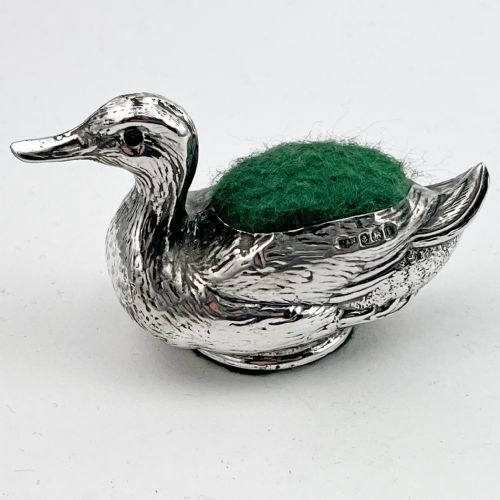
These charming vintage sewing pincushions combine miniature silver animals and turned wood with tactile velvet pads for daily use.
Vintage Sewing Pincushion
A vintage sewing pincushion brings together small decorative objects and functional needlework tools from the nineteenth and twentieth centuries. When you search for vintage sewing pincushion, you encounter everything from utilitarian turned wood sewing clamps to whimsical silver animals.
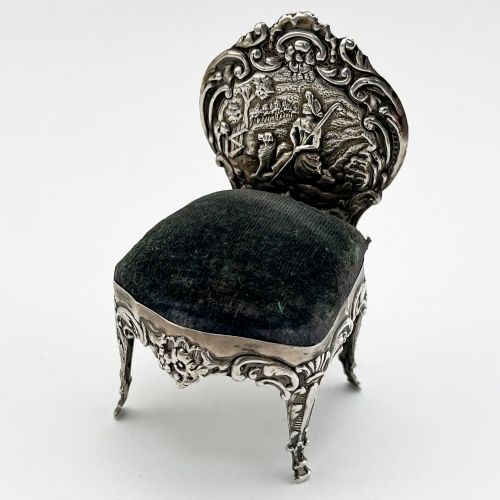
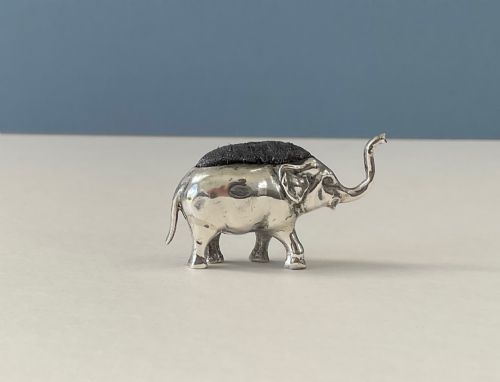
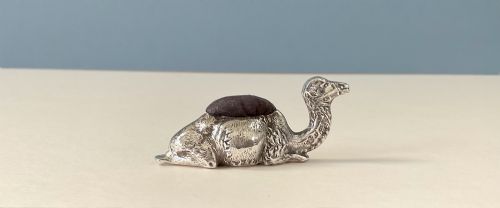
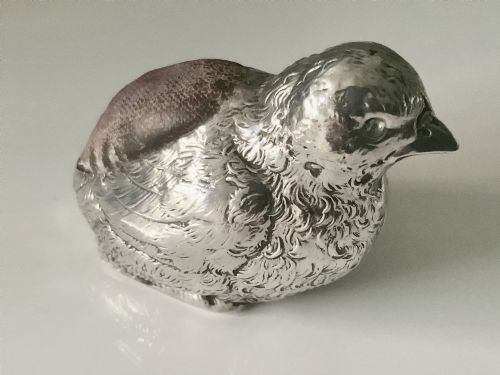
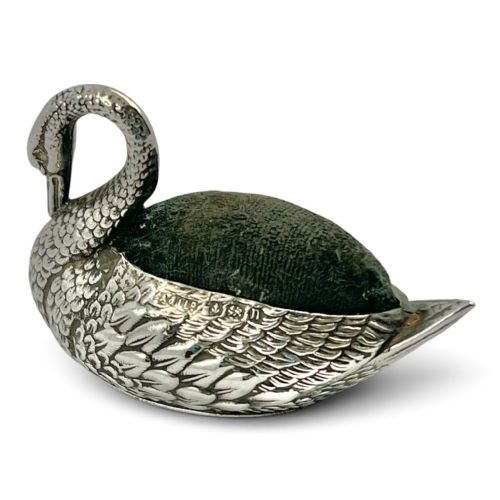
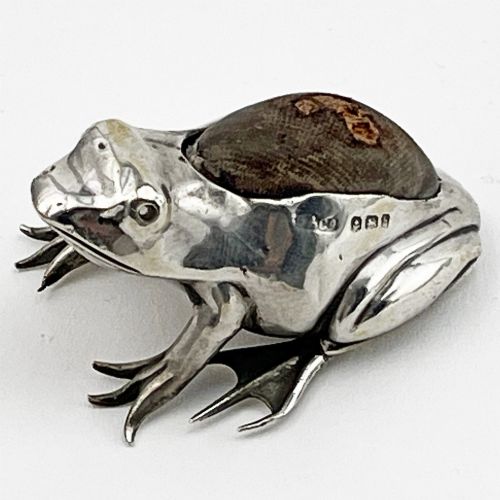
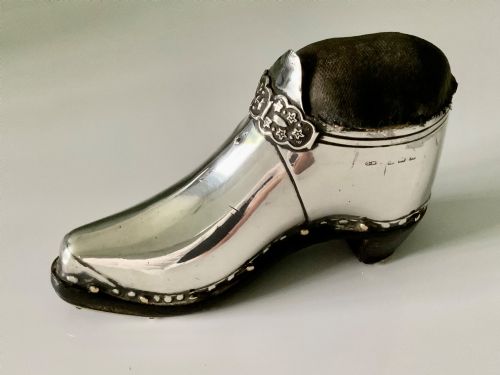
The pieces on this page span several periods, including Georgian, Victorian, Edwardian, George V, and Art Deco. Animal forms such as pigs, swans, frogs, and birds dominate the selection alongside novelty shapes like shoes, cars, and wheelbarrows.
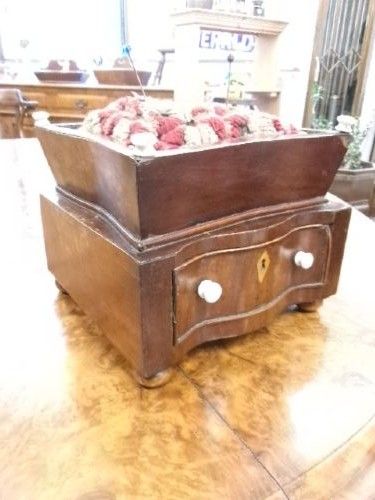
You will also find fabric and velvet pads mounted on ceramic, mahogany, and ebony stands. These accessories sat upon dressing tables and sewing boxes to keep pins tidy during intricate needlework.
What varies in quality
Materials also dictate the character of the piece, with solid sterling silver and finely turned mahogany representing higher standards of manufacture than simpler ceramic or plain wood versions.
Current listings feature materials including sterling silver, velvet, mahogany, ebony, turned wood, and glazed porcelain across Edwardian and Victorian styles.
George W Shiebler·Artificer's Guild
The Vintage Sewing Pincushion Glossary
- Novelty pin cushion
- A pin cushion shaped to resemble an animal, vehicle, or familiar object rather than a standard geometric pad. These pieces were popular during the Edwardian period.
- Treen
- Small handmade wooden items produced from turned or carved timber. Tunbridge ware is a specific type of treen decorated with tiny wood mosaic tiles.
- Sewing clamp
- A device secured to a table edge with a thumb screw, holding haberdashery accessories and pin cushions steady during stitching.
- Haberdashery
- Small items connected to sewing and dressmaking, including pins, needles, threads, and associated dressing table tools.
Vintage Sewing Pincushion: Frequently Asked Questions
What periods do these pin cushions come from?
The pieces span the Georgian, Victorian, Edwardian, and Art Deco eras, extending into the mid-twentieth century. Edwardian examples, particularly silver novelty animals, appear most frequently.
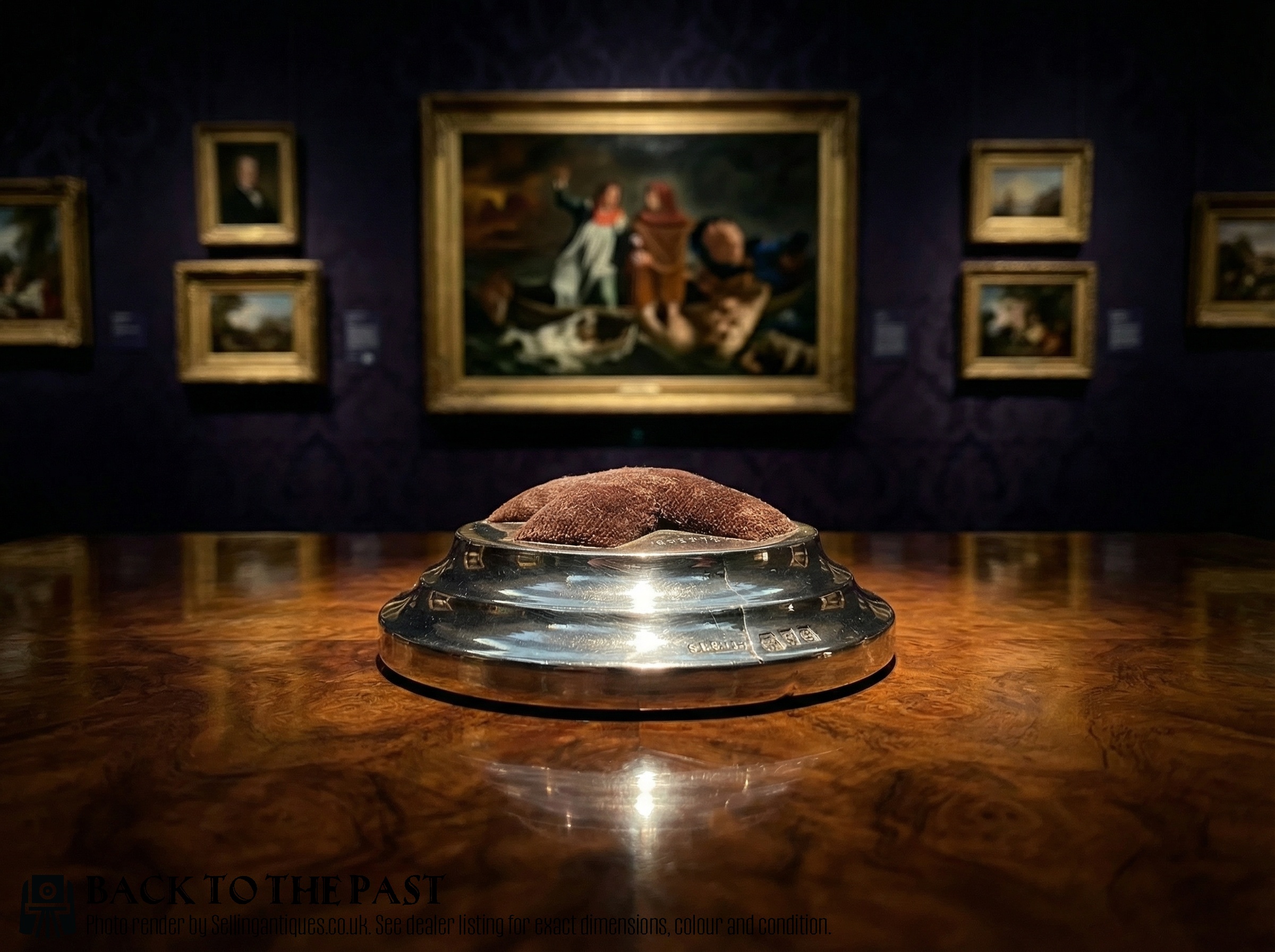
Dates often align with hallmarks stamped directly onto the silver mounts, allowing collectors to pinpoint the exact year of manufacture.
How were these pin cushions used?
Tailors, seamstresses, and homemakers kept them on dressing tables or attached them to sewing boxes and table edges. They held pins and needles close at hand during dressmaking.
Many of the figural designs served as decorative display pieces as well as practical sewing tools for daily needlework.
Are the velvet pads original?
Some pieces retain their original stuffed velvet inserts, while others have received replacement fabric over the decades of use. The fit and fabric type often indicate whether the pad remains undisturbed.
Original velvet typically shows appropriate wear consistent with the age of the silver or wooden mount.
How do I identify silver novelty cushions?
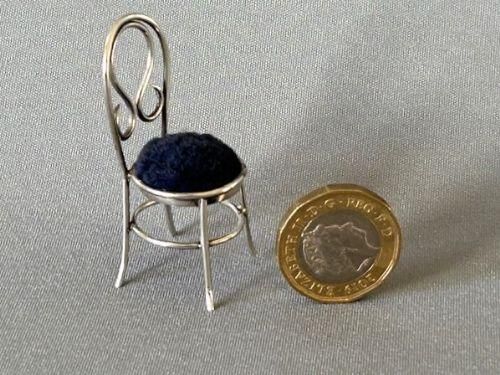
Silver novelty pieces are shaped like animals, boots, furniture, or vehicles with a stuffed cushion integrated into the design. Look for Birmingham or Chester assay marks on the metal body.
Common animal forms include pigs, ducks, frogs, and swans produced during the early twentieth century.