



Vintage Serpentine Bedside Tables
Vintage serpentine bedside tables bring curved fronts and rich timber grains to the bedroom, offering practical surface space alongside traditional cabinet storage.
Vintage Serpentine Bedside Tables
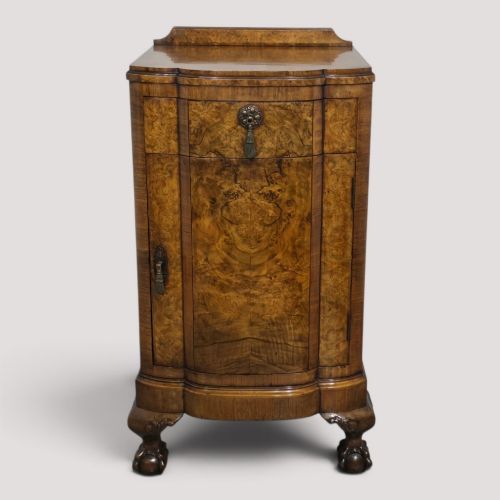
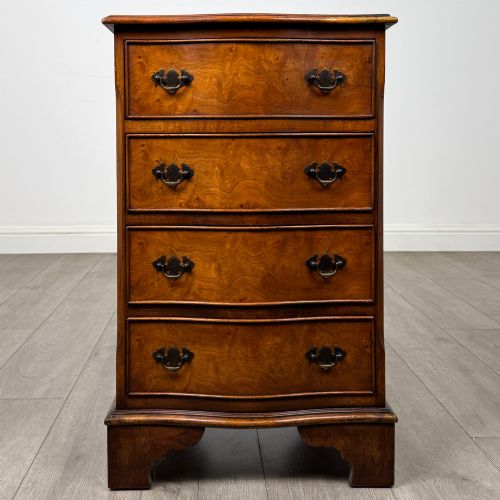
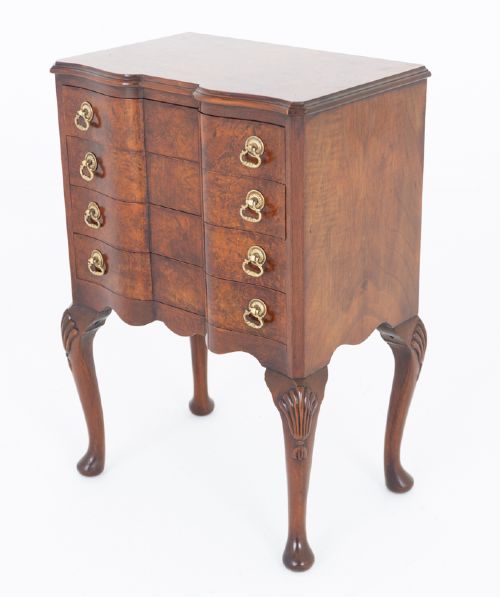
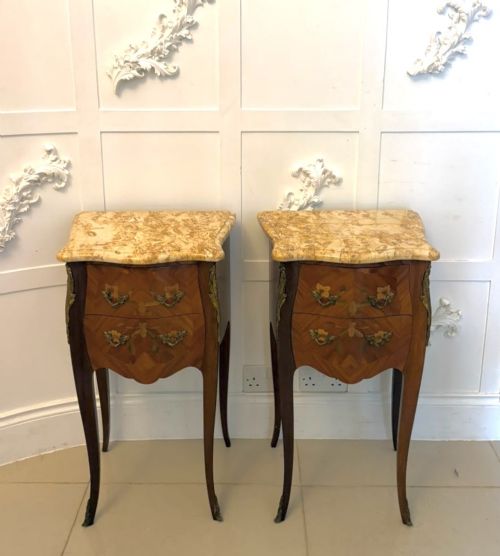
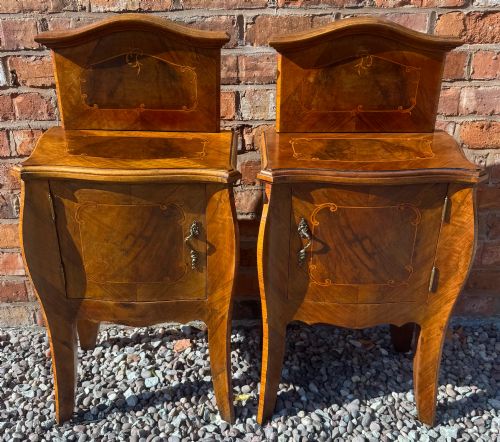
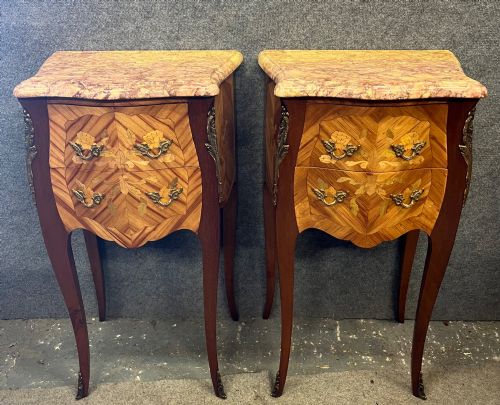
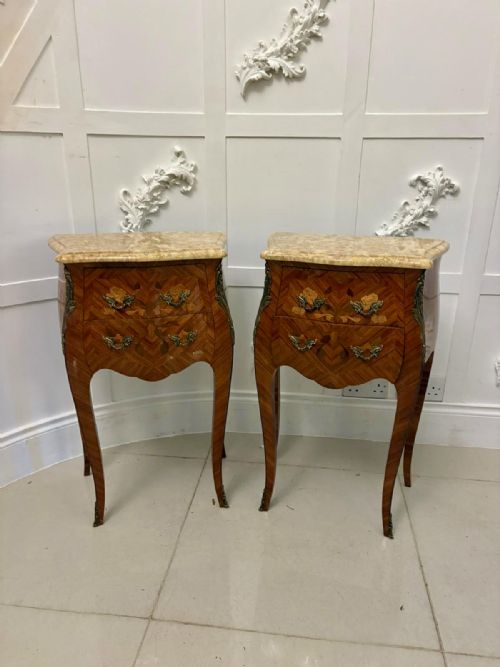
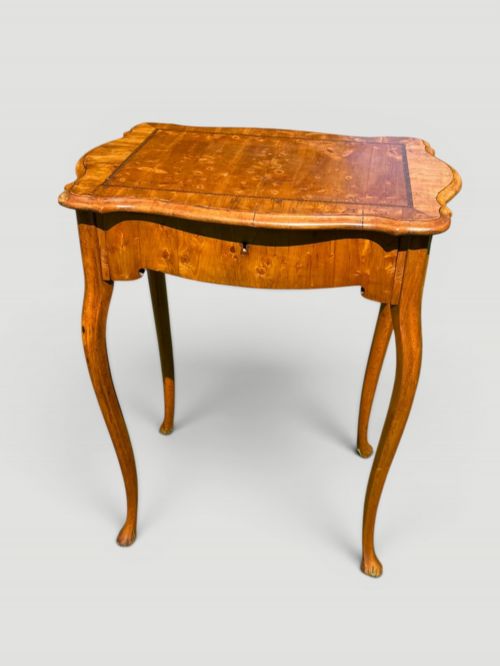
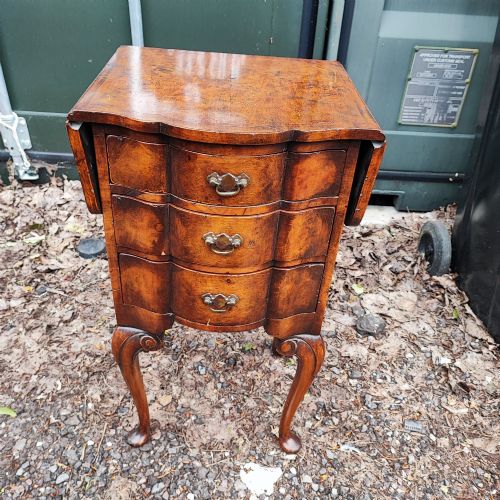
Most pieces take the form of small bedside chests of drawers, lamp chests, or enclosed cabinets with hinged doors. Common stylistic influences include French Louis XV and Queen Anne revivals, bringing decorative marquetry inlay and shaped aprons to these functional domestic items.
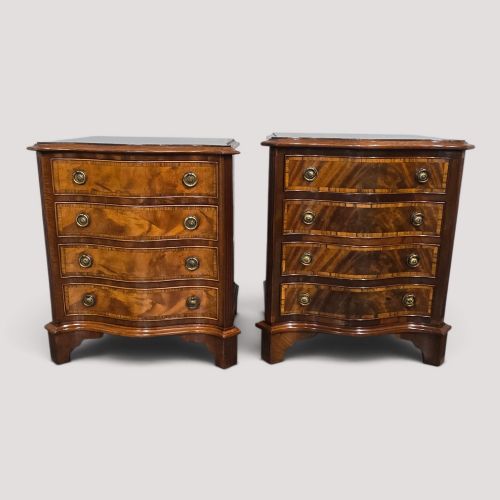
Origins span Edwardian workshops through to 1930s cabinet makers, utilising traditional forms designed to hold bedside lighting and personal items. Buyers frequently encounter matched pairs alongside single chests finished in walnut, mahogany, or kingwood.
How they were made
Construction relies upon solid timber frames combined with decorative wood veneers such as burr walnut, kingwood, and mahogany applied to curved surfaces. Cabinet makers skillfully shaped the timber to achieve the signature serpentine front without compromising structural integrity.
Many examples incorporate intricate marquetry inlay work, contrasting woods, and polished marble tops. Brass handles, escutcheons, and mounts complete the hardware details on period pieces from the nineteenth and early twentieth centuries.
Materials across the inventory span brass, marble, and numerous wood veneers including burr walnut, kingwood, and rosewood.
What varies in quality
Quality depends upon the choice of timber figure, the precision of the curved serpentine shaping, and the finesse of any marquetry inlay. Superior pieces display carefully matched wood grains across the drawer fronts and balanced proportions throughout the cabinet.
The refinement of brass hardware, the smoothness of drawer operation, and the integration of marble tops distinguish finer workshop production from standard commercial output of the period.
The Vintage Serpentine Bedside Tables Glossary
- Serpentine
- A furniture front characterised by a double-curved line, convex in the centre and concave at the sides. This shape requires advanced cabinet making skill to execute successfully.
- Marquetry
- Decorative patterns formed by fitting together thin slices of various coloured woods and veneers onto a structural surface. It appears frequently on French revival pieces.
- Kingwood
- A dense, heavy tropical timber featuring rich brown and violet-brown colouring with darker streaks. It was prized by cabinet makers for fine veneer work.
- Burr walnut
- Timber harvested from walnut tree growths, producing highly figured, swirling grain patterns. It is typically utilised on top surfaces and drawer fronts to catch the light.
- Commode
- A low piece of furniture with drawers or doors, used historically for storage in bedrooms. Early bedside versions often concealed a chamber pot.
Vintage Serpentine Bedside Tables: Frequently Asked Questions
Are these tables sold as pairs?
Many listings feature matched pairs of bedside cabinets, though single chests also appear regularly in the selection.
Buyers seeking symmetry for a bed placement will find several dual configurations originating from the Edwardian and interwar periods.
What wood types are most common?
Walnut, burr walnut, and mahogany dominate the materials seen across the current inventory of tables and chests.
Exotic veneers like kingwood and satinwood also appear alongside contrasting marquetry inlay and marble surfaces.
How do I identify a revival style?
Revival pieces draw inspiration from earlier eras such as the French Louis XV style or Queen Anne period.
Cabinet makers in the nineteenth and twentieth centuries reinterpreted these historic forms using contemporary construction methods and traditional timbers.
What is the typical size of these cabinets?
These pieces are built with compact proportions specifically intended to sit alongside a bed for lighting and small items.
Dimensions generally correspond to small chests of drawers or bedside commodes rather than large storage furniture.