
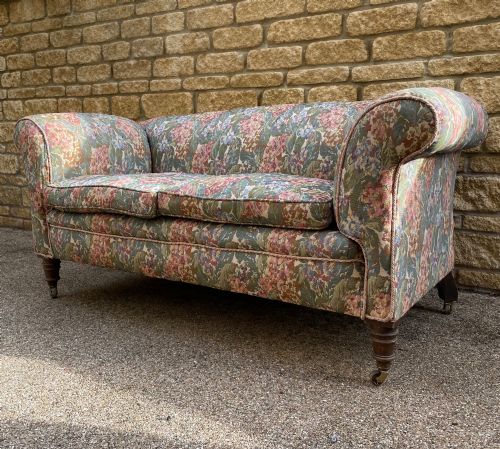
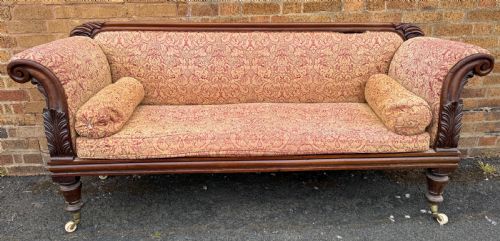
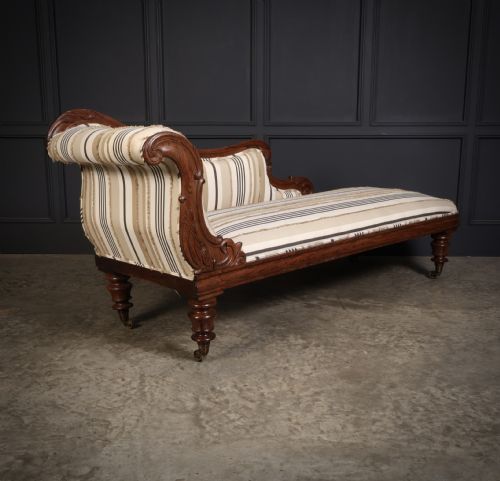


Vintage Scroll End Sofa
A vintage scroll end sofa brings distinctive sweeping timber curves and deep seating to a room, offering both traditional character and substantial comfort.
Vintage Scroll End Sofa
A vintage scroll end sofa represents a distinct seating form defined by its characteristic rolled arms, appearing across periods from the Regency era through to the Edwardian and later twentieth century. Buyers seeking this phrase encounter various related furniture types, including two-seater drop arm settees, double-ended sofas, chaise longues, and window seats.
The pieces listed on this page span the nineteenth century to the early twentieth century, incorporating William IV, Regency, Victorian, Grand Regency, and Queen Anne Revival styles alongside country house forms. Mahogany, simulated rosewood, rosewood, and burr oak provide the primary timber structures for these diverse seating options.
Alongside standard settees, related forms such as lyre-shaped sofas and upholstered window seats demonstrate the broad interpretation of the scroll-end aesthetic. These items combine timber frames with fabric upholstery to create functional furniture suited to period and traditional interiors.
Materials and construction methods
Makers utilised solid timbers including mahogany, rosewood, and simulated rosewood to build the structural frames, often finishing them with carved details. Brass mounts and stretchers occasionally appear alongside timber components to add structural support and decorative contrast.
Upholstery fabric covers the seating areas and supports, secured to timber frames that range from early nineteenth-century country house pieces to Edwardian window seats. The integration of carved mahogany framing with textile upholstery defines the primary construction technique seen across these examples.
Listings feature mahogany, rosewood, simulated rosewood, and burr oak timbers alongside fabric upholstery across the nineteenth and twentieth centuries.
Factors that distinguish quality
Quality in a vintage scroll end sofa rests upon the crispness of timber carving on the frame and the richness of the wood grain, whether dealing with figured mahogany, rosewood, or simulated finishes. Finer examples display meticulous attention to the sweeping curves of the scroll arms and the balanced proportions of the overall silhouette.
The integrity of the original timber structure and the sophistication of period styling, such as William IV or Regency design details, elevate certain pieces above standard production. The integration of textile upholstery with the underlying wood frame further indicates the standard of craftsmanship invested in the construction.
The Vintage Scroll End Sofa Glossary
- Scroll end
- A sofa arm characterised by an outward-curved, volute scroll shape that defines the silhouette of nineteenth-century seating. This architectural feature provides both a visual terminus and an armrest.
- Simulated rosewood
- A painted or grained surface finish applied to a secondary timber to imitate the rich colour and figuring of genuine rosewood. This technique was frequently utilised during the Regency period.
- William IV
- A British design style dating from the 1830s, noted for heavy classical proportions, bold carved scrollwork, and dark timbers like mahogany and rosewood. Pieces from this era often feature robust mounts.
- Chaise longue
- An upholstered seating form designed for reclining, combining elements of a chair and a daybed with a single raised end. It shares the scroll-end aesthetic common in nineteenth-century drawing rooms.
- Window seat
- A long, narrow upholstered bench designed to fit within a window recess or hallway, often featuring low arms or scroll ends. These pieces utilise timber frames matching contemporary salon furniture.
Vintage Scroll End Sofa: Frequently Asked Questions
What is a scroll end sofa?
A scroll end sofa is a nineteenth-century seating form characterised by distinctive rolled wooden arms that curve outward. These pieces often feature mahogany or rosewood frames paired with upholstered seating.
Originating in the Regency and William IV periods, they serve as both decorative and functional statement items for traditional interiors.
How do I identify a Regency sofa?
Regency sofas typically display classical architectural influences, balanced proportions, and dark timber frames such as mahogany or simulated rosewood. They frequently incorporate carved details and lyre shapes.
Examining the construction methods and wood grain helps distinguish pieces made during this early nineteenth-century period from later revival styles.
Where should I place a window seat?
An upholstered window seat fits well beneath large windows, in entryways, or at the foot of a bed. Its narrow profile allows it to provide seating without blocking light or obstructing walkways.
These pieces pair well with period architectural details and offer a compact alternative to full-sized settees.
What is simulated rosewood furniture?
Simulated rosewood is timber painted or stained to replicate the distinctive dark grain and warm tones of genuine rosewood. This practice was common during the Regency era when exotic woods were expensive.
Artisans applied graining techniques to more accessible woods while maintaining the fashionable dark aesthetic of high-status furniture.