



Vintage Scottish Picture
A vintage scottish picture brings home the vast landscapes, quiet lochs and domestic scenes captured by artists across the nineteenth and twentieth centuries.
Vintage Scottish Picture
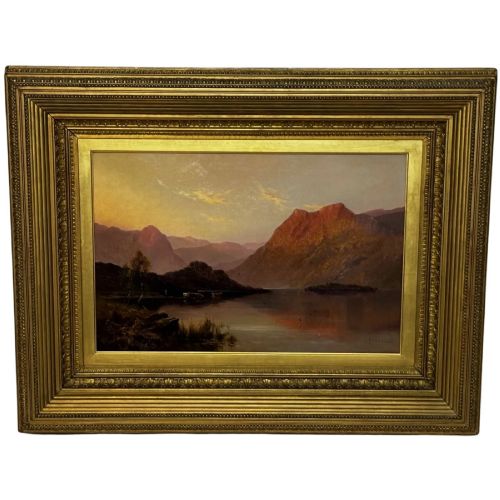
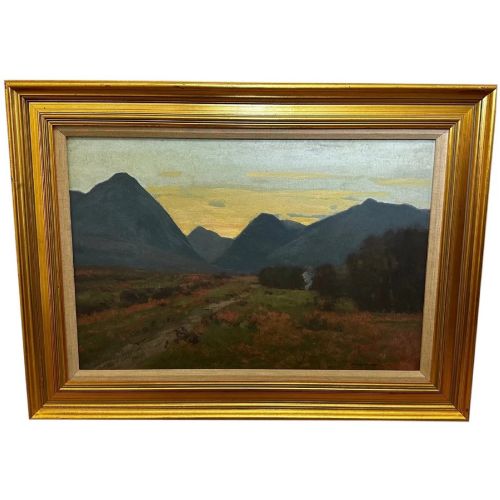
When you search for a vintage scottish picture, you encounter framed original artworks ranging from Victorian Highland landscapes to mid-century watercolours of coastal and rural subjects. These works document Scotland through varied eyes, capturing cattle by the water, ruined castles, and mountain vistas.
The selection on this page leans heavily towards oil paintings on canvas and delicate watercolours on paper, framed in wood and giltwood. Pieces stretch from the late nineteenth century through the 1950s, recording shifts in British Impressionism and the Scottish School along the way.
How they were made
Makers utilised traditional mediums, applying oil on canvas or board to build rich textures in landscape and portrait subjects. Watercolours on paper offer a lighter touch, often heightened with charcoal or gouache to capture the shifting light of the Hebrides or the Borders.
Framing played an integral role, with original wood and gold leaf frames encasing these works to protect the fragile paper and canvas surfaces. Artisans matched the weight of the frame to the ambition of the painting, whether handling a large oil study or a modest watercolour.
Materials recorded across the selection include watercolour, oil on canvas, giltwood, and gold leaf.
What varies in quality
The distinction between a standard piece and a superior one rests upon the artist's command of light, atmosphere, and brushwork. Stronger compositions convey the specific mood of a Scottish glen or coastal inlet rather than relying on formulaic topographical details.
Condition and originality also set works apart, particularly the survival of the early or original frame and the stability of the paper, canvas, or board. A piece that retains its character without heavy restoration holds greater integrity.
Alfred Fontville de Breanski Jr·George Houston·David Roberts·George Rankin·Ralston Gudgeon·Henry Robinson Hall·Herbert Dicksee·Robert Eadie·Frank Hider·John A. Houston·John Douglas Perrett·James Bell Anderson·R.P. Noble·Stanley Orchart·John Charles Tunnard·Alfred Henry Vickers·Margaret Laing·George Turner·Snaffles·Hirst Walker·AJ Thornton·Owen Bowen·Denys Garle·James Kerr McArthur·Robin Watt
The Vintage Scottish Picture Glossary
- Giltwood
- Wood carved and covered with a thin layer of gold leaf. This material frequently appears in the ornate frames surrounding nineteenth-century oil paintings.
- Watercolour
- A paint consisting of pigment suspended in a water-based solution, typically applied to paper. It allows for translucent washes that suit atmospheric landscape studies.
- Scottish School
- A loose term encompassing artists trained or working in Scotland who shared regional subjects and stylistic influences. Their output spans traditional realism to early twentieth-century modernism.
- Etching
- A printmaking process where lines are bitten into a metal plate with acid before ink is applied. The resulting image offers fine linear detail on paper.
Vintage Scottish Picture: Frequently Asked Questions
What subjects do these vintage works typically feature?
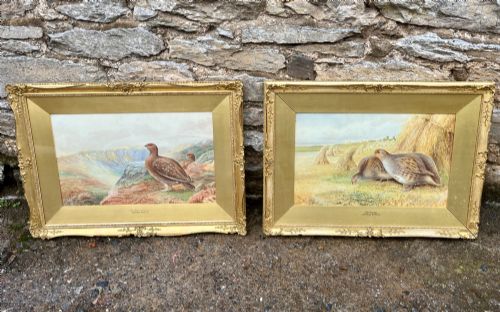
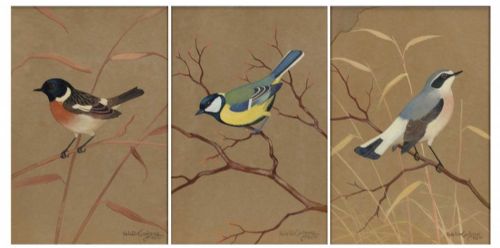
These artworks focus heavily on Scottish landscapes, featuring highland cattle, lochs, coastal scenes, and historic castles. You will also encounter domestic interiors, portraits, and depictions of birds.
Artists drew inspiration from the rugged terrain and rural life across the Scottish borders, the Hebrides, and the mainland.
Are these oil paintings on canvas or board?
The listings include both traditional stretched canvases and rigid wooden boards. Canvas works offer subtle texture from the woven fabric beneath the paint layers.
Board supports provide a stable surface that artists often utilised for quicker plein-air studies and smaller landscape sketches.
How can I tell the period of a Scottish landscape?
Clues lie in the framing style, the weight of the canvas, and the artistic techniques employed by the painter. Victorian works often feature heavier, ornate giltwood frames and darker, more dramatic palettes.
Mid-century pieces tend towards looser brushwork and brighter interpretations of light, reflecting the influence of the Scottish School.