



Vintage Scale Weights Set
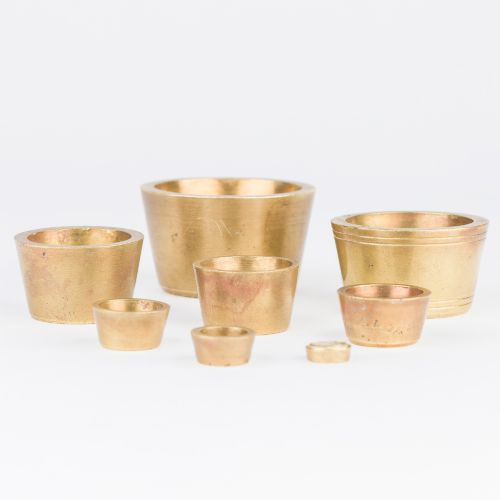
A vintage scale weights set brings tactile historical utility to a modern interior, offering solid brass and iron standards that once governed trade, post, and apothecary.
Vintage Scale Weights Set
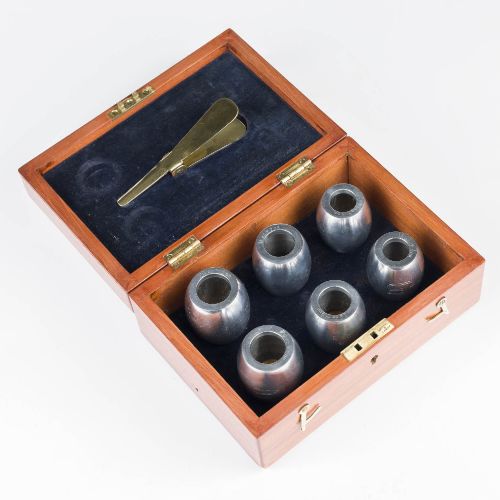
The materials span utilitarian cast iron and bright polished brass, frequently housed in fitted mahogany, oak, or walnut bases lined with velvet. These functional groupings reflect the rigorous calibration demands of the nineteenth and early twentieth centuries, surviving today as both historical artefacts and robust decorative objects.
Materials and construction
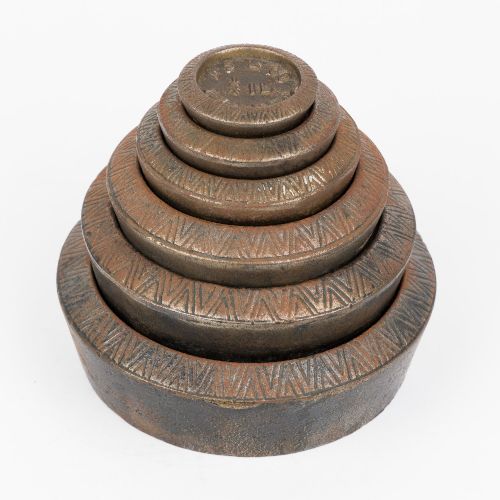
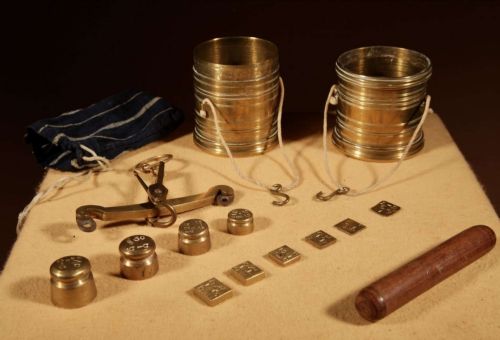
Makers utilised durable metals such as solid brass, bronze, and cast iron to cast and turn individual weight units, ensuring minimal wear over decades of heavy handling. Wooden bases and block stands were fashioned from dense hardwoods like mahogany and oak, often shaped with fitted recesses to hold each specific weight securely.
Surface finishing involved precision stamping, engraving, and adjustment filling, where makers added lead plugs to calibrate exact mass. The combination of warm timber and polished metal creates a distinct visual contrast that defines these utilitarian objects.
Listings feature periods spanning from the Victorian era through the 1940s, utilising brass, mahogany, oak, and cast iron.
Distinctions in quality
Quality rests upon the completeness of the set, the clarity of official verification stamps, and the integrity of any fitted wooden housing. Full matched sequences retaining their original block stands or velvet-lined boxes command greater interest than assembled or partial groups.
Fine manufacture shows in crisp maker inscriptions, precise turning, and the presence of municipal or trade stamps denoting official standardisation by makers such as W and T Avery or De Grave.
De Grave Short and Co·W and T Avery·S Mordan and Co·Young and Son
The Vintage Scale Weights Set Glossary
- Avoir
- Avoirdupois, the system of weights used for general goods and commerce. This standard governed everyday trade weights found in grocers and postal sets.
- Troy
- A system of units of mass used for precious metals and apothecary items. Troy ounce weights are frequently encountered in specialised trade sets.
- Tical
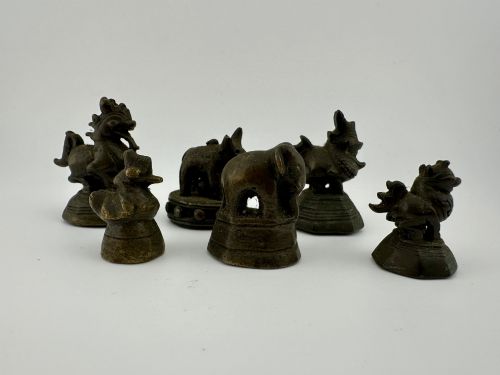
- A traditional unit of weight mass associated with Southeast Asian trade. Burmese and Thai bronze animal trade weights often utilise this regional standard.
- Bushel
- A unit of capacity for dry commodities. Dutch bushel balance sets incorporate specialised balancing mechanisms for agricultural measurement.
- Beam scales
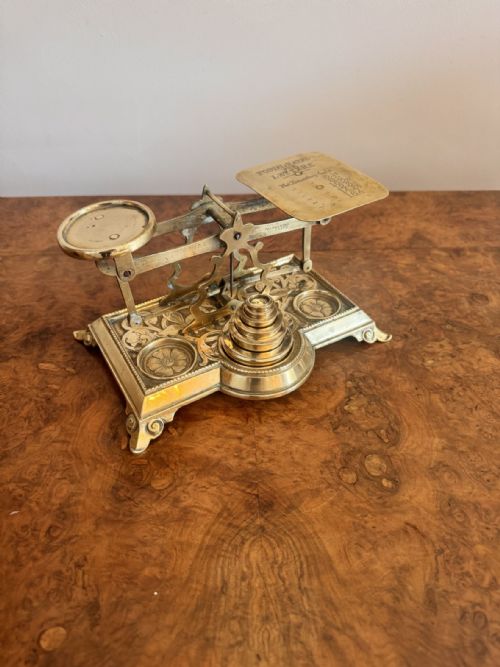
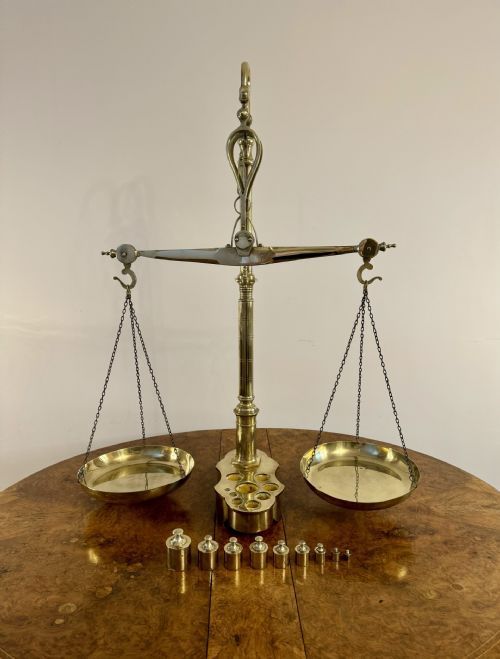
- A weighing device operating on the principle of lever arms suspended from a central pivot. These scales are frequently paired with heavy brass weights in large postal and commercial sets.
Vintage Scale Weights Set: Frequently Asked Questions
What is a vintage scale weights set?
A vintage scale weights set is a collection of calibrated masses made of brass, bronze, or iron, often accompanied by balance beams or fitted wooden blocks.
These sets were used for tasks ranging from weighing letters at the post office to measuring goods in grocery shops and pharmacies.
How do I date a vintage scale weights set?
Dating relies on maker marks, style of the wooden base, and official verification stamps engraved into the metal.
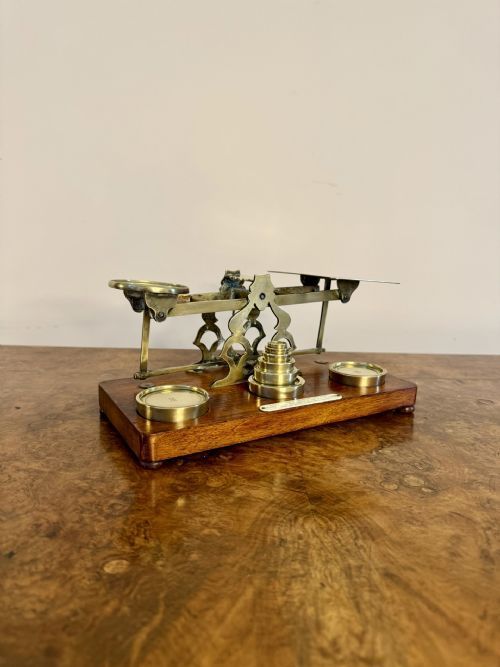
Victorian sets tend to feature mahogany with heavy brass beams, while Edwardian examples often utilise oak and refined postal configurations.
Were these weights used in homes?
Many postal scales and letter weights were standard fixtures on the desks of nineteenth-century writing rooms and offices.
Heavier commercial sets remained strictly within trade environments like grocers, co-ops, and municipal inspection offices.
What are opium weights?
Opium weights are distinct trading standards cast in bronze, often shaped as stylised animals like lions or ducks.
Originating in Southeast Asia, these decorative pieces served as functional units of mass for merchants.