


Edwardian Brass Scale Weights
Edwardian brass scale weights are heavy, precise metal counters crafted for trade and correspondence, offering both mechanical accuracy and tactile desk appeal.
Edwardian Brass Scale Weights
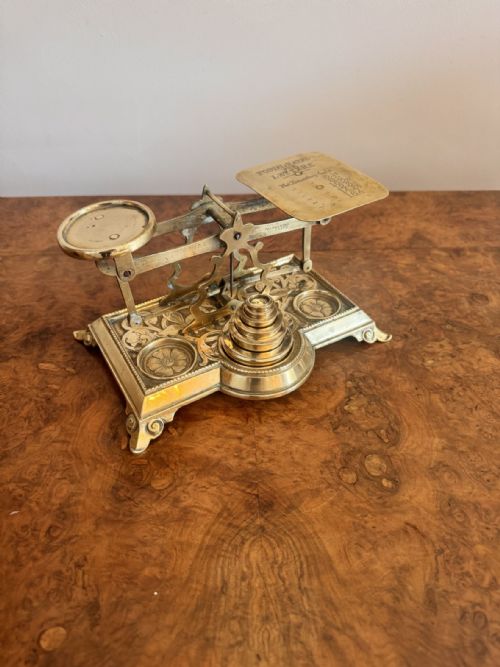
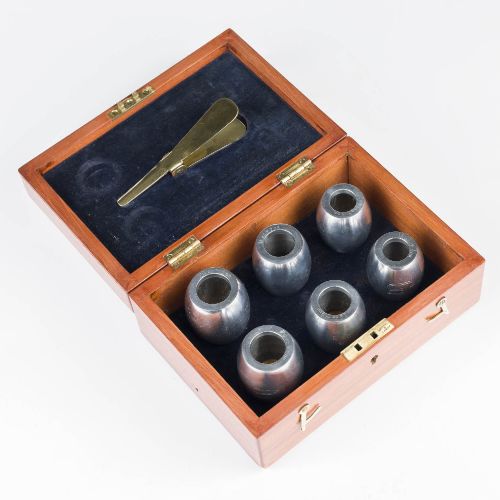
Edwardian brass scale weights are utilitarian objects designed for measuring mass accurately in shops, offices, and municipal contexts. These pieces range from loose individual standards to comprehensive matched sets housed in fitted bases.
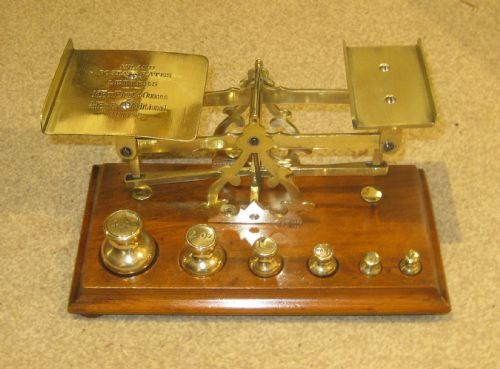
The versions most frequently met on this page include standard avoirdupois sets commissioned for municipal authorities, alongside postal weights accompanying desktop balance scales. They reflect the strict regulatory standards of the period and the heavy daily demands of commerce.
Materials extend beyond pure brass to incorporate mahogany, oak, and walnut mounting blocks, while specific examples bear official stamps denoting regional verification for cities and counties such as Liverpool, Lancashire, and Northamptonshire.
How they were made
These items were produced primarily through casting and turning brass, resulting in dense, durable objects capable of withstanding constant handling. Makers shaped the metal into cylindrical or knobbed configurations that allowed secure gripping and precise adjustment.
Fitted storage blocks and bases utilised dense hardwoods like mahogany, walnut, and oak, often shaped with specific recesses to hold each individual weight securely in place. Metal components frequently received stamped or engraved inscriptions detailing standard units and maker details.
Some municipal weight sets were checked so rigorously by local inspectors that they carry decades of overlapping verification stamps from different centuries.
What varies in quality
The distinction between ordinary and superior examples lies in the crispness of the official verification stamps and the completeness of the matched set. Retaining the original fitted wooden base with all corresponding slots filled elevates an assembly above loose, disparate pieces.
Surface finish and metal preservation also separate standard utilitarian items from those retained in superior condition. Fine examples display clear maker attribution to notable firms and retain their original warm polish without excessive pitting or heavy abrasion.
De Grave Short and Co·W and T Avery
The Edwardian Brass Scale Weights Glossary
- Avoirdupois
- A system of weights based on a pound of sixteen ounces. This standard governed everyday commercial trade throughout the period.
- Postal scales
- Weighing devices calibrated specifically for letters and parcels to determine correct postage rates. They frequently incorporated matching brass weights on dedicated platforms.
- Verification stamp
- Official markings punched into the metal by inspectors to certify accuracy for public trade use. These often name specific cities or counties.
- Balance scales
- A mechanical weighing instrument featuring a central fulcrum and two suspended pans. They relied upon precise counterweights to determine mass.
Edwardian Brass Scale Weights: Frequently Asked Questions
What were edwardian brass scale weights used for?
These objects served to measure exact quantities of goods, mail, or commodities in commercial shops and municipal offices. They ensured fair trade and correct postal tariffs by providing a reliable physical standard of mass.
Traders and officials relied on them daily, matching the loose pieces against the load on balance scales to determine weight accurately.
How do I know if a set is complete?
A complete set fits precisely into every designated recess of its original wooden base without empty gaps. Each individual piece should match the style, wear pattern, and stamped markings of the others.
Missing pieces leave vacant slots in fitted mahogany or oak blocks, which were originally arranged in descending order of size.
What do the stamped inscriptions mean?
Stamps on the metal usually indicate the maker, the standard unit of measurement, and the regional authority that tested the item. You will frequently find city or county names alongside official verification cyphers.
These marks confirm that the pieces were legally sanctioned for use in public trade within specific jurisdictions.
How should I clean brass scale weights?
Light dusting with a dry cloth is generally sufficient to remove surface dirt without disturbing the aged patina. Avoid harsh chemical cleaners or abrasive pads that can remove original stamps and soften crisp edges.
Preserving the natural oxidation maintains the historical character and appearance accumulated over a century of existence.