
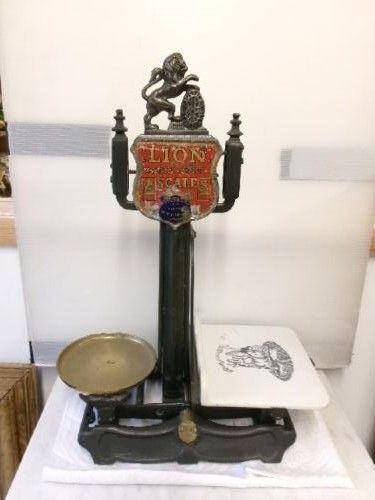
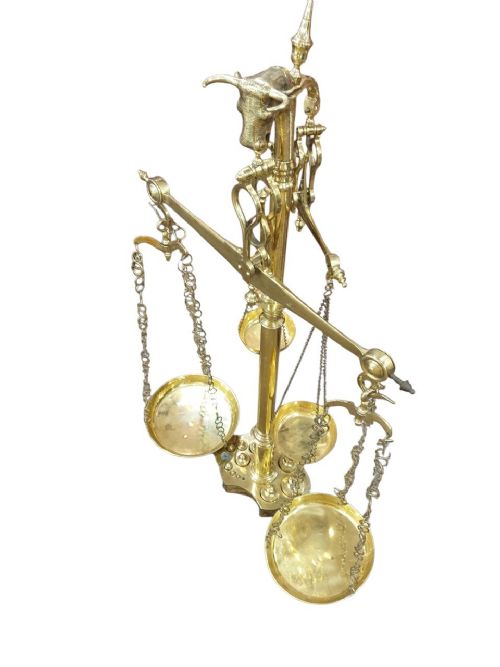
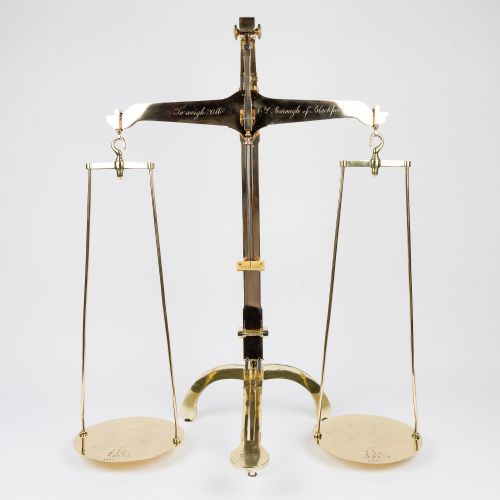
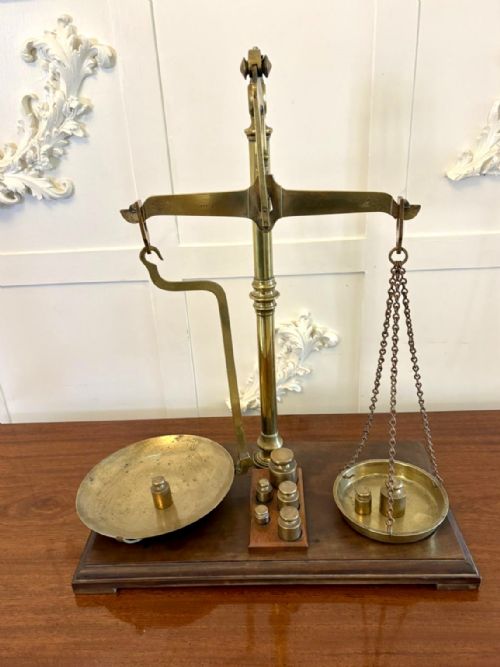
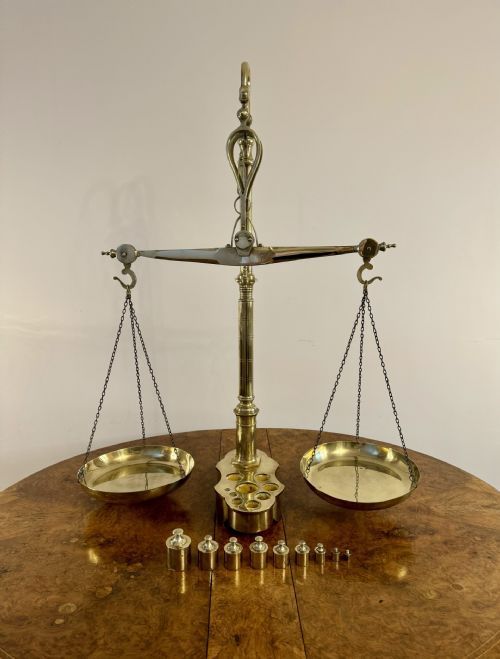


Vintage Brass Counter Balance
These vintage brass counter balance scales bring purposeful industrial weight and polished Victorian mechanical precision directly into a modern interior.
Vintage Brass Counter Balance
A vintage brass counter balance typically takes the form of trade and scientific scales, including grocers scales, butcher scales, and apothecary balances. These items served a functional purpose in commercial shops and institutions across the nineteenth and early twentieth centuries.
You are most likely to encounter Victorian and Edwardian examples on this page, spanning from the late nineteenth century through to the nineteen-thirties. These pieces combine substantial timber bases with articulated brass beams and pans designed for daily mercantile use.
The category encompasses robust commercial apparatus originating from British makers as well as nineteenth-century French variants. Common formats range from large shopkeeper beam scales to specialised sets complete with original weights and mahogany block stands.
How they were made
The primary construction pairs heavy cast iron or dense mahogany bases with bright polished brass components and steel pivots. This combination provided the necessary mass and stability to ensure accurate weighing in busy commercial environments.
Makers fashioned the beams and pans from rolled or cast brass, which was polished to a bright finish alongside precise steel knife-edge bearings. Wooden components like mahogany stands and box bases were turned, jointed, and polished to house delicate weights securely.
Even defunct nineteenth-century co-operative societies and regional city boroughs managed to weigh their sausages with considerable brass style.
What varies in quality
Quality in a vintage brass counter balance depends on the integrity of the original mechanical components and the crispness of maker inscriptions. Examples bearing identifiable merchant or manufacturer details on the beam or base command greater interest among collectors.
The presence of matching original weights and complete block stands elevates an assembly above a bare mechanism. Superior pieces maintain their original surface patination across both the polished brass and the supporting timber without modern intervention.
Day and Millward·Parnall and Sons of Bristol·De Grave·Bartlett and Sons
The Vintage Brass Counter Balance Glossary
- Beam scale
- A weighing device utilising a central fulcrum and two suspended pans to determine mass by equilibrium. This mechanism forms the core operational principle of most antique shop scales.
- Apothecary balance
- A sensitive weighing instrument traditionally used by chemists and pharmacists for measuring small quantities of medicine. These typically feature smaller brass pans and enclosed wooden storage cases.
- Avoir weights
- Standardised units of mass used for commercial trade, derived from the avoirdupois system. They are frequently found paired with period shop scales in original wooden block stands.
- Counter balance
- A mechanical arrangement designed to offset weight or maintain equilibrium in heavy apparatus. In shop scales, this allows the beam to settle accurately when goods are placed upon the pan.
Vintage Brass Counter Balance: Frequently Asked Questions
How were these scales originally used in shops?
Shopkeepers used these balance scales daily to weigh goods such as meat, groceries, and dry produce for customers across the counter. The merchant placed standard weights on one side and loaded the opposite pan until the brass beam achieved equilibrium.
This physical measurement formed the basis of retail transactions before the widespread adoption of modern spring and digital weighing machines. Their robust construction ensured they could withstand constant commercial handling.
How do I identify a Victorian balance scale?
Victorian balance scales typically feature heavy mahogany or cast iron bases supporting polished brass beams and suspended pans. Look for period stylistic details such as turned wooden feet and cast iron framing patterns typical of the late nineteenth century.
Many examples also carry engraved manufacturer details or official verification stamps from British boroughs or co-operative societies. These markings help anchor the piece to a specific late Victorian or Edwardian decade.
Are these old scales still accurate for weighing?
While these mechanisms were engineered for precise commercial measurement, centuries of use and environmental wear can affect their calibration. Changes in the balance knife-edges mean they function primarily as decorative objects today rather than certified measuring tools.
Collectors appreciate them for their mechanical ingenuity and historical presence rather than daily kitchen utility. Minor adjustments can sometimes restore balance, but most are displayed as static interior pieces.
How should I clean polished brass and wood?
Maintenance requires gentle dusting and occasional cleaning with appropriate metal polish applied sparingly to avoid removing historical patination. Timber bases benefit from simple wax application to nourish the antique mahogany or wood grain.
Avoid harsh chemical cleaners or abrasive pads that can strip the aged surface finish from the brass beams and pans. Preserving the natural warmth of the metal and wood ensures the piece retains its authentic character.