



Vintage Satsuma Pottery Urns
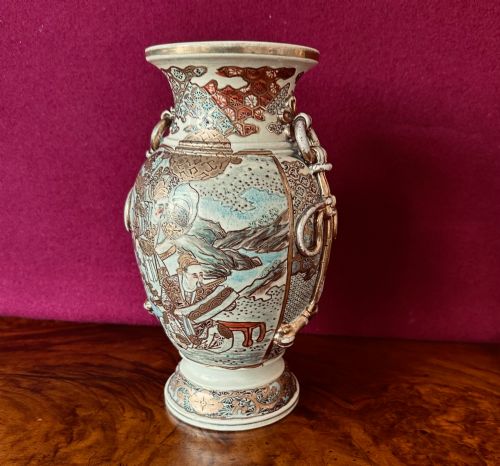
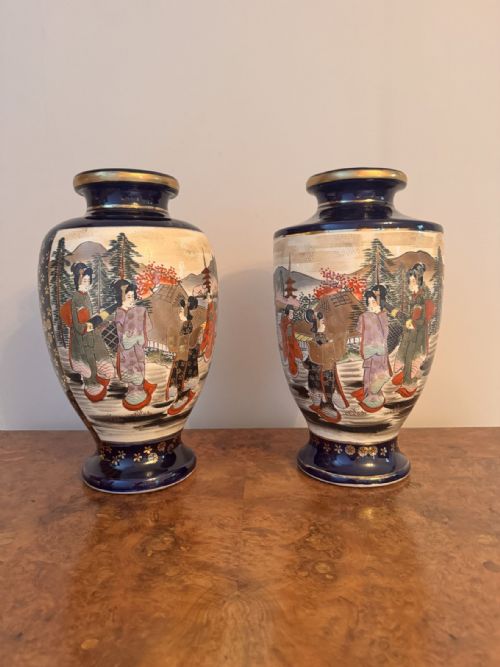
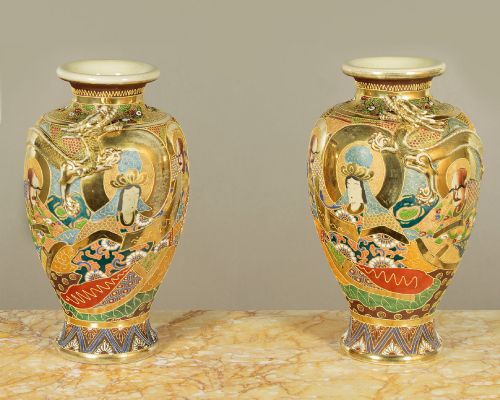
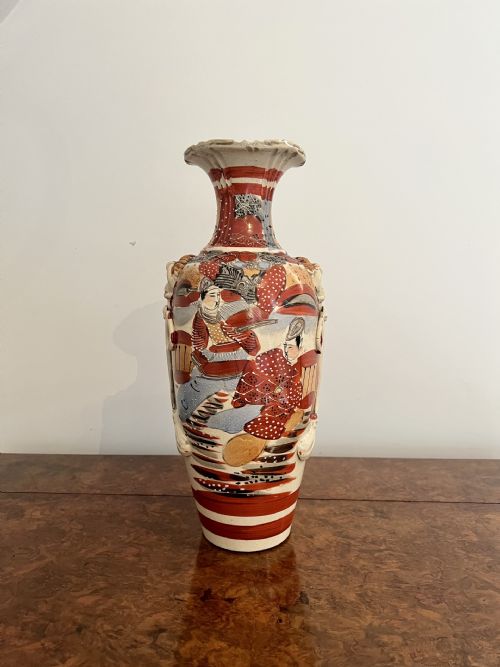
Vintage satsuma pottery urns bring rich Japanese artistry into a room, offering intricate painted scenes highlighted in gilt.
Vintage Satsuma Pottery Urns
Vintage satsuma pottery urns encompass decorative vessels, lidded urns, and vases originating from Japan across the Meiji, Edwardian, and Showa periods. Buyers searching this phrase most commonly encounter pairs of vases adapted into table lamps or standing as decorative mantel ornaments from the late nineteenth and early twentieth centuries.
The forms range from small miniature vases and bulbous shapes to large hexagonal and lidded vessels. Many pieces reflect Japanese Meiji period aesthetics alongside later Showa and Japonisme influences.
Origins span Kyoto workshops and specific maker signatures, creating a diverse selection of hand-painted earthenware objects. The aesthetic relies heavily on traditional figures, family scenes, wisteria gardens, and landscape motifs.
Materials and construction
The foundation of these pieces is earthenware ceramic, shaped into various vase and urn forms before receiving detailed hand-painted decoration. Artisans applied fine enamel colours to depict complex figural processions and natural scenes.
Gold leaf and gilt detailing frequently accentuate the painted designs, adding bright highlights against the crazed glaze background. Some twentieth-century examples incorporate wood, brass, or fabric elements when converted into table lamps.
Current listings feature earthenware vases and table lamps spanning the nineteenth century through the 1930s.
Assessing quality and execution
Quality rests upon the precision of the hand-painted detail and the complexity of the subject matter, such as multi-figure processions versus simple landscapes. Finer pieces demonstrate careful brushwork and deliberate placement of gilt highlights.
The clarity of the earthenware body and the consistency of the enamel work distinguish superior examples. Pieces bearing signatures from recognised Kyoto makers often show a higher standard of artistic execution.
Chosei·Hakusan·Kinkozan·Hattori
The Vintage Satsuma Pottery Urns Glossary
- Satsuma
- Earthenware pottery originating from Satsuma province in Japan, known for its distinctive cream-coloured, crackle-glazed surface and intricate enamel decoration.
- Meiji Period
- The era of Japanese history lasting from 1868 to 1912, characterised by opening trade with the West and prolific decorative arts production.
- Gilt
- A thin layer of gold applied to the surface of the ceramic to highlight specific areas of the painted design.
- Earthenware
- Porous pottery fired at lower temperatures, serving as the traditional base material for Satsuma wares.
- Japonisme
- The influence of Japanese art on Western aesthetics, particularly prominent in European design during the late nineteenth century.
Vintage Satsuma Pottery Urns: Frequently Asked Questions
What is satsuma pottery?
Satsuma pottery is a type of Japanese earthenware traditionally recognised by its ivory-coloured body and fine crackle glaze. Artisans decorated these surfaces with detailed enamel paints and gold leaf.
Most pieces feature elaborate figural scenes, landscapes, or floral motifs. The style gained immense popularity in the West during the late nineteenth century.
How do I date satsuma urns?
Dating involves examining the style of decoration, the type of ceramic body, and any signatures or studio marks present on the base. Meiji period pieces often display dense, meticulous hand-painted details.
Later pieces from the Edwardian and Showa periods may show different colour palettes or modern adaptations such as lamp fittings. Comparing the motifs to documented maker outputs helps narrow the timeframe.
Can I use them as lamps?
Many vintage satsuma vases and urns were converted into table lamps during the early twentieth century. These conversions incorporate electrical fittings alongside the original ceramic bodies.
They function well as decorative lighting in living spaces. Care should be taken to check the wiring when living with vintage lamp conversions.
How do I clean satsuma pottery?
Cleaning requires a soft, dry cloth to gently remove dust from the textured surface. Avoid using water, harsh chemicals, or abrasive cleaners on the delicate enamel and gilt.
Preserving the fragile crackle glaze and gold leaf is essential for maintaining the appearance of the piece. Regular gentle dusting keeps the surface safe from buildup.