

Vintage Salon Armchairs
Vintage salon armchairs bring French and Victorian elegance to a room, offering compact seating wrapped in period textiles and carved wood frames.
Vintage Salon Armchairs
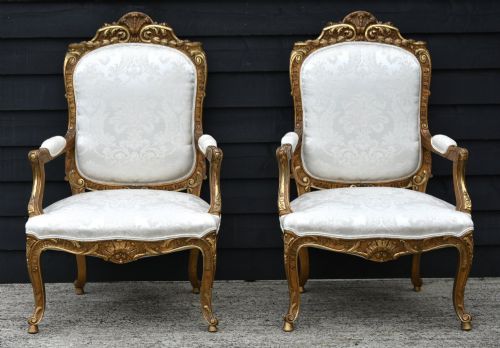
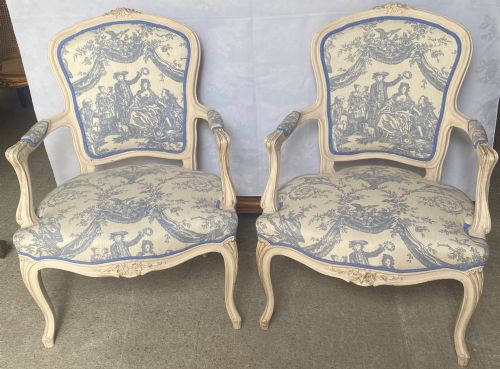
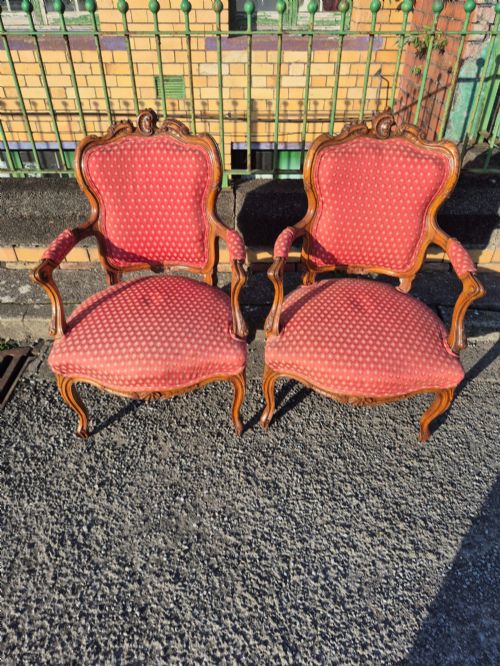
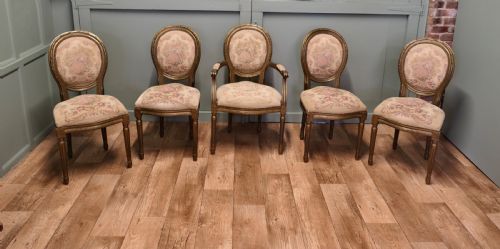
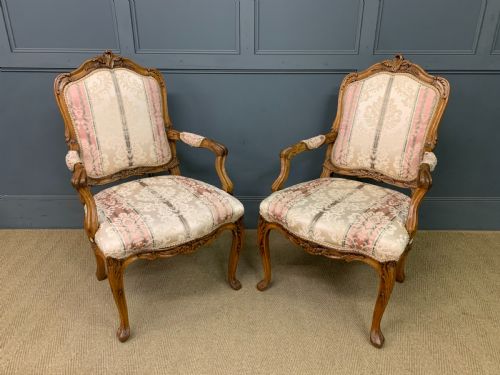
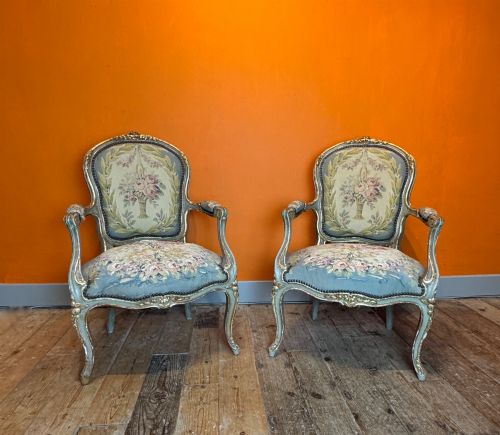
Vintage salon armchairs encompass nineteenth-century and early twentieth-century seating designed for formal rooms, drawing rooms, and bedrooms. The selection on this page leans heavily toward French models, including pairs and suites reflecting Louis XV and Louis XVI revivals, alongside British Victorian examples.
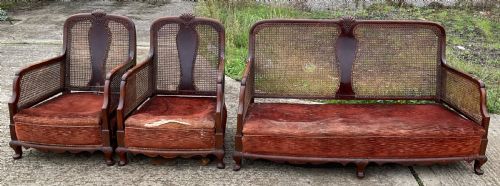
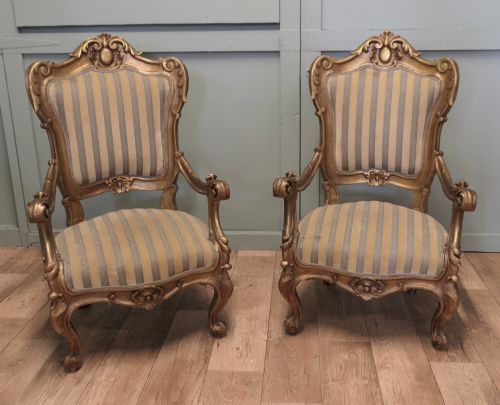
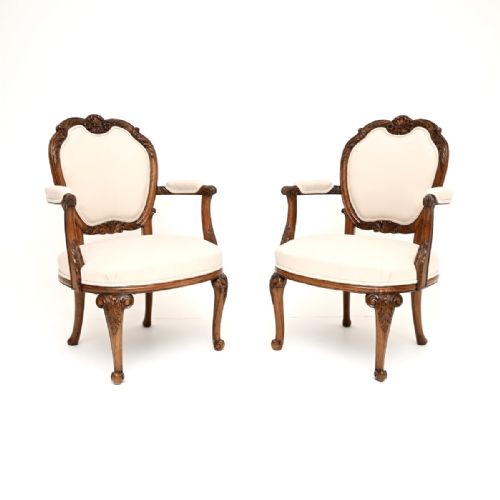
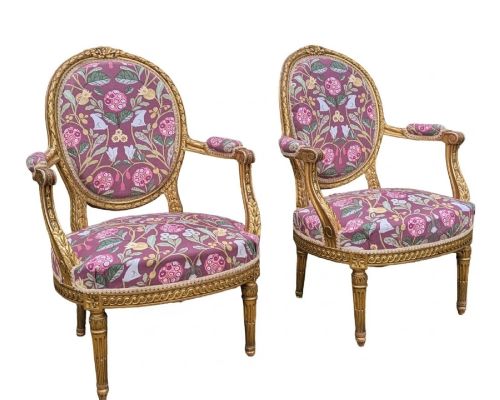
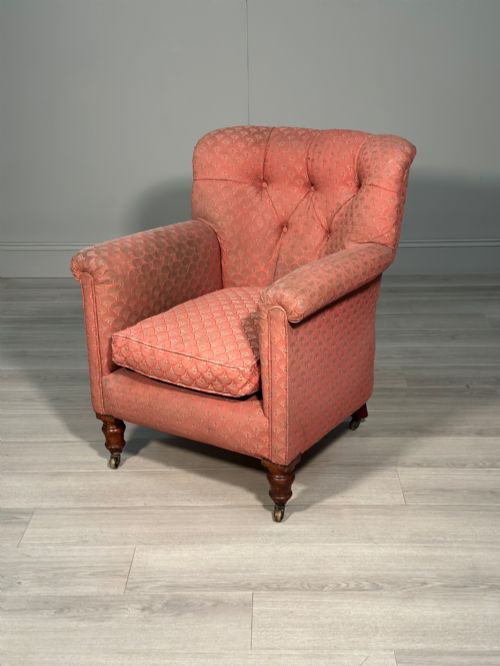
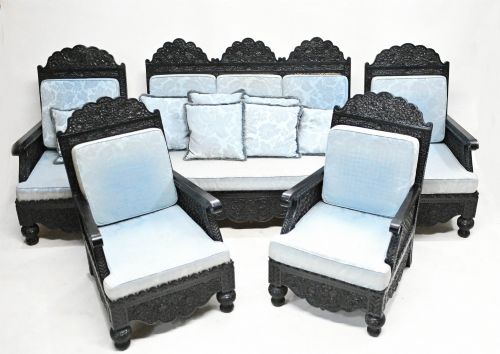
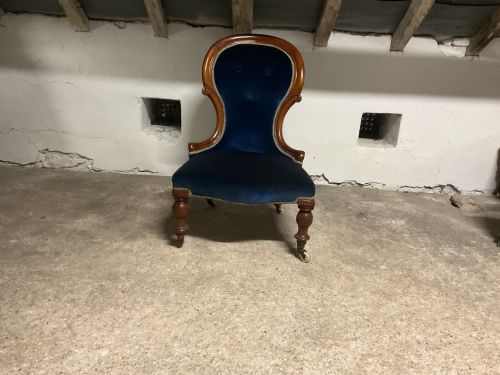
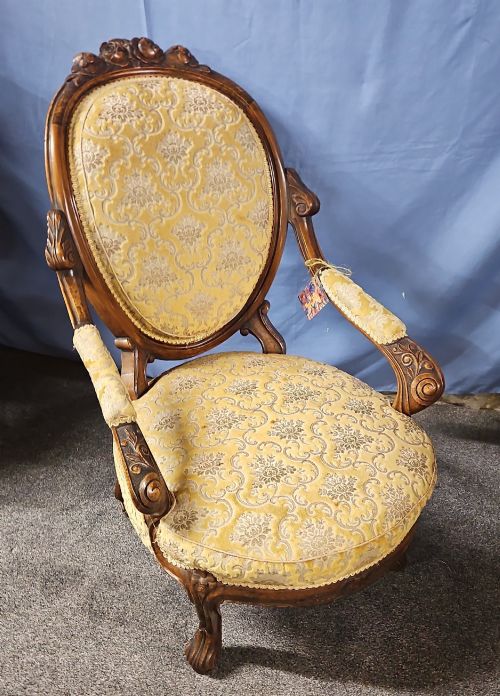
Forms range from open-armed fauteuils and carved giltwood frames to walnut spoonback chairs, nursing chairs, and inlaid mahogany corner chairs. Buyers encounter single chairs, matched pairs, and larger salon suites comprising settees and matching armchairs.
Origins stretch across French workshops and British Victorian parlours, spanning the Victorian and Edwardian eras. These pieces serve as decorative accent seating that carries distinct period proportions and traditional upholstery.
How they were made
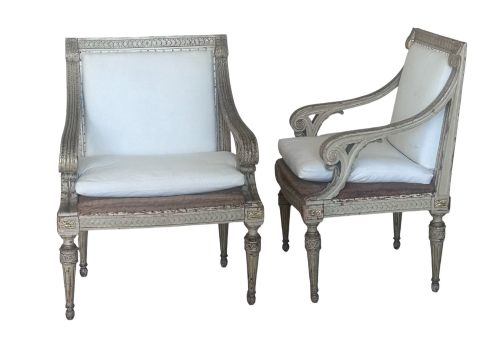
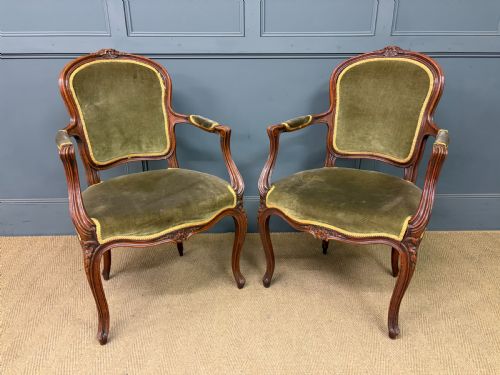
Frames rely on solid timbers such as walnut, mahogany, oak, and rosewood, alongside giltwood and painted finishes. Carvers shaped these woods into cabriole legs, scroll arms, and elaborate crest rails, occasionally employing parcel gilt highlights.
Upholstery methods involve traditional stuffing techniques paired with distinctive cover materials including velvet, leather, needlepoint tapestry panels, and printed fabric. Details like button backs, string inlay, and brass elements complete the construction.
Vintage Salon Armchairs Retail Price Guide 2026
Typical asking prices for vintage salon armchairs among the pieces listed under this phrase on Sellingantiques today, from the lower quarter to the upper quarter. They describe what is for sale here now, not the wider market.
Listings feature nineteenth-century and early twentieth-century pieces spanning Victorian, Edwardian, and French revival styles built from walnut, mahogany, and giltwood.
What varies in quality
The crispness of the wood carving dictates the distinction between standard production and superior craftsmanship, where hand-chiseled detail defines the frame. French giltwood and carved walnut examples often display deeper relief and more fluid lines.
The integrity of the frame construction and the fidelity of revival styles, such as Louis XVI taste or Rococo curves, separate workshop pieces from massed output. Original textiles and needlepoint panels add historical weight to surviving chairs.
Mellier and Co·C Hindley and Sons
The Vintage Salon Armchairs Glossary
- Bergère
- An enclosed armchair with upholstered sides and back, often featuring cane panels or tight upholstery. It provides a deeper seat than an open armchair.
- Spoonback
- A chair back shaped in a concave curve resembling the bowl of a spoon, common in Victorian seating. This design supports the sitter's spine.
- Giltwood
- Timber treated with gold leaf or gilt paint to create a metallic decorative surface. It appears frequently on revival salon chairs.
- Needlepoint
- Hand-stitched canvas work utilised for upholstery panels on period chairs. These decorative textiles often depict floral or pastoral scenes.
Vintage Salon Armchairs: Frequently Asked Questions
How do I identify a French salon armchair?
French salon armchairs display characteristic revival styling such as Louis XV or Louis XVI curves, cabriole legs, and exposed carved wood frames. Look for beech, walnut, or giltwood structures paired with traditional upholstery like needlepoint or silk.
British Victorian equivalents tend to utilise mahogany or rosewood with heavier proportions, button backs, or spoonback designs. Regional details and construction methods further distinguish continental workshops from British cabinetmakers.
Where should I place a salon armchair?
Salon armchairs suit drawing rooms, bedrooms, and studies as accent seating rather than primary lounging chairs. Their compact scale allows them to fit neatly into corners or alongside small tables.
Pairs look balanced placed opposite a fireplace or flanking a sofa. Their decorative carved frames ensure they read well from any angle in a room.
Are these chairs comfortable for daily use?
These chairs offer upright seating intended for formal reception rooms rather than deep lounging. Their supportive backs and padded arms provide pleasant seating for reading or conversation.
Seat depths and heights vary across nineteenth-century and Edwardian models. Buyers seeking softer comfort often look for upholstered Victorian easy chairs or sprung salon suites.
Can I mix different chair styles together?
Mixing French giltwood frames with Victorian walnut seating creates a layered interior common to eclectic period styling. Matching wood tones or upholstered fabrics helps unify disparate pieces within a single room.
Pairs provide symmetry, while single occasional chairs introduce focal points. Period pieces from the nineteenth century blend easily when scale and finish share a common elegance.