


Vintage Sailboat Wall Art
Vintage sailboat wall art brings maritime character into a room through oil and watercolour depictions of coastal vessels.
Vintage Sailboat Wall Art
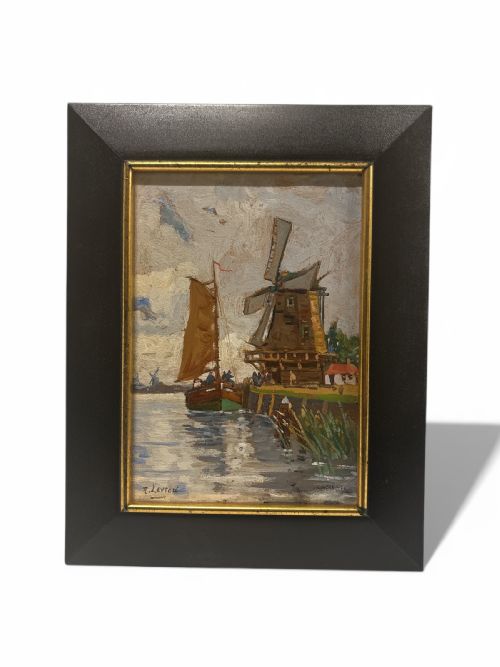
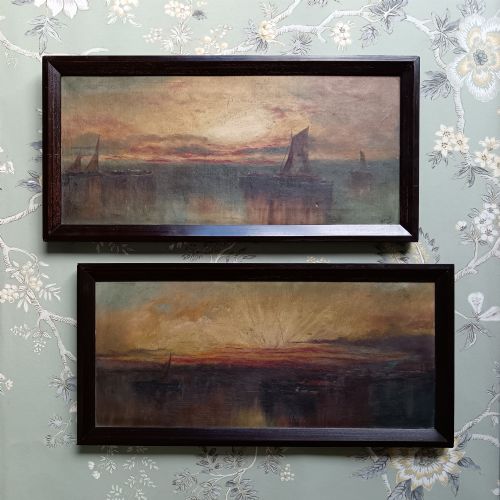
Vintage sailboat wall art comprises framed paintings and watercolours depicting maritime scenes, coastal views, and marine vessels. These works capture rivers, harbours, and open seas from the nineteenth century through the mid-twentieth century. Buyers find everything from delicate watercolours to large oil paintings on canvas.
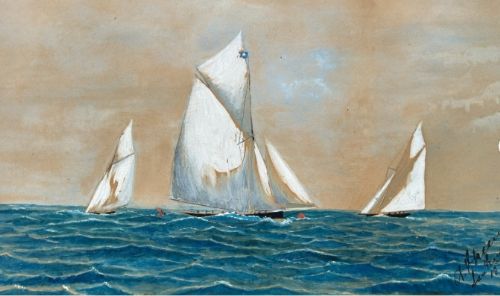
The selection on this page centres on period pieces executed in British Impressionism, Post-Impressionism, and nineteenth-century maritime styles. Common subjects include fishing boats, racing yachts, and harbour entrances rendered by named artists and regional schools. Most examples date from the Victorian and Edwardian eras up to the nineteen-sixties.
Materials and methods
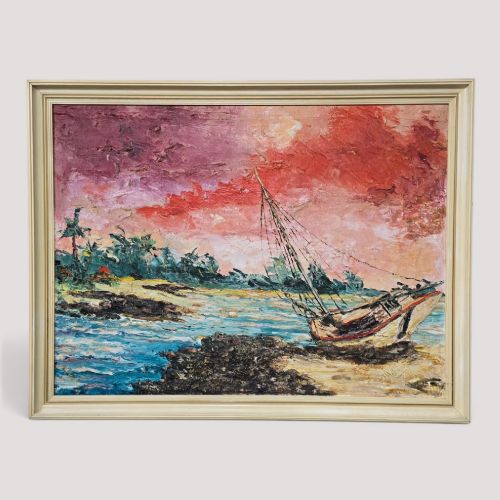
Painters of these marine scenes relied primarily on oil paint or watercolour applied to canvas, paper, or wood panels. Oil paint allowed artists to build rich impasto textures representing rough seas and billowing sails, while watercolour suited the translucent light of coastal skies.
Many works retain their original period frames, often finished with gilt details that complement the maritime subject matter. Glass protects the delicate paper and watercolour pieces, while canvas works typically remain unglazed on stretcher frames.
Listings span from the nineteenth century through the nineteen-sixties, utilising oil paint, watercolour, and canvas.
Judging quality in marine works
Quality rests upon the artist's handling of light, water, and vessel perspective. Superior pieces demonstrate a confident command of atmosphere, accurately capturing the play of sunlight on waves or the moody tones of a moonlit seascape.
The strength of the composition and the preservation of the medium dictate the standing of a piece. Stronger works convey movement and maritime atmosphere convincingly, whereas lesser examples rely on formulaic layouts and flat application of paint.
R Leyton·B. Nash·Elisabeth Bardon·Richard Harry Carter·Louis Suire·Norman Lloyd·Edward Seago·Ernest F. Hill·Stanley Orchart·George Henry Knight·E Tucker·Gustave de Breanski·John McDougal·Paul Jean Clays·Antonio Godoy·Harry Wanless·Johan Jens Neumann·Bertram Priestman
The Vintage Sailboat Wall Art Glossary
- Impasto
- Paint applied thickly to a canvas, standing out in relief from the surface. This technique brings a tangible texture to crashing waves and billowing sails.
- Watercolour
- A paint consisting of pigment suspended in a water-based solution, typically applied to paper. It creates luminous washes ideal for coastal skies and calm seas.
- Gilt
- A thin layer of gold leaf applied to wood to decorate a picture frame. It adds a warm metallic border around the artwork.
- Maritime
- Depicting the sea, ships, and nautical life. It forms the core subject category for these coastal paintings.
- Lugger
- A traditional two-masted fishing vessel with lug sails, frequently seen in nineteenth-century coastal art.
Vintage Sailboat Wall Art: Frequently Asked Questions
What periods do these paintings come from?
The works span from the nineteenth century through the Edwardian era and into the mid-twentieth century.
Most pieces date between the eighteen-eighties and the nineteen-sixties, capturing changing artistic movements like impressionism.
How should I hang a canvas marine painting?
Canvas works should hang away from direct sunlight and excessive moisture to protect the oil paint and wood stretcher.
Ensure sturdy wall fixings support the weight of the frame, particularly for large oil paintings.
Are watercolours framed under glass?
Paper and watercolour pieces require glass protection to shield them from dust, humidity, and atmospheric damage.
Keep these framed works in stable indoor environments to preserve the integrity of the paper.
How do I identify a Victorian marine painting?
Victorian maritime works often feature detailed rigging on sailing ships, dramatic coastal lighting, and traditional fishing luggers.
Signatures, dates, and framing styles also help pinpoint the nineteenth-century origin of the canvas.