




French Impressionist Seascape
A French impressionist seascape captures coastal light and water through loose brushwork, offering buyers a direct connection to Mediterranean and Atlantic shores.
French Impressionist Seascape
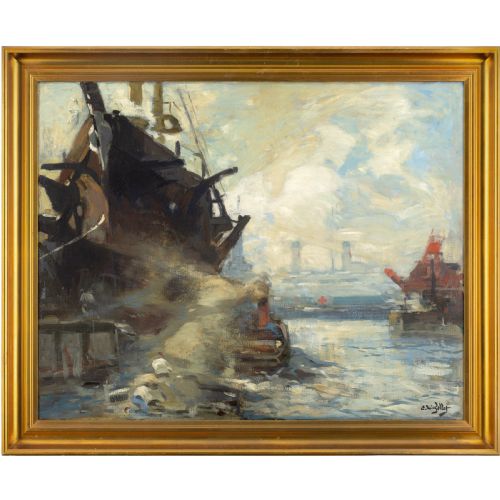
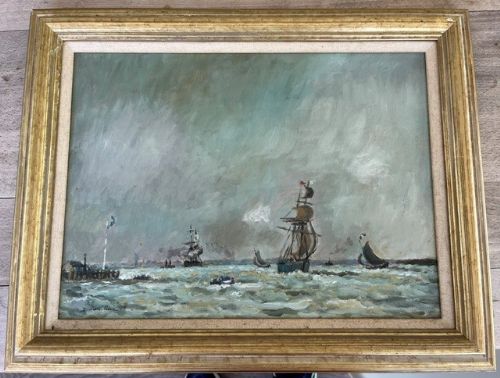
When you search for a french impressionist seascape, you encounter framed paintings depicting harbours, coastal cliffs, and open water along the French coastline. These works capture specific locations such as Normandy, Brittany, and the Côte d'Azur under changing atmospheric conditions.
The selections on this page span from the late nineteenth century through to the mid-twentieth century, recording ports, fishing vessels, and marine views. You meet pieces executed in oil on canvas, oil on board, and watercolour on paper, often housed in period frames with gilt details.
How They Were Made
Artists built these coastal compositions using oil paint on canvas or board, applying pigments with visible, textured brushstrokes to render moving water and changing skies. Some works employ impasto techniques to build physical depth on the surface, while others utilise watercolour washes on paper.
Support materials include wood panels, stretched canvas, and paper, frequently paired with carved or moulded gilt frames that complement the maritime subject matter.
The listings span periods from 1870 to 1960, employing materials that include oil on canvas, watercolour, and textured paint on board.
What Varies In Quality
Quality rests in the handling of light and atmosphere across the water, separating dynamic observational works from formulaic harbour scenes. The surety of the brushwork and the harmony of the colour palette determine the visual strength of each composition.
The preservation of the original paint layer and the integrity of the period frame influence the overall character of the piece. Works that retain their untouched surface texture and authentic ground convey the intended immediacy of the maritime subject.
Eugène-Louis Gillot·Hector Caffieri·Erich Mercker·Elisabeth Bardon·Louis Suire·Gustave Vidal·Jean-Baptiste Olive·Raymond Picque·William Lee Hankey·Charles Malfroy·Roger de la Corbiere·Owen Bowen
The French Impressionist Seascape Glossary
- Impasto
- Paint applied thickly to a canvas or board, creating a textured surface that stands proud of the support. This technique captures the physical quality of sea spray and churning waves.
- Gilt
- A thin layer of gold leaf or metallic finish applied to frames. It provides a reflective border that isolates the marine composition from its surroundings.
- Board
- A rigid wooden or composite panel used as a painting support instead of stretched canvas. Artists frequently utilised board for smaller plein air studies executed on location.
- Watercolour
- Pigment suspended in a water-based, transparent solution applied to paper. It yields luminous washes well suited to capturing coastal skies and open water.
French Impressionist Seascape: Frequently Asked Questions
What is a french impressionist seascape?
A french impressionist seascape is a painting that depicts coastal views, harbours, and the sea using the loose brushwork and light-focused approach characteristic of the impressionist movement.
These works record specific locations along the French coastline, ranging from Normandy fishing ports to Mediterranean coves, produced from the late nineteenth century to the mid-twentieth century.
How were these marine paintings displayed?
These works were traditionally housed in wooden frames, often finished with gilt details, designed to complement the tones of the canvas.
The frame isolates the coastal scene and protects the edges of the canvas or board from physical damage over time.
Where were these coastal scenes painted?
Artists painted these scenes along the French coasts, including the rugged shores of Brittany, the cliffs of Normandy, and the sunlit waters of the Côte d'Azur.
Many practitioners worked directly on location to capture transient effects of light on the water and harbour activity.
How do I care for an oil on board painting?
Keep the painting away from direct sunlight and steady fluctuations in humidity to protect both the wooden support and the oil paint layer.
Avoid using liquid cleaners on the surface, relying instead on a soft, dry brush to remove dust from the frame and painted area.