




Vintage Sailboat Painting
These vintage sailboat painting examples capture maritime history on canvas and paper, drawing collectors to coastal scenes from the nineteenth and twentieth centuries.
Vintage Sailboat Painting
A vintage sailboat painting typically portrays coastal waters, harbour activities, and open seas through the lens of nineteenth and twentieth-century artistic movements. These works range from tightly detailed Victorian maritime studies to looser Impressionist and Post-Impressionist interpretations.
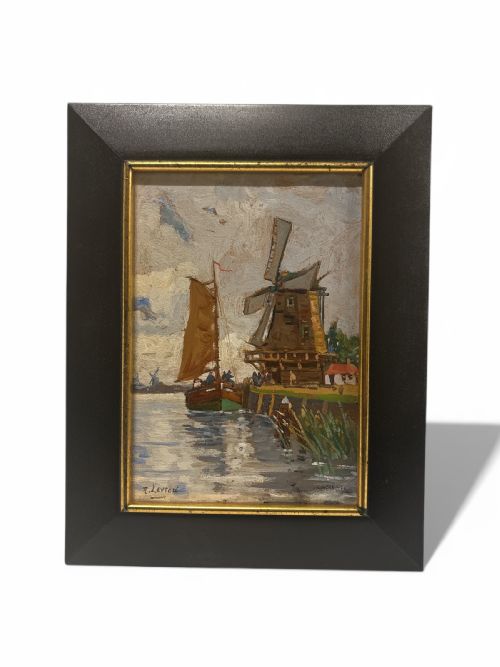
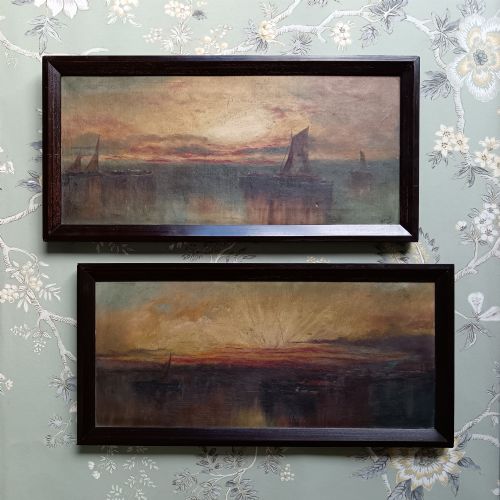
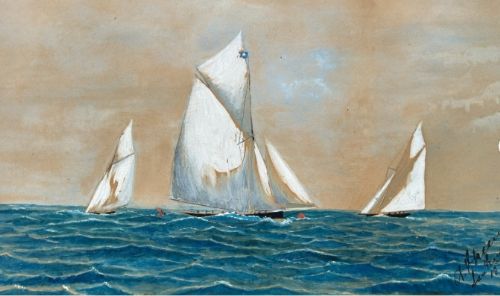
The selections available here lean heavily towards framed oil paintings and watercolours on paper, canvas, or board. Landscapes span British, French, and wider European settings, capturing working luggers, racing yachts, and quiet coastal inlets.
How They Were Made
Artists relied primarily on oil paint or watercolour applied to stretched canvas, wooden board, or heavy paper. Oil works often display textured impasto and rich pigment layers, whereas watercolours utilise thin, translucent washes to capture changing light on water.
Framing frequently involves wood and gilt mouldings under glass for works on paper, protecting the delicate pigments while framing the maritime subject matter.
Vintage Sailboat Painting Retail Price Guide 2026
Typical asking prices for vintage sailboat painting among the pieces listed under this phrase on Sellingantiques today, from the lower quarter to the upper quarter. They describe what is for sale here now, not the wider market.
Listings feature works spanning the nineteenth century, Edwardian period, and mid-twentieth century, created using oil, watercolour, canvas, and wood.
What Varies in Quality
The distinction between standard works and exceptional pieces rests upon the artist's handling of light, atmospheric perspective, and water movement. Superior examples demonstrate a confident command of tone that instantly evokes the specific weather and mood of a coastal day.
Condition and provenance further influence the standing of each piece, particularly regarding the preservation of original canvas grounds, watercolour pigments, and period frames.
R Leyton·B. Nash·Elisabeth Bardon·Richard Harry Carter·Louis Suire·Fred Pailhes·Norman Lloyd·Adrian Van Porten·William Tuck·Edward Seago·Hendrik Willebrord Jansen·Samuel Owen·Charles Harmony Harrison·Ernest F. Hill·Stanley Orchart·George Henry Knight·E Tucker·Gustave De Breanski·John McDougal·Paul Jean Clays·Antonio Godoy
The Vintage Sailboat Painting Glossary
- Impressionism
- A nineteenth-century art movement characterised by relatively small, thin, yet visible brush strokes and an emphasis on accurate depiction of light. This technique allowed marine painters to capture shifting reflections on the sea.
- Impasto
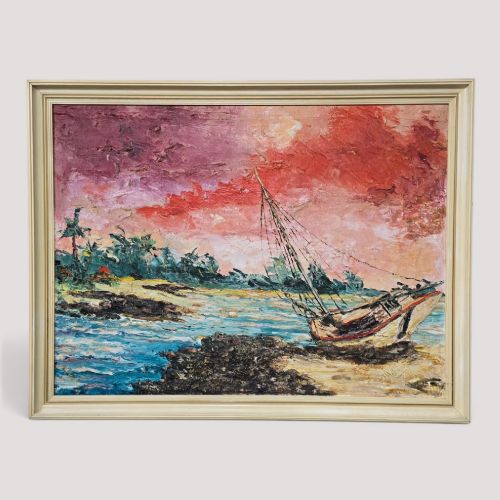
- The process or technique of laying on paint or spread thickly on a surface, so that it stands out from it. Artists utilise this method to render the thick texture of churning waves or foaming sea spray.
- Lugger
- A small two- or three-masted fishing vessel carrying lug sails. These working boats frequently appear in West Country and French coastal scenes from the Victorian era onwards.
- Provenance
- The chronology of the ownership or location of a historical object. Clear provenance helps verify the attribution of nineteenth-century marine watercolours and oils.
Vintage Sailboat Painting: Frequently Asked Questions
What periods do these paintings cover?
The inventory spans from the nineteenth century through the Edwardian era into the mid-twentieth century, including works dated from the 1860s up to the 1960s.
These dates reflect shifting artistic movements, moving from detailed Victorian maritime traditions towards Impressionist interpretations of light and water.
Are these works created with oil or watercolour?
Both mediums appear frequently across the selection, featuring oil paints on canvas, board, alongside delicate watercolours on paper.
Oil paintings often provide thick textures and deep pigments, whereas watercolours present a lighter, translucent approach to coastal scenes.
How do I identify a Victorian maritime painting?
Victorian marine works tend to exhibit precise detail regarding ship rigging, architectural harbour walls, and traditional working vessels like trawling luggers.
They often contrast sharply with the looser brushwork found in later twentieth-century Impressionist interpretations of the sea.
Where were most of these coastal scenes painted?
The geographic origins include British coastal regions such as Cornwall and Devon, alongside French locations like Brittany, Normandy, and the Mediterranean.
Artists frequently travelled to active fishing ports and sheltered river estuaries to capture working boats and coastal architecture.