
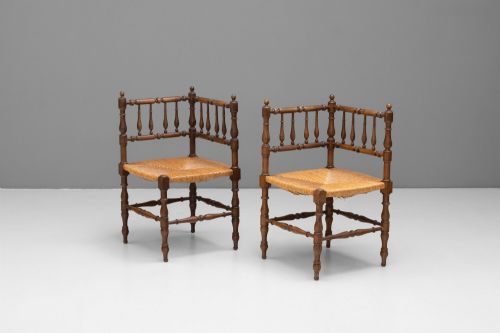
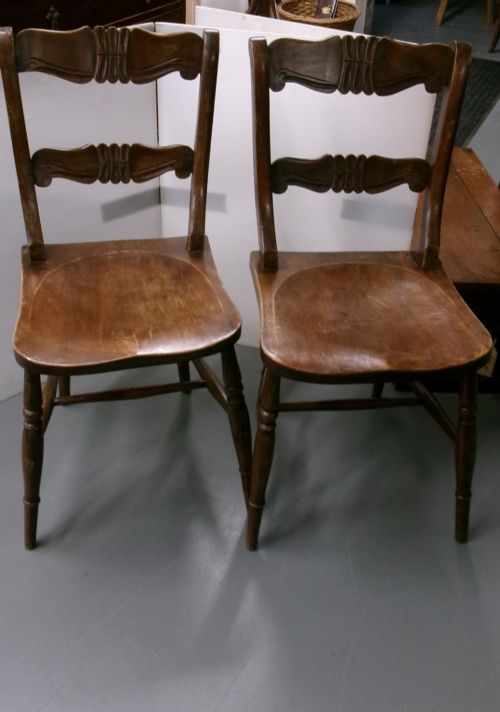


Vintage Rustic Chair Pair
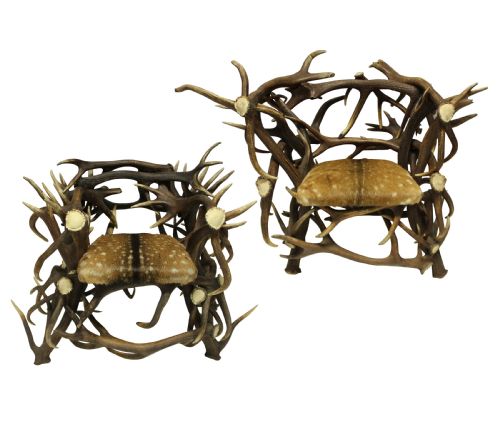
These vintage rustic chair pair listings offer country seating built from elm, ash, and oak to bring traditional farmhouse character into a room.
Vintage Rustic Chair Pair
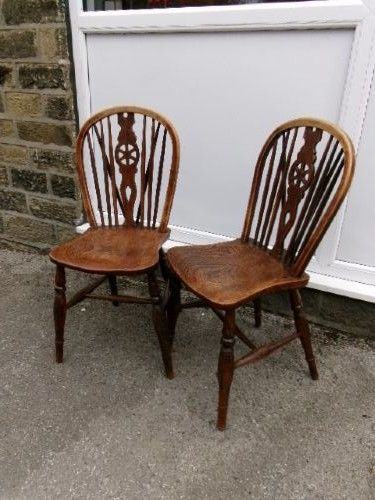
When you search for a vintage rustic chair pair, you encounter domestic seating rooted in country kitchen traditions and vernacular design. These sets span various regional forms including Windsor wheelbacks, stick backs, ladder backs, and folk chairs from the eighteenth, nineteenth, and early twentieth centuries.
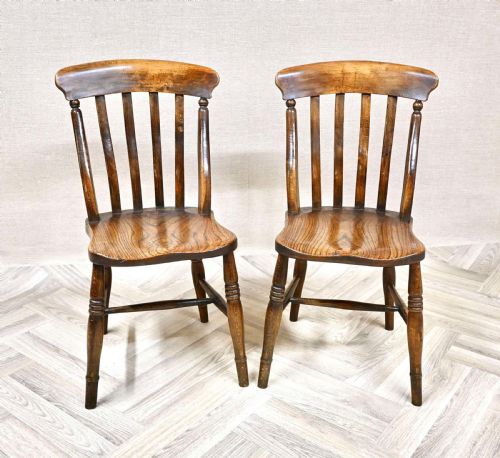
The most common examples on this page are nineteenth-century kitchen and dining chairs featuring elm seats combined with beech or ash framing. You also find specialised seating such as carvers, corner chairs, and armchairs designed for farmhouse hearths and rustic interiors.
How they were made
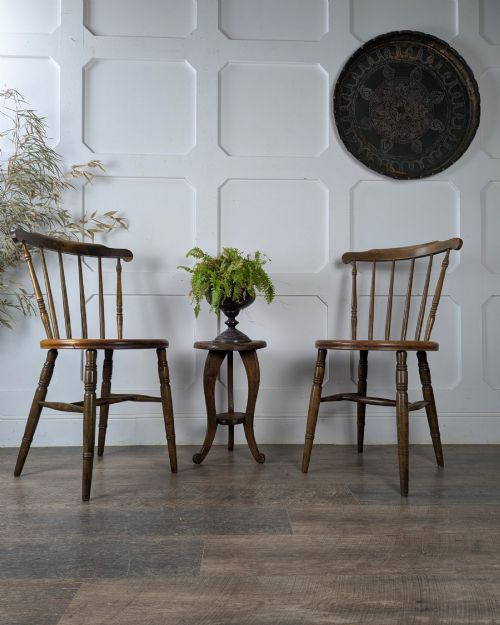
Cabinet makers and rural bodgers constructed these chairs using solid native timbers such as elm for scooped seats and ash or beech for turned spindles and legs. Parts were frequently steam-bent to form horseshoe rails and comb backs before being pegged and wedged together.
Surface finishes range from scrubbed bare wood showing natural grain to historic painted coats and polished patinas developed through generations of domestic use. Rush seating also appears in specific spindleback designs, woven tightly over wooden frames.
Materials span native hardwoods including elm, ash, beech, and oak, alongside painted finishes and woven rush seats.
What varies in quality
The distinction between standard utility seating and finer examples lies in timber selection, particularly the depth of figuring in elm seat planks and the crispness of turning on spindles and legs. Pairs that retain matching proportions and uniform timber degradation hold greater visual harmony.
Structural integrity depends on the original joinery and subsequent maintenance, where tighter tolerances in wedged tenons and lesser movement in the wood preserve the original stance of each chair.
The Vintage Rustic Chair Pair Glossary
- Windsor chair
- A wooden chair built with a thick solid timber seat into which the legs and back spindles are separately inserted. They often feature bentwood bow backs and sculpted arm rests.
- Wheelback
- A specific Windsor variation featuring an ornamental pierced splat shaped like a cartwheel in the centre of the backrest. This decorative detail gained popularity during the nineteenth century.
- Bobbin turning
- A type of decorative woodwork formed on a lathe to resemble a series of wooden bobbins or spools linked together. It appears frequently on seventeenth and eighteenth-century furniture legs and stretchers.
- Rush seat
- A traditional woven seat made from dried marsh rushes twisted into cords and hand-plaited across the chair frame. It provides a flexible and durable surface for country dining chairs.
- Stick back
- A minimalist chair design where plain turned vertical spindles form the backrest without a central splat. These functional pieces were standard in British kitchens and cottages.
Vintage Rustic Chair Pair: Frequently Asked Questions
Are these chairs comfortable for daily dining?
Many nineteenth-century kitchen chairs feature deeply saddled elm seats carved to fit the human body, offering surprising support during long meals.
Their upright proportions and sturdy wooden construction make them practical for daily use around a kitchen table.
How do I match a near pair of chairs?
A near pair typically shares the same general era, timber species, and vernacular style, such as similar Windsor or ladderback profiles.
Minor variations in height or turning details are normal in antique country furniture and add to their collected character.
What is the difference between a carver and a side chair?
Carver chairs include integrated armrests designed for the head of a table or fireside placement, requiring more space in a room.
Side chairs are armless and compact, built to tuck neatly under standard dining tables in multiples.
How should I care for antique elm and ash timber?
Keep wooden chairs away from direct heat sources and sudden temperature shifts to prevent timber shrinkage and loose joints.
Apply a traditional beeswax polish occasionally to nourish the dry grain and maintain the natural lustre of the wood.