

Vintage Rural Wall Art
Vintage rural wall art captures the quiet rhythms of the countryside through painted canvas, card, and paper.
Vintage Rural Wall Art
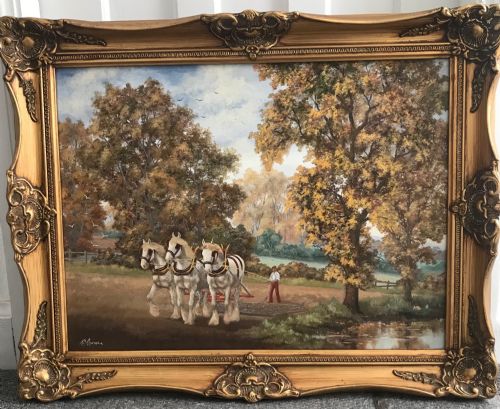
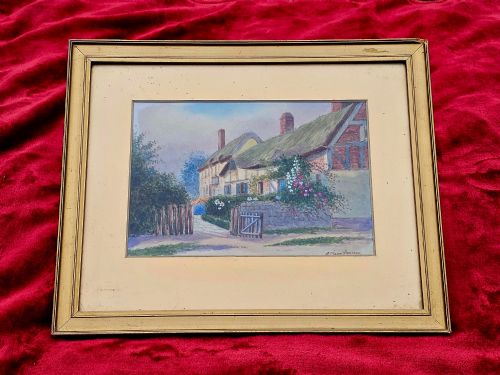
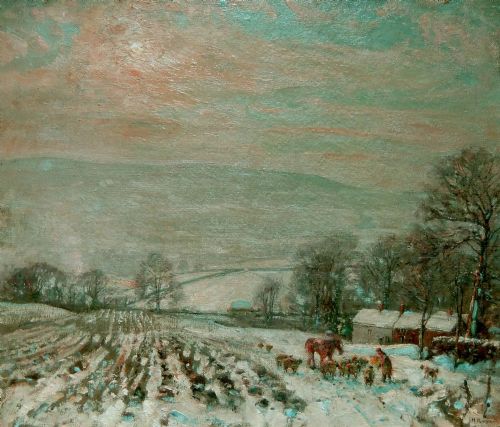
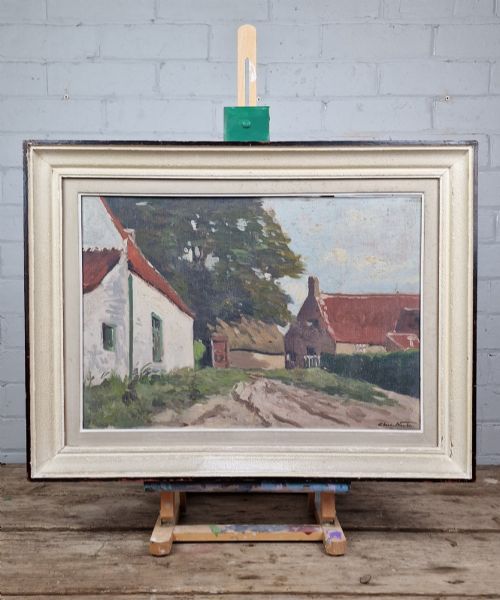
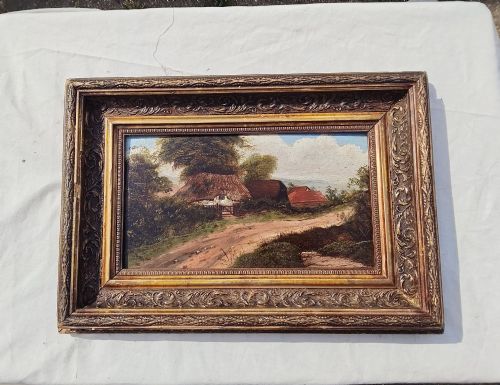
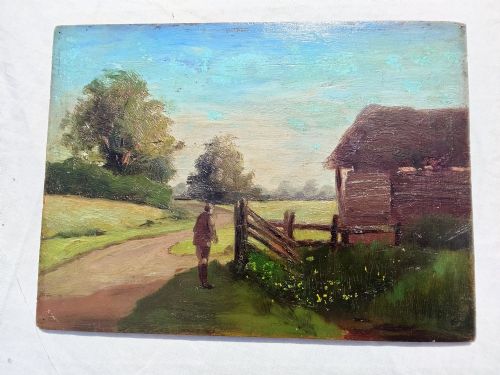
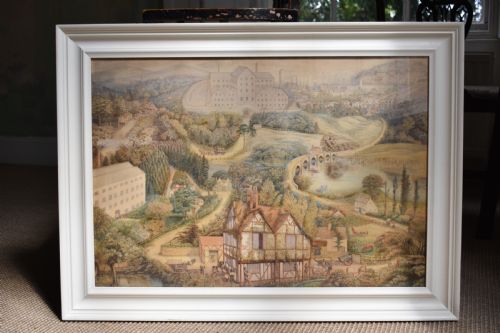
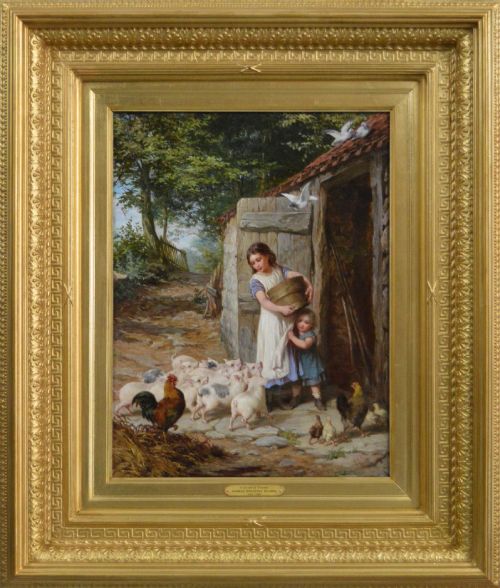
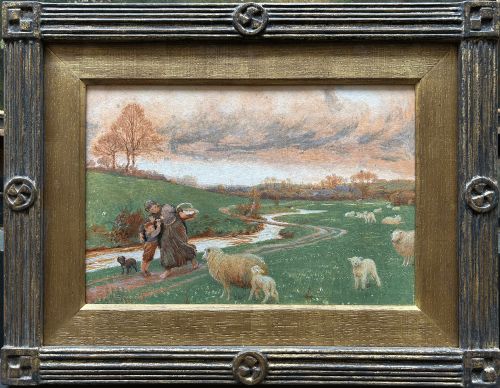
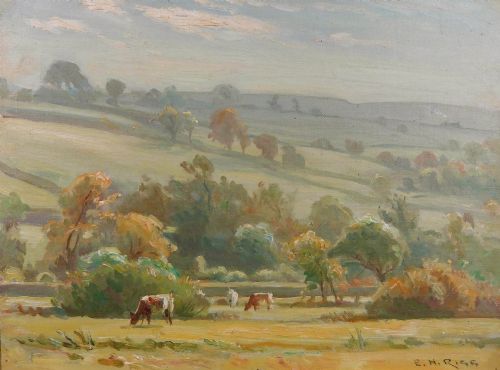
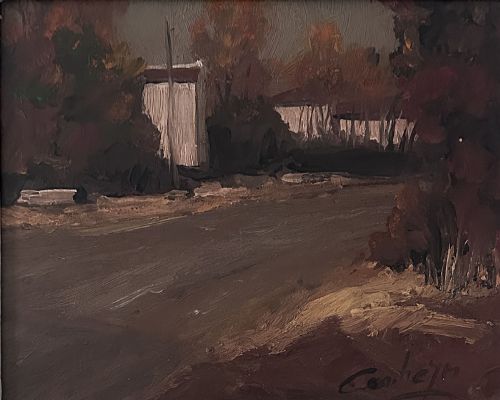
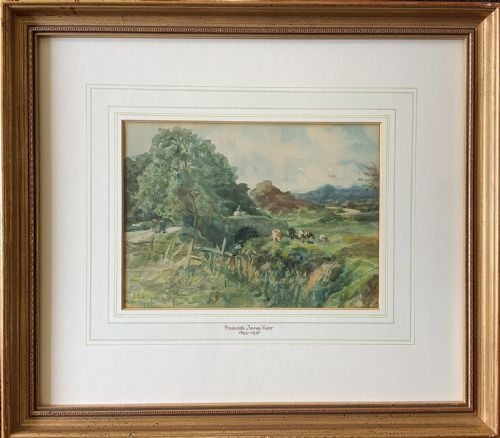
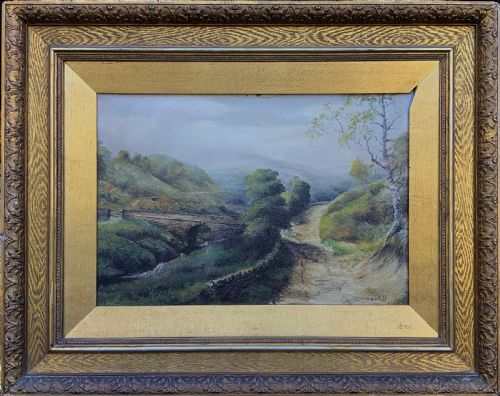
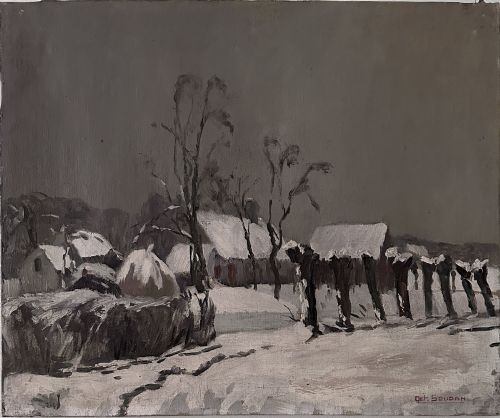
Vintage rural wall art comprises oil paintings, watercolours, and framed artworks depicting traditional country scenes, farmyards, and agricultural landscapes. These works span the nineteenth and twentieth centuries, incorporating periods from Victorian and Edwardian times through to the mid-century decades.
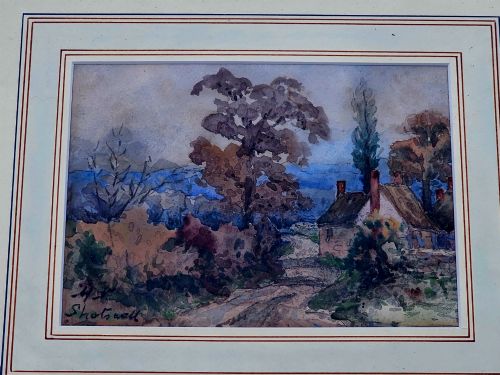
The most common pieces encountered here are oil paintings on canvas or board and delicate watercolours on paper. Subjects frequently feature cottages, livestock, working horses, and pastoral views created by British, French, and Belgian artists.
Buyers seek these framed pieces to bring a sense of historical landscape and traditional rural life into domestic interiors. Each artwork acts as a visual record of agricultural methods and countryside architecture from past eras.
Materials and methods of creation
Artists relied primarily on oil paint applied to canvas, wooden board, or card, building texture and depth with traditional brushwork. Watercolours on paper provide a lighter, more translucent medium favoured for pastoral scenes and atmospheric weather effects.
Substrates varied according to the period and format, ranging from heavy woven canvas stretched over wooden frames to stiff card and thick watercolour paper. Protective glass frequently accompanied works on paper to shield delicate pigments from moisture and light.
Framing utilised wood, often moulded and gilt, anchoring the paintings and watercolours securely for wall display. Lithographs also appear as printed reproductions of original painted compositions.
Media used by these artists include canvas, wooden board, card, glass, and paper.
Distinctions in execution and condition
Quality rests upon the artist's ability to capture light, form, and atmospheric depth within the landscape rather than mere adherence to academic realism. Skilled handling of oil paint or watercolour creates believable movement in foliage, water, and animals.
Compositional balance and confident brushstrokes separate accomplished works from formulaic topographical sketches. The preservation of the original pigment vibrancy and the integrity of the substrate also determine the standing of each piece.
Subtle details in figures and livestock reveal the draughtsmanship of the maker, whether working in an impressionist manner or a traditional style.
A. Marie Parsons·Herbert Royle·Charles Houben·George Augustus Holmes·Frederick Walker·Ernest Higgins Rigg·Frederick James Kerr·Charles Edward Wilson·Sydney Yates Johnson·Charles Clair·Henry Charles Fox·William JB Jenkins·Reginald Grange Brundrit·Fred Lawson·John Hobson Nicholson·William Hoggatt·Ernest Pile Bucknall·Owen Bowen·James Orrock·Henry John Boddington·M. C. Hider·John Atkinson·Willem Anton Alexander Knip
The Vintage Rural Wall Art Glossary
- Oil painting
- A work created using pigments bound in a drying oil, typically applied to canvas or wood panel. This medium allows for rich colour blending and textured impasto surfaces.
- Watercolour
- A painting method where fine pigment powders are suspended in a water-soluble binder, usually applied to paper. It yields translucent washes of colour well suited to atmospheric landscapes.
- Post-Impressionism
- An art movement extending beyond impressionism that prioritised emotional response and expressive forms over optical naturalism. Works in this style employ distinct brushwork and simplified geometric elements.
- Impressionism
- A style emphasising the accurate depiction of light and its shifting qualities alongside ordinary subject matter. Painters used visible brush strokes and open compositions to capture momentary visual effects.
- British School
- A loose categorization for artists trained or working within Britain, encompassing regional landscapes and traditional rural portraiture. It reflects shared stylistic influences across generations of painters.
Vintage Rural Wall Art: Frequently Asked Questions
How do I date an old landscape painting?
Dating relies heavily on stylistic markers, artist signatures, framing materials, and the physical substrate such as canvas or board. Nineteenth-century works often show heavier varnish and darker palettes compared to brighter mid-century pieces.
Examining the back of the frame or stretcher can also reveal old labels, stamps, or handwritten inscriptions left by previous owners or galleries.
What is the difference between oil and watercolour?
Oil paint utilises a slow-drying oil binder that permits rich colour layering and visible texture on canvas or wooden panels. Watercolour uses water-soluble binders on paper, creating translucent and luminous effects.
Oils generally require sturdy wooden frames without glass protection, whereas watercolours need glazing to prevent moisture damage to the paper.
Where should I hang rural art at home?
These works suit traditional living spaces, dining rooms, and studies where organic wooden tones and heritage decor predominate. Placing them away from direct sunlight preserves the pigments on both canvas and paper.
Pairing similar rural subjects or matching nineteenth-century frames creates a cohesive gallery wall arrangement.
What does British School mean on a label?
The term denotes an artist trained or working within the British artistic tradition during a specific era. It groups together painters who shared regional subjects, techniques, and landscape conventions.
Such attribution often appears when an individual hand cannot be definitively named, pointing instead to a recognised cultural origin.