


Farmhouse Oil Painting
A farmhouse oil painting brings the quiet weight of rural land and agricultural buildings straight onto an interior wall.
Farmhouse Oil Painting
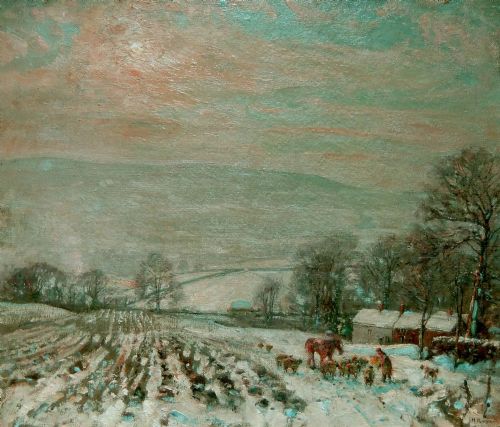
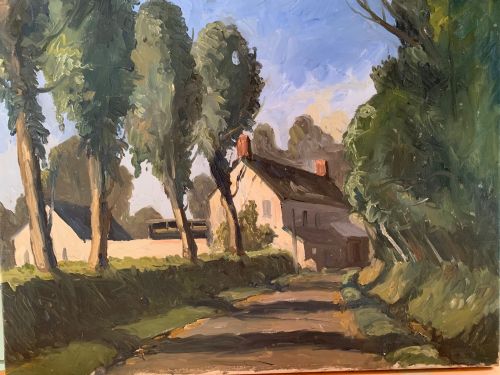
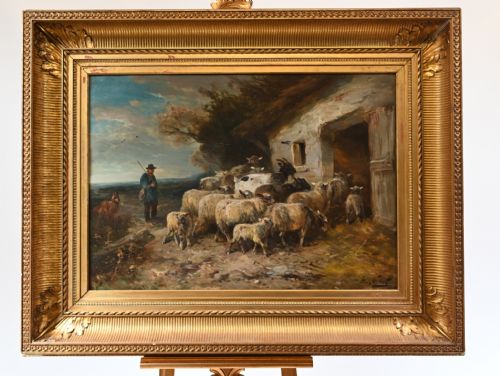
A farmhouse oil painting captures rural properties, agricultural yards, and pastoral landscapes through pigmented oil on support surfaces. The pieces here span the nineteenth century, the Victorian era, and various decades of the twentieth century, originating from British, French, and other European hands.
The subjects range from solitary cottages and working farmyards with sheep and plough teams to sunlit courtyards in Provence and Corsica. Buyers encounter both detailed realist depictions and looser post-impressionist or modernist interpretations.
Forms include framed wall art on stretched canvas, board, and panels, housed in wood or giltwood frames. These works reflect regional European artistic traditions from specific periods like the eighteen nineties and nineteen thirties.
Assessing quality and execution
Quality rests in the handling of light, brushwork confidence, and compositional balance rather than simple age. Superior pieces demonstrate purposeful application of paint that defines form and atmosphere without unnecessary stiffness.
The integration of the frame with the painting affects the overall coherence of the piece. Works that retain period wooden or giltwood frames show better original context than those with modern replacements.
The documented periods span the Victorian era, the nineteenth century, and twentieth-century decades up to nineteen sixty.
Herbert Royle·Henry Schouten·Raimond Louis Lecourt·James Kyd·Owen Bowen·Georgina Lara·John Westall·Maurice Dagron·Peter Marius Sand Holm·Maurice Wiliquet·W Lambert·Frederik Vermehren·Hans Andreasen Hessellund·Frederik Christian Kiaerskou·Gustav Vermehren
The Farmhouse Oil Painting Glossary
- Canvas
- A heavy woven fabric stretched across a wooden stretcher bar to serve as a painting surface. It provides a textured ground for oil paint.
- Giltwood
- Wood that has been coated with a thin layer of gold leaf or metallic gold paint. It appears frequently on nineteenth-century and Victorian frames.
- Impasto
- Paint applied thickly to a canvas or board so that the strokes stand out in relief. This technique adds physical depth and tactile presence to foliage, earth, or buildings.
- Post-Impressionism
- An art movement developing from the late nineteenth century that rejected naturalistic depiction in favour of expressive colours and forms. Works in this style show simplified shapes and bold brushwork.
- Board
- A rigid flat panel made of wood or pressed material used as a support for oil paintings instead of stretched canvas.
Farmhouse Oil Painting: Frequently Asked Questions
How do I date a farmhouse oil painting?
Dating relies on stylistic clues, clothing styles of figures, framing methods, and stretcher construction. Pigment analysis and artist signatures provide further chronological markers.
Many works carry specific dates or reflect distinct movements like Victorian realism or mid-twentieth-century French colourism.
Where were these paintings produced?
These works come from workshops and studios across Britain, France, Denmark, and Germany. Artists painted both on location in rural regions and inside urban studios from sketches.
French provincial and British rural scenes represent a large portion of the available inventory.
How should I hang an oil painting?
Hang paintings away from direct sunlight, high humidity, and extreme temperature fluctuations. Secure them to wall studs using appropriate hardware rated for the weight of the framed piece.
Ensure the frame hangs level and sits flush against the wall surface.
What is the difference between canvas and board?
Canvas consists of woven fabric stretched over a wooden frame, offering slight give under the brush. Board provides a rigid, inflexible flat panel surface.
Both materials received preparatory grounds before the oil paint was applied.