


Vintage Round Wall Clock
A vintage round wall clock brings honest utility and strong geometry to a room, combining clear dials with dependable mechanical movements.
Vintage Round Wall Clock
When searching for a vintage round wall clock, you encounter timepieces shaped by practical service on railways, in schools, and across municipal offices during the nineteenth and twentieth centuries.
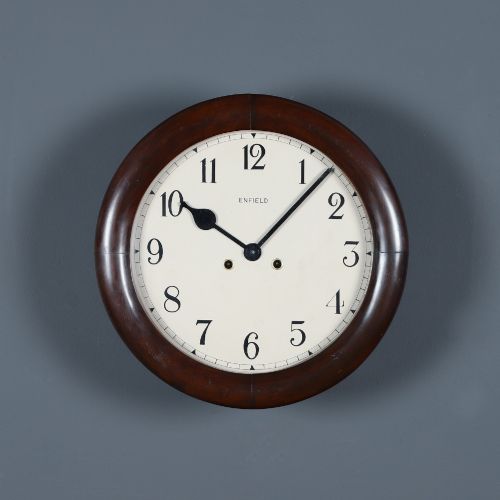
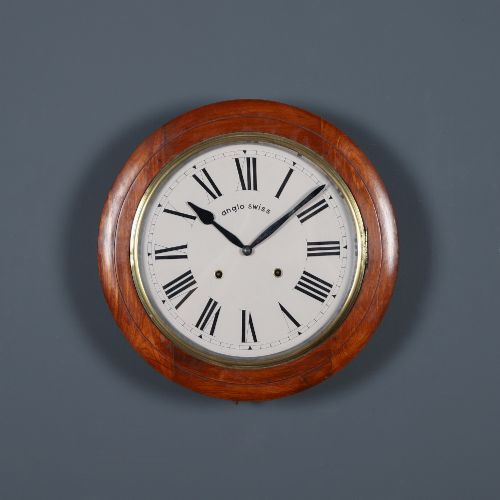
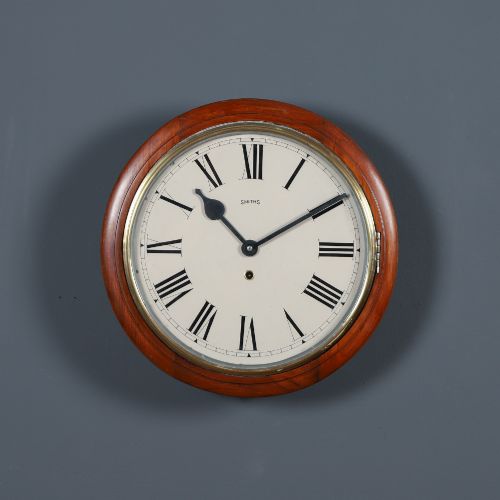
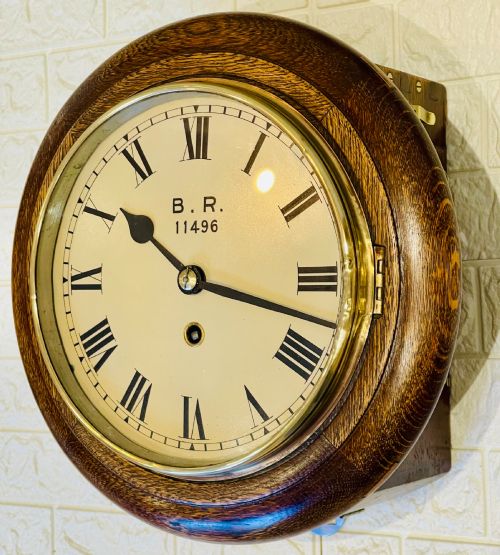
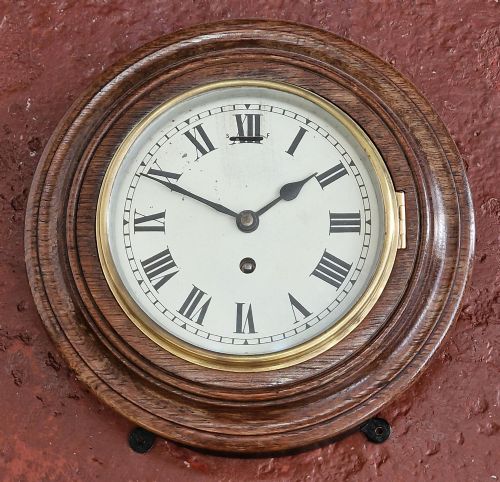
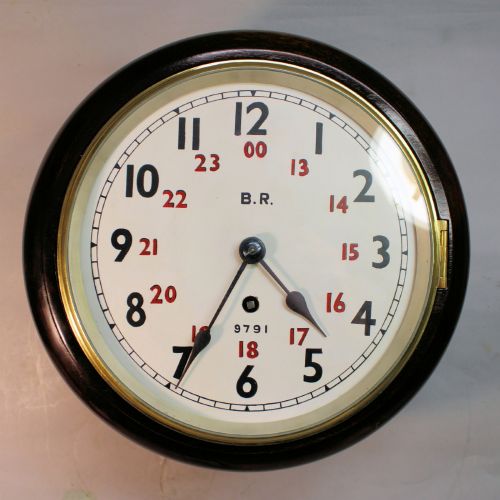
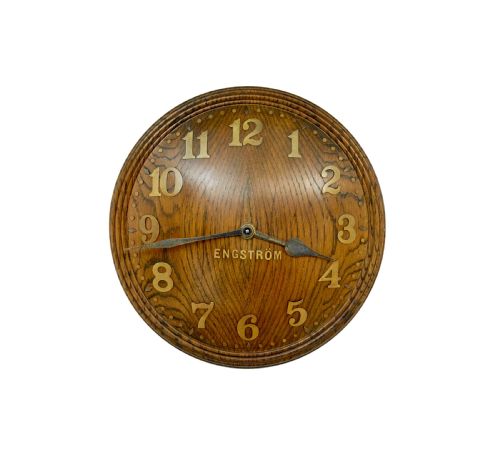
The pieces listed here span the Victorian, Edwardian, and Art Deco eras, with mahogany and oak cases housing circular dials designed for immediate legibility from a distance.
Railway station and school wall clocks dominate the selection, alongside military pieces and mirrors adapted from similar circular formats.
How They Were Made
Cabinetmakers constructed sturdy circular surrounds using solid timbers such as mahogany, oak, and walnut, often housing the movement behind a heavy hinged glass bezel and brass rim.
Movements relied on fusee mechanisms or striking gear enclosed within timber boxes, while dials were traditionally painted or enamelled iron featuring clear Roman or Arabic numerals.
Vintage Round Wall Clock Retail Price Guide 2026
Typical asking prices for vintage round wall clock among the pieces listed under this phrase on Sellingantiques today, from the lower quarter to the upper quarter. They describe what is for sale here now, not the wider market.
Several clocks bear the precise station names and telegraph codes of former railway junctions where engines once puffed.
What Varies in Quality
The distinction between ordinary and superior examples lies in the crispness of the dial lettering, the weight of the cast brass bezel, and the fine adjustment of the fusee movement.
Tighter timber joinery in the case and original painted dials with minimal restoration separate utilitarian pieces from those commissioned for prominent municipal or railway positions.
Smiths·Enfield·Anglo Swiss·John Walker·Zenith·Harrods·Payne of Tunbridge Wells·Webster
The Vintage Round Wall Clock Glossary
- Fusee
- A conical pulley connected to the mainspring by a chain or cord that ensures even tension and accurate timekeeping as the spring unwinds. This mechanism is standard in better British dial clocks.
- Bezel
- The metal ring, usually brass or chrome, that holds the protective glass over the clock face. It is typically hinged to allow easy access for winding and setting.
- Dial
- The circular face of the clock displaying the numerals and minute tracks. These are frequently painted wood, metal, or convex glass.
- Chiming
- An acoustic mechanism that strikes bells or gongs on the hour and half-hour. Such movements require additional gear trains within the case.
Vintage Round Wall Clock: Frequently Asked Questions
Where were these clocks originally used?
Many of these circular timepieces hung in railway booking halls, station platforms, schoolrooms, and municipal offices where workers needed precise timekeeping.
Their robust construction and clear dials ensured they could withstand busy public environments and remain visible across large rooms.
How do fusee movements work?
A fusee movement uses a conical pulley and chain to equalise the pulling force of the mainspring as it loses tension.
This clever mechanical device helps the clock maintain a consistent rate throughout its running period between windings.
How should I hang a heavy timber wall clock?
Due to the solid mahogany or oak cases and heavy brass bezels, these clocks require secure fixing directly into wall studs or masonry using appropriate wall anchors.
Hanging them from a sturdy screw or bracket takes the weight off the internal wooden trunk and keeps the pendulum plumb.
How do I tell Victorian clocks from later pieces?
Victorian examples often feature deep mahogany cases and fusee movements with subtle maker signatures inscribed on the dial or backplate.
Later twentieth-century versions from the Edwardian and Art Deco periods introduce lighter oak timbers, different dial fonts, and alternative striking mechanisms.