
Vintage Rose Gold Bracelet
A vintage rose gold bracelet brings a distinctive warmth to the wrist, spanning styles from sturdy Victorian gate links to refined Edwardian chains.
Vintage Rose Gold Bracelet
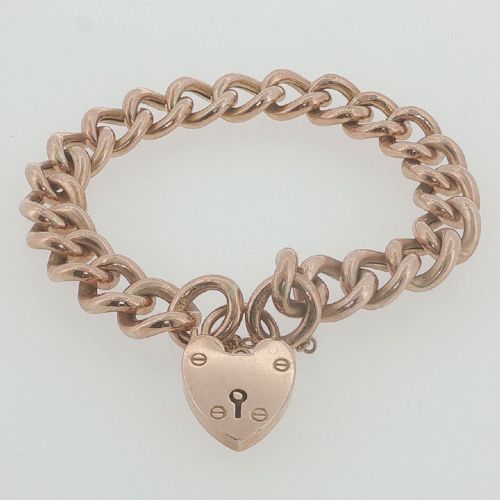
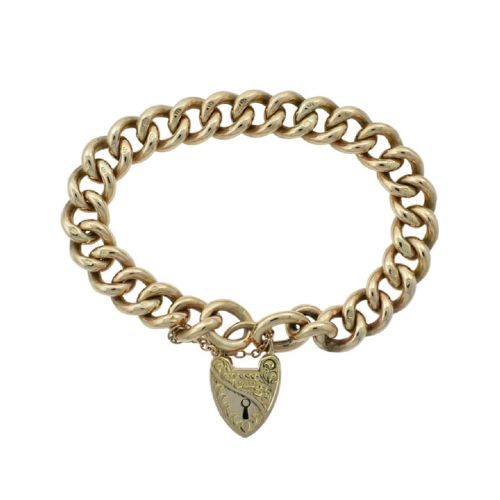
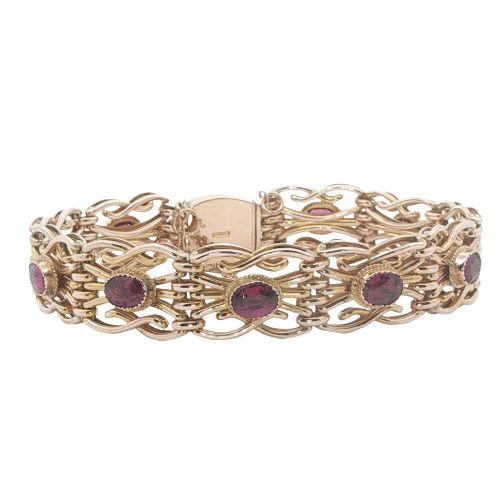
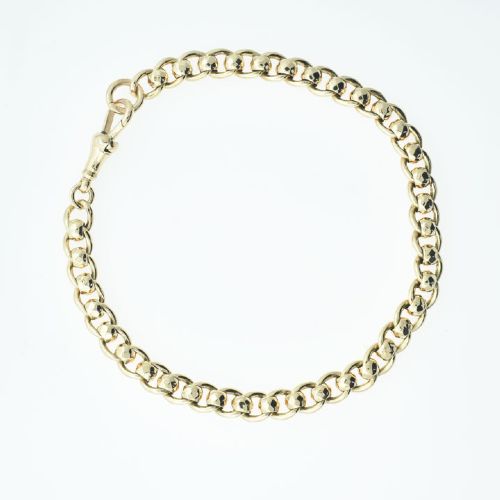
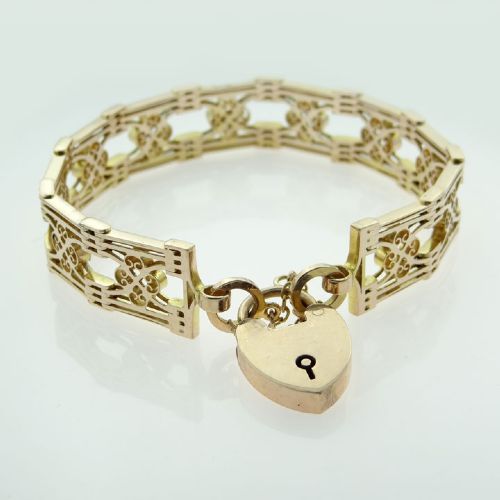
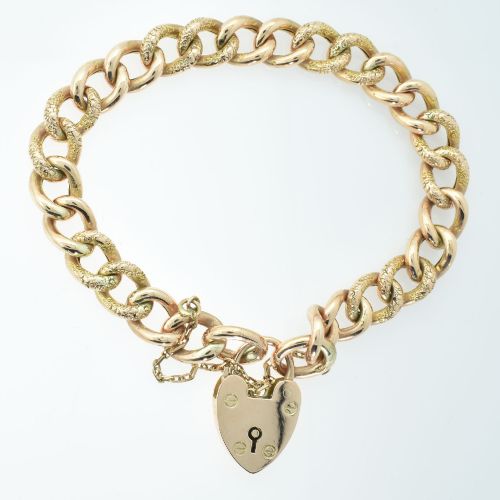
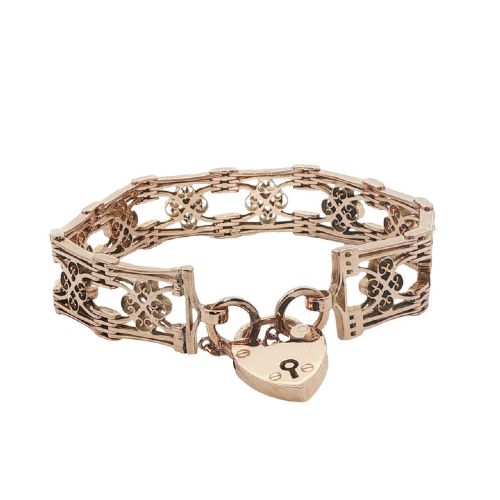
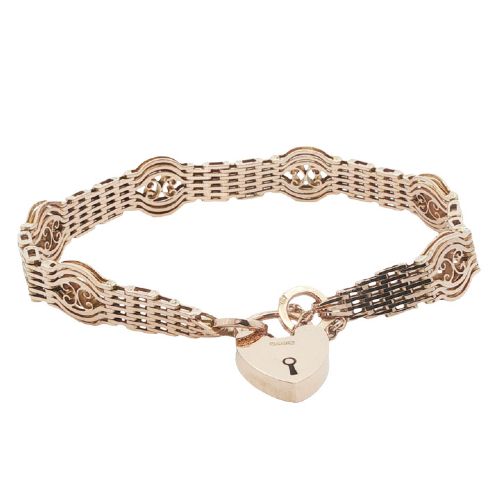
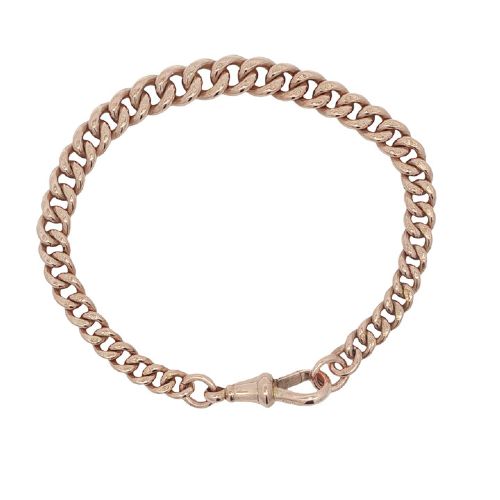
A vintage rose gold bracelet takes many forms across the Victorian, Edwardian, and mid-century periods, ranging from heavy curb chains and gate links to gem-set dress pieces. When searching for a vintage rose gold bracelet, buyers most frequently encounter substantial 9ct gold curb and gate link designs secured with heart padlocks.
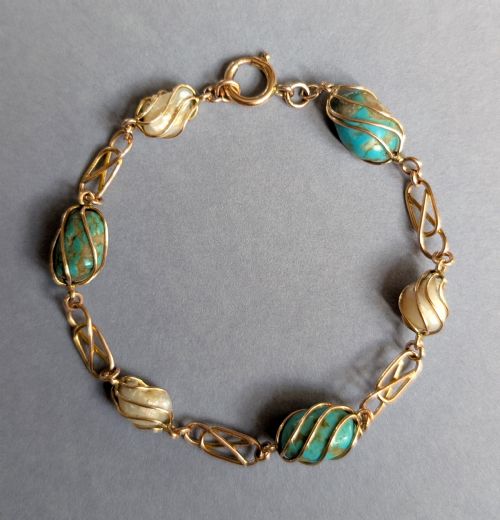
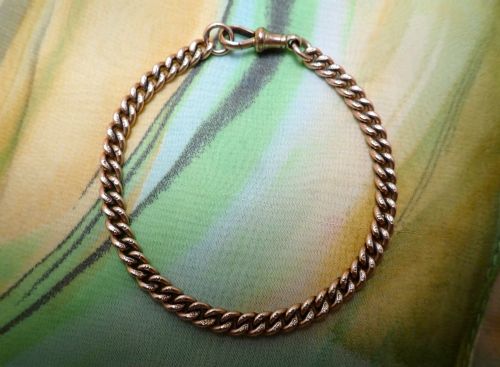
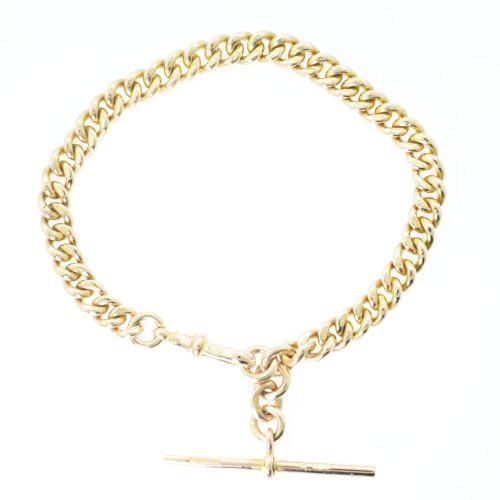
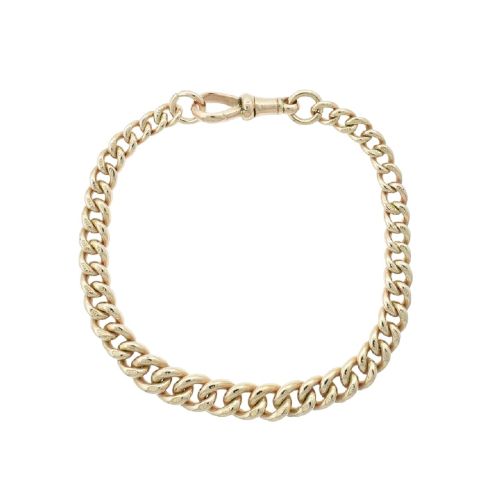
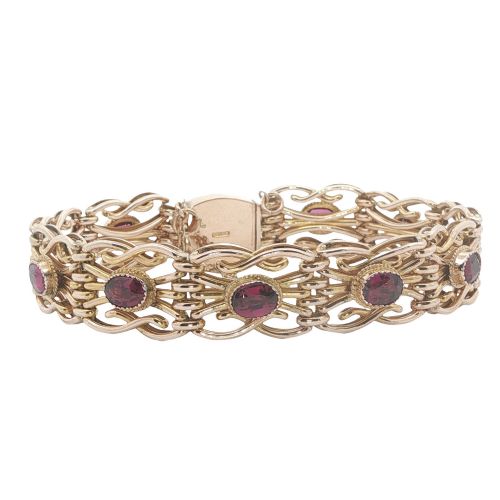
Many of these pieces began life as watch chains or Albert chains before finding new purpose as wristwear. They arrive paired with gemstones such as almandine garnets, seed pearls, diamonds, sapphires, and turquoises, reflecting the ornamental tastes of the nineteenth and early twentieth centuries.
Materials and construction
Goldsmiths utilised 9ct and 15ct rose gold, shaping the metal into hollow or solid curb links, articulated gate bars, and fancy links. Many links display half-engraved patterns or decorative rollerball mechanisms executed by hand.
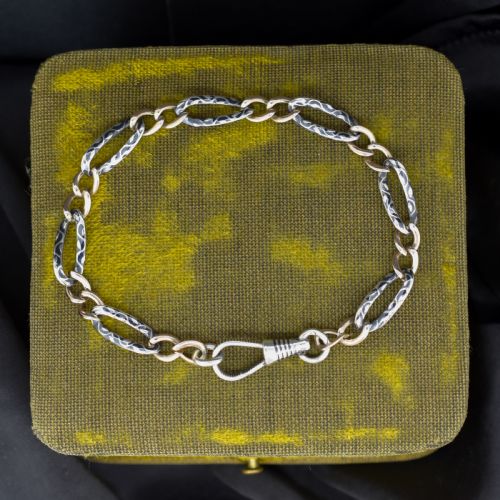
Secure fastenings are integral to the construction, employing heart padlocks, dog clips, and T-bars that double as ornamental elements. Gemstones are flush-set or star-set directly into the gold, accompanied by seed pearls secured on fine posts.
Listings feature 9ct and 15ct rose gold alongside materials like silver, diamonds, garnets, sapphires, turquoises, opals, and seed pearls.
Quality variations
The distinction between average and exceptional pieces rests in the weight of the gold and the crispness of the hand-engraving. Heavier curb and gate links retain their structural integrity better over decades of wear.
The integration of gemstones and the survival of original clasps, such as heart padlocks and dog clips, elevate a piece. Finer examples maintain sharp chasing on the patterned links without thinning from excessive polishing.
The Vintage Rose Gold Bracelet Glossary
- Curb link
- A type of chain formed by interlocking, identical uniform links that lie flat against the skin. These links provide a sturdy foundation for heavy everyday bracelets.
- Gate bracelet
- A design composed of parallel vertical bars joined by alternating links, reminiscent of a traditional garden gate. This style achieved immense popularity during the Victorian and Edwardian eras.
- Heart padlock
- A heart-shaped clasp used to secure watch chain bracelets and gate bracelets. They often carry hallmarks and decorative engraving on the surface.
- Albert bracelet
- A shortened version of a pocket watch chain adapted for wristwear, frequently retaining a T-bar fastening. They display substantial weight and intricate link construction.
- Almandine garnet
- A deep red variety of garnet utilised in late Victorian and Edwardian jewellery. The stones provide a rich, dark contrast to the warm tone of rose gold.
- Dog clip
- A spring-loaded swivel fastening originally designed for watch chains. They offer a secure and practical clasp on antique link bracelets.
Vintage Rose Gold Bracelet: Frequently Asked Questions
How do I date a rose gold bracelet?
Dating relies heavily on British hallmarks stamped onto the metal, which indicate assay offices and specific years of production. Stylistic clues such as heart padlocks, gate link formations, and specific gemstone cuts also point toward Victorian, Edwardian, or later mid-century periods.
Examining the construction methods, such as hand-engraving versus machine stamping, helps narrow down the decade of manufacture. Comparing the clasp type and link style against documented archive pieces confirms the likely era.
Are these bracelets durable for daily wear?
Solid gold curb and gate bracelets offer robust construction suited to regular daily use. Heavier pieces distribute tension evenly across multiple links, reducing strain on individual joints.
Bracelets set with softer organic materials like seed pearls or turquoise require greater care to avoid moisture damage and impact. Checking the security of heart padlocks and dog clips ensures safe retention on the wrist.
What is an Albert bracelet?
An Albert bracelet originates from a watch chain worn by gentlemen in the nineteenth century, named after Prince Albert. These chains feature heavy graduated links and often retain a functional T-bar.
Jewellery makers repurposed these substantial chains into bracelets by shortening the length and fitting secure clasps. Their notable weight makes them enduringly popular among collectors.
How do I care for antique rose gold?
Cleaning requires warm soapy water and a soft cloth to remove everyday oils without scratching the gold surface. Harsh chemical dips should be avoided, particularly on pieces containing seed pearls or soft gemstones.
Storage in a dedicated jewellery box prevents scratching from other metal items. Regular inspection of the links and padlocks by a jeweller protects against accidental loss.