
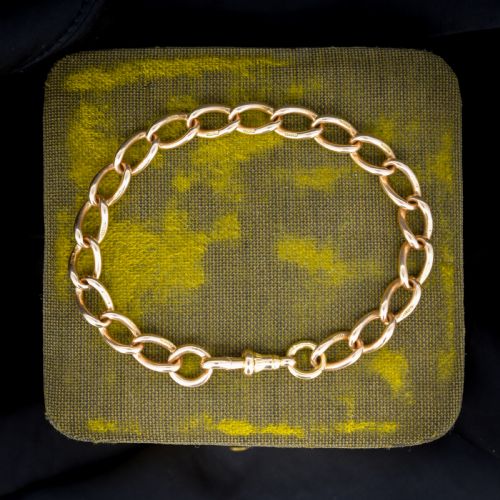
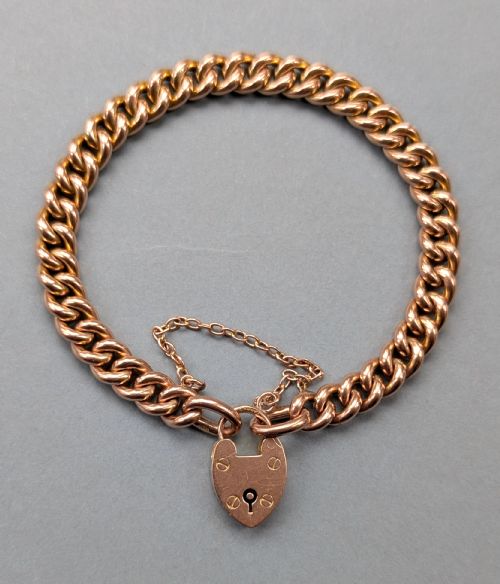


Rose Gold Curb Link Bracelet
A rose gold curb link bracelet brings together the warm tone of antique gold and the satisfying weight of interlocking links.
Rose Gold Curb Link Bracelet
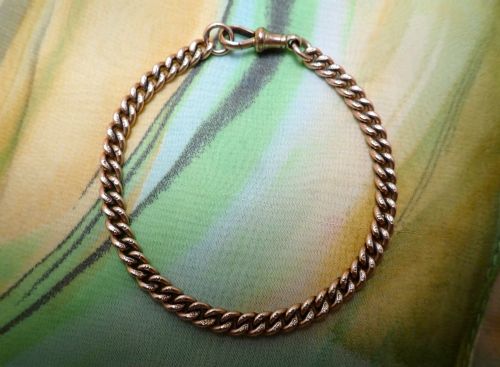
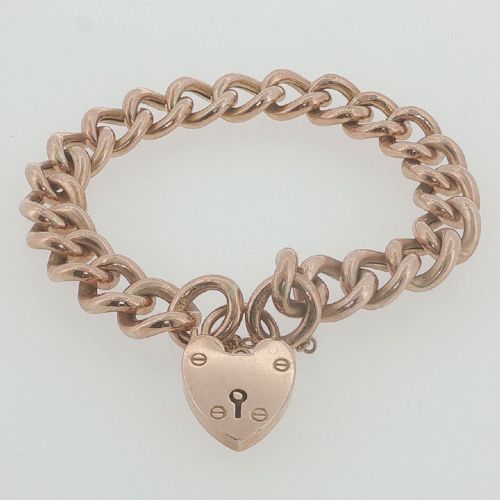
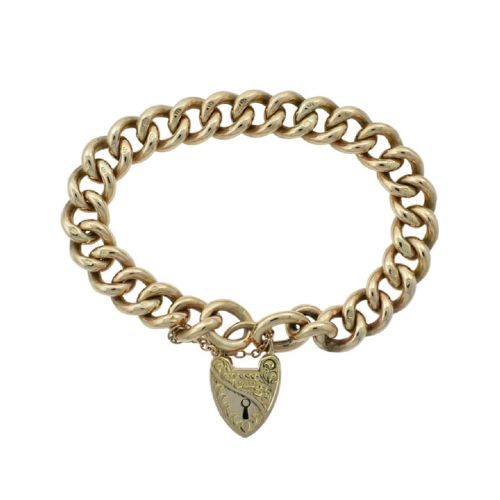
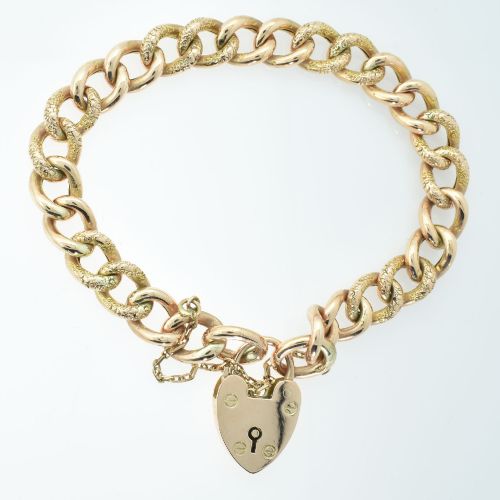
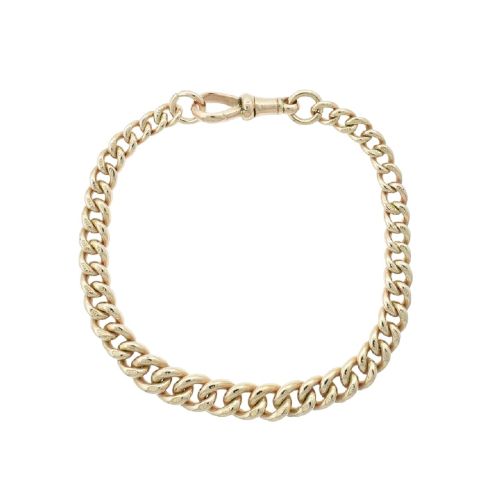
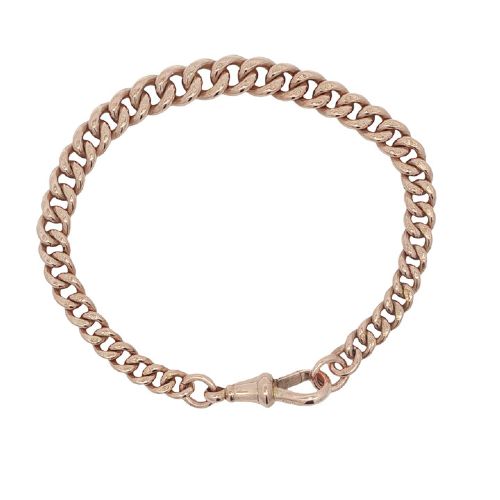
A rose gold curb link bracelet is a classic form of antique wristwear built from interlocking links with a flat profile. These pieces appear primarily in Victorian and Edwardian iterations from the periods around nineteen hundred, nineteen ten, and the wider Victorian era.
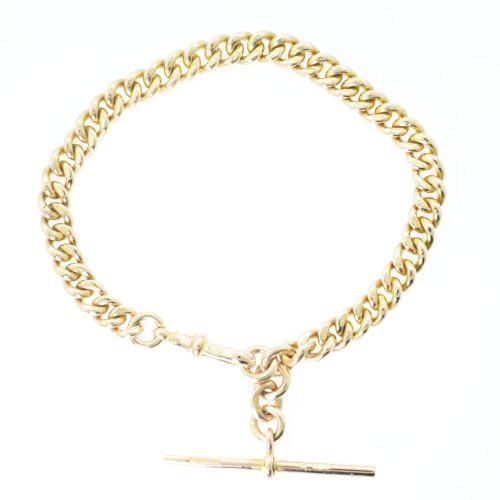
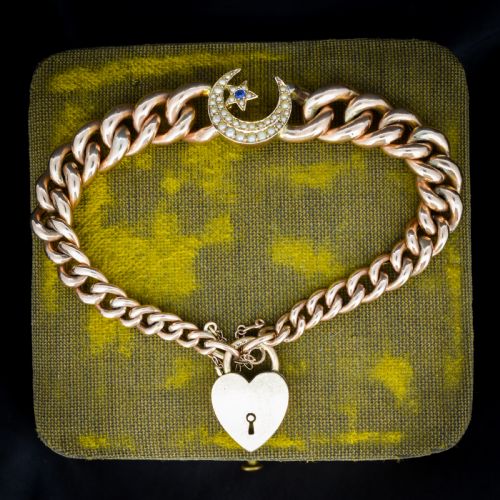
Most examples found here utilise lower and higher yellow-red alloys, specifically nine carat rose gold and fifteen carat gold. Many feature secure fastenings such as heart padlocks, dog clips, or T-bars, occasionally accented with seed pearls, turquoise, or sapphires.
How They Were Made
Goldsmiths constructed these bracelets using hollow or solid interlocking links shaped into curb chains, frequently adding hand engraving to individual links for texture. Chain links were soldered and polished by hand, with heavier forms designed to accommodate charms or pendants.
Clasps and padlocks required dedicated mechanical work, incorporating sprung tongues or hinged bails alongside hallmarks stamped directly into the metal. Gemstones like turquoise and seed pearls were then set by hand into decorative centrepieces or padlocks.
The listings span the Victorian and Edwardian eras, utilising nine carat rose gold, fifteen carat gold, turquoise, and seed pearls.
What Varies in Quality
Quality rests heavily on the gauge of the metal and the weight of the individual links, distinguishing light chains from substantial heavy pieces. Solid construction retains its structural integrity far better over decades of wear than hollow alternatives.
The precision of the hand engraving and the originality of the associated hardware, such as heart padlocks and dog clips, further separate standard examples from finer specimens. Surviving hallmarks and intact gem settings also elevate an individual piece.
The Rose Gold Curb Link Bracelet Glossary
- Curb link
- A type of chain made from interlocked links that have been twisted and flattened to lie uniformly against the skin. This design allows the bracelet to drape comfortably around the wrist.
- Albert bracelet
- A sturdy chain style originally designed to secure pocket watches, adapted here for wristwear. These often incorporate a T-bar for fastening.
- Heart padlock
- A popular clasp shape cast in the form of a padlock, functioning as the primary closure on many antique bracelets. They frequently carry full British hallmarks.
- Dog clip
- A spring-loaded swivel clasp used to attach safety chains or secure bracelets to rings and padlocks. It permits free movement without twisting the main chain.
- Half engraved
- A decorative technique where only alternate links receive hand-carved patterning to create contrast. This leaves plain polished sections alongside textured areas.
Rose Gold Curb Link Bracelet: Frequently Asked Questions
How do I fasten a heart padlock?
Heart padlocks on these bracelets usually open by pressing a small internal spring lever or a side-mounted button. The hinged arm then swings inward to release the jump ring.
Take care not to force the mechanism if it feels stiff, as antique springs can weaken over time. A gentle press should release the catch securely.
Can I wear my bracelet every day?
These antique bracelets are robust enough for regular wear, particularly heavier solid examples from the Victorian and Edwardian periods. However, hollow links require more care to prevent crushing.
Remove the bracelet before engaging in heavy manual work or swimming to protect the delicate engravings and gemstone settings.
What is a T-bar used for?
The T-bar is a small metal bar attached to a short length of chain, originally intended to slip through a waistcoat buttonhole. On a bracelet, it passes through a designated large link to secure the piece.
This functional element adds a distinct decorative anchor to the wrist and points to the pocket watch ancestry of the design.
How do I tell Victorian from Edwardian pieces?
Victorian pieces often display heavier ornamentation, rich deep rose gold tones, and romantic motifs like lovers knots or turquoise clusters. Edwardian items tend to lean towards lighter, refined proportions.
Examining the assay office hallmarks stamped on the padlocks or links provides the most reliable date of manufacture.