


Vintage Room Oil Painting
These vintage room oil painting examples capture domestic spaces and intimate domestic scenes across the nineteenth and twentieth centuries.
Vintage Room Oil Painting
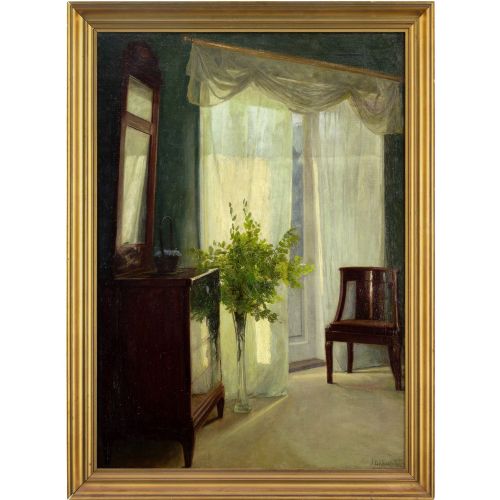
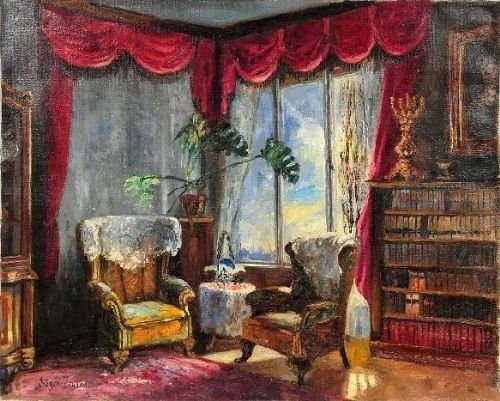
A vintage room oil painting brings historical interiors, reception rooms, and quiet corners directly onto the wall through the medium of oil paint. These artworks record specific domestic and public spaces, ranging from Edwardian reception rooms to mid-century cottages and sunlit garden doors.
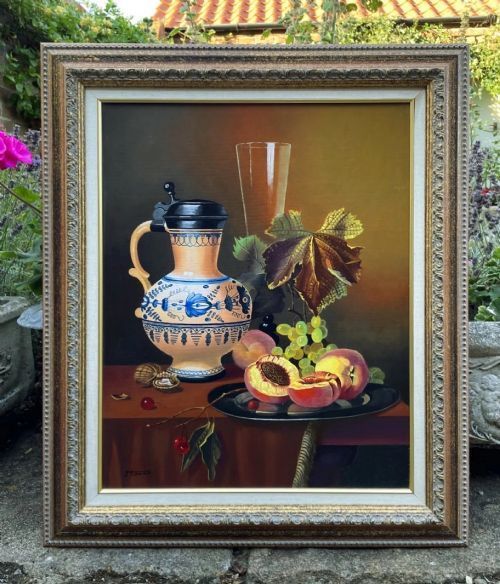
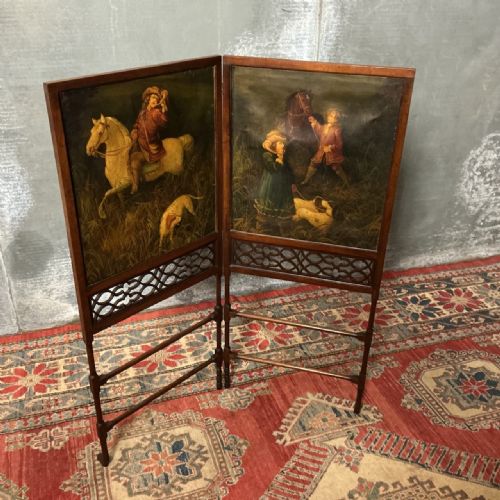
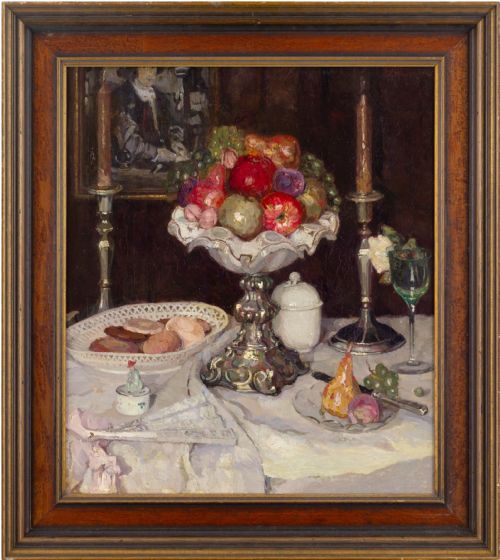
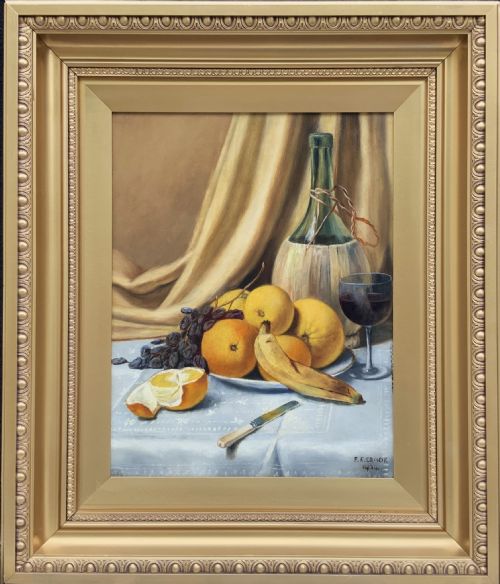
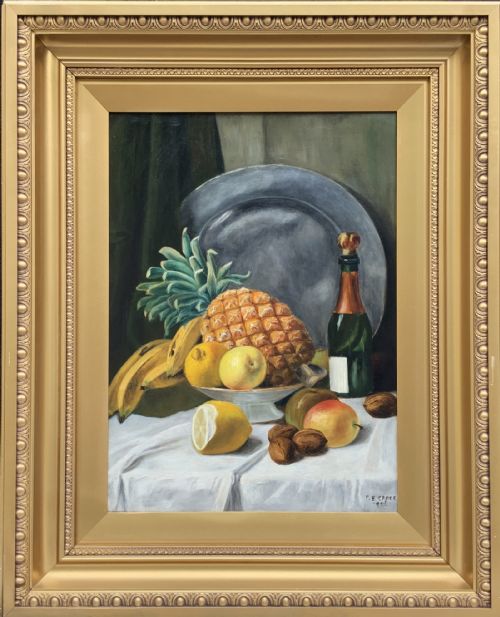
Buyers will encounter various formats in this selection, including framed canvases, wooden fire screens, and panels depicting still life arrangements, fruit, and architectural interiors. The periods span from Victorian and Edwardian works through to 1950s interpretations of traditional subjects.
The subjects divide broadly between detailed interior scenes showing furnished rooms and still life compositions set within domestic spaces. Both categories rely on oil as the primary vehicle for capturing light, texture, and depth within a room.
Materials and construction
These works rely on oil paint applied to canvas or wood panels, often housed within wooden frames finished with gold leaf or gilt. The combination of oil pigments allows artists to build rich layers that define the shadows and light sources within a room.
Frames frequently utilise gilded wood to complement the painted interior scenes, protecting the edges of the canvas and providing a formal boundary. Certain functional items, such as fire screens, incorporate wood structures specifically built to hold these painted panels.
One canvas preserves a liner's smoking room panel from a passenger ship navigating the high seas.
Assessing the pieces
Quality in a vintage room oil painting rests upon the artist's handling of perspective, light, and interior detail. Stronger examples successfully render complex light sources, such as sunlight passing through a garden door or illuminating a dining room.
The sophistication of the brushwork and the preservation of the canvas or wood panel dictate the visual strength of the piece. Well-rendered still life arrangements and accurately proportioned architectural spaces distinguish finer works from simpler decorative panels.
John Lübschitz·Else Preußner·Gertrude Halsband·Charles Cameron Baillie·Elinor Margaret Charteris·Zsuzsanna Suger·John Exley·Robert Panitzsch·C. Sorensen
The Vintage Room Oil Painting Glossary
- Oil on Canvas
- A traditional painting medium where oil-based pigments are applied to a stretched woven fabric support. This combination allows for smooth blending and deep colour saturation.
- Gilded Wood
- Timber frames or panels treated with a thin layer of gold leaf or metallic gilt paint. This finish enhances the decorative presentation of the artwork.
- Still Life
- An artwork depicting inanimate subject matter, typically everyday objects such as fruit, jugs, and candlesticks arranged on a table. These compositions often form part of interior room scenes.
- Fire Screen
- A decorative panel placed in front of a fireplace when not in use, occasionally constructed with an integrated oil painting. These items combine practical household protection with fine art.
Vintage Room Oil Painting: Frequently Asked Questions
What periods do these paintings cover?
The pieces span from Victorian and Edwardian examples up to mid-century works from the 1950s. This range encompasses diverse aesthetic movements including post-impressionism and traditional realism.
Buyers will find that each period brings distinct conventions in how interior spaces and domestic objects are composed and illuminated.
How should I hang an oil painting?
Select a wall space that avoids direct, harsh sunlight to protect the oil pigments and any gilded wood framing from fading over time. Ensure the hanging hardware is securely fixed to support the weight of the wooden stretcher or panel.
Maintain stable room humidity to prevent any warping of the underlying canvas support or wooden fire screen structure.
What is the difference between an interior and still life?
Interior paintings focus on architectural spaces, rooms, and furnishings like Stately Home panels or reception room views. Still life works concentrate on smaller arrangements of objects such as fruit and jugs.
Both forms utilise oil paint to record domestic life, often overlapping when a still life is placed within a room setting.
Are these paintings signed by artists?
Many works in this selection feature artist signatures or are attributed to specific European and British schools. Pieces range from signed original works to school-attributed compositions from the twentieth century.
Documentation of makers helps establish the historical context of each room scene.