



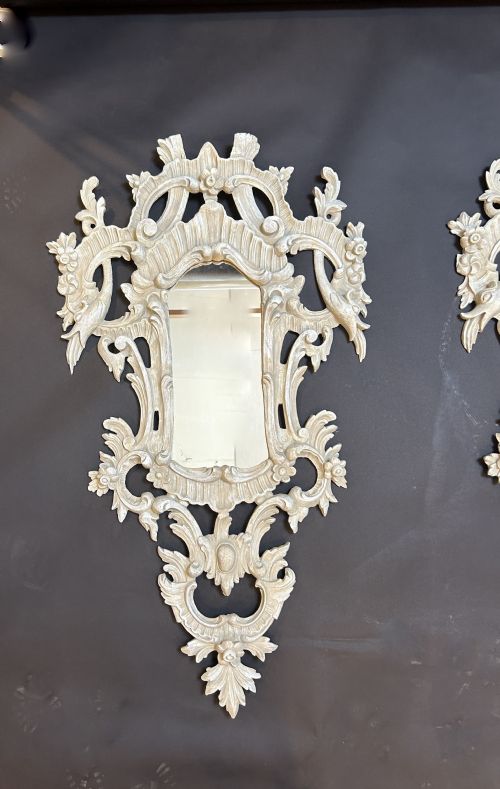
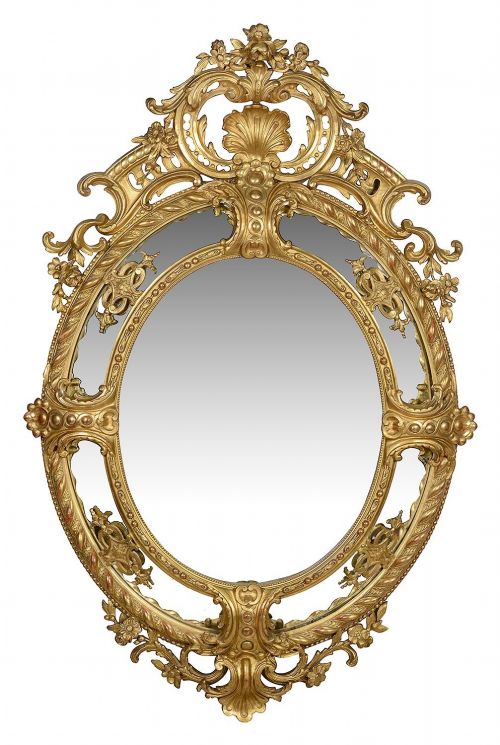



Vintage Rococo Hanging Mirror
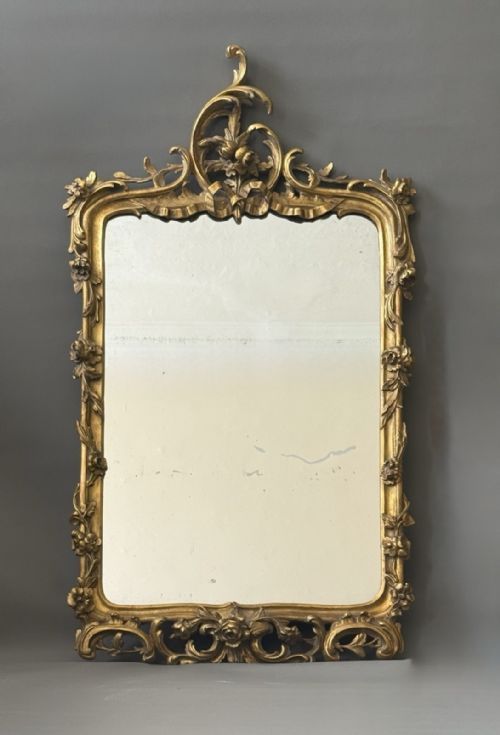
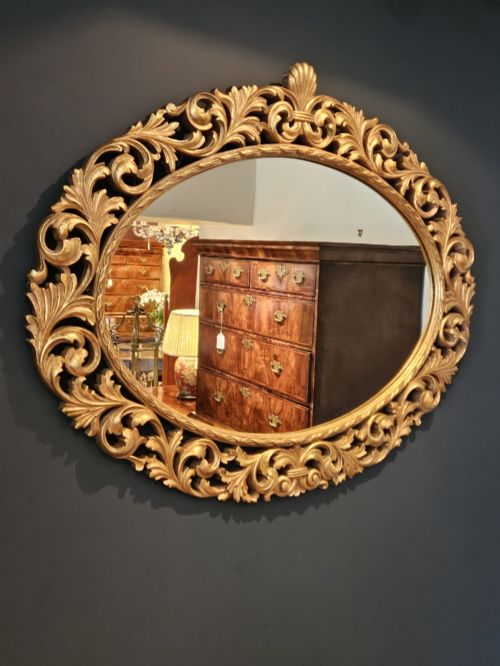
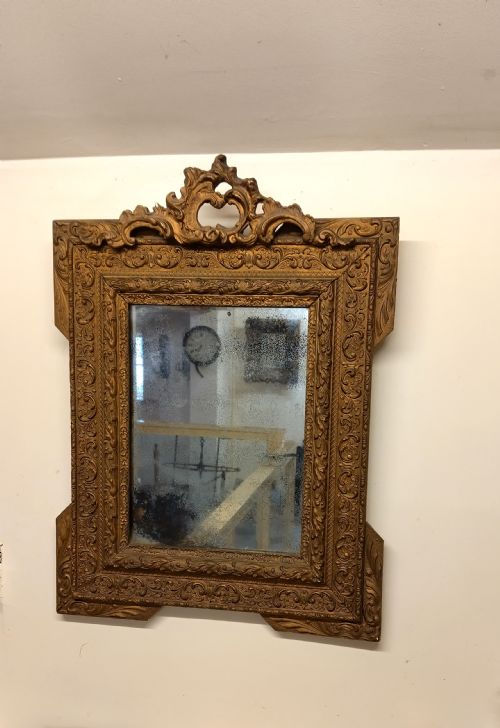
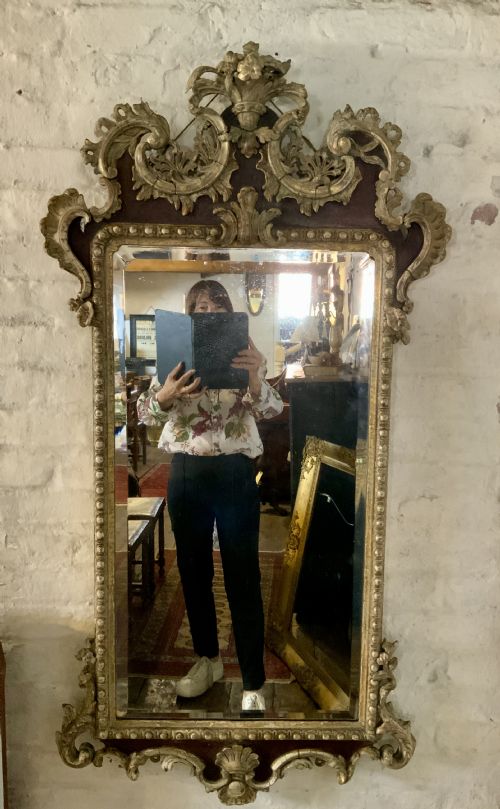
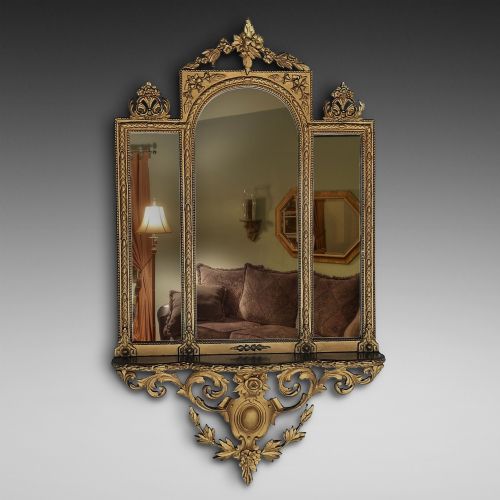
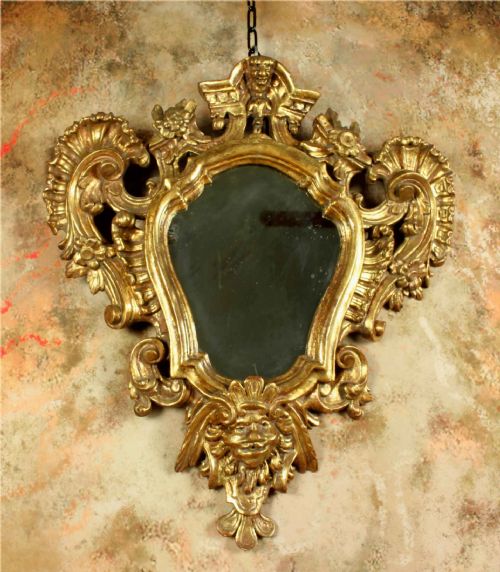
These vintage rococo hanging mirror examples bring flamboyant asymmetric curves and gilt surfaces to interior spaces, drawing the eye with their ornate decoration.
Vintage Rococo Hanging Mirror
A vintage rococo hanging mirror draws upon the extravagant design language of eighteenth-century France, featuring sweeping scrolls, C-scrolls, and naturalistic motifs. These pieces span centuries of production, appearing in nineteenth-century revivals as well as earlier iterations.
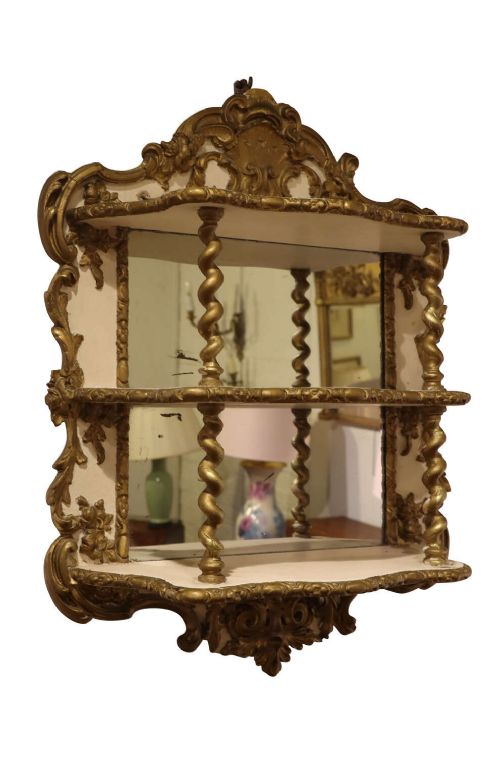
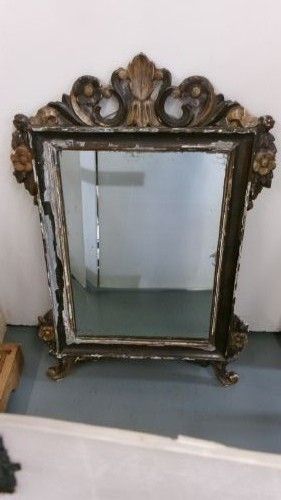
The dominant forms on this page include large oval and rectangular wall mirrors, alongside occasional wall shelves and étagères. Frames take on dynamic, irregular silhouettes defined by carved foliage, shell work, and decorative masks.
Origins vary between French, Italian, and British workshops, each interpreting the revival styles through local cabinet-making traditions. Buyers encounter everything from substantial nineteenth-century giltwood creations to lighter early twentieth-century interpretations.
Distinctions in quality
The depth and crispness of the carving separate superior examples from routine productions. Hand-carved wooden frames exhibit sharp undercut details in foliage and scrolls, whereas moulded composition ornaments often display softer, rounded edges.
The integrity of the gilt surface matters significantly, with original gold leaf patination holding more character than later re-gilding. The weight and stability of the underlying timber frame dictate how well the piece survives structural shifts over time.
Listings feature periods spanning from the eighteenth century through to the 1930s, constructed in giltwood, gesso, oak, walnut, brass, and bronze.
The Vintage Rococo Hanging Mirror Glossary
- Gesso
- A plaster mixture applied to wood frames as a base for gilding or painting. This material allows artisans to model intricate relief ornamentation.
- Giltwood
- Timber that has been coated with gold leaf or gold paint. It forms the lustrous finish characteristic of many revival decorative objects.
- C-scroll
- A decorative motif shaped like the letter C, heavily utilised in rococo design. It creates a sense of dynamic movement across the frame.
- Foxing
- Age-related spots and discolouration appearing within the mirror glass plate. Collectors often value this deterioration as proof of genuine antiquity.
- Étagère
- A piece of furniture featuring open shelves, occasionally combined with a wall mirror in revival pieces. It provides display space alongside reflective glass.
Vintage Rococo Hanging Mirror: Frequently Asked Questions
How do I date a rococo mirror?
Dating relies upon examining the construction methods of the wooden frame and the composition of the mirror glass. Earlier pieces often utilise hand-beveled plates and distinct timber joints hidden behind the gesso.
Revival pieces from the nineteenth and twentieth centuries frequently incorporate machine-sawn timber or modern backing boards while imitating eighteenth-century stylistic traits.
Where should I hang a heavy gilt mirror?
Substantial frames require secure wall fixings anchored directly into masonry or solid wall studs to support the weight safely. Placing them above a fireplace mantel is a traditional arrangement that anchors room proportions.
Ensure the hanging wire or integrated brackets on the rear of the frame match the substantial mass of timber and glass.
What is the difference between rococo and baroque?
Baroque design tends to be heavy, symmetrical, and monumental, projecting absolute power and formal grandeur. Rococo style introduces lighter, asymmetrical forms, curving lines, and playful organic motifs like shells and foliage.
Mirrors from the rococo revival lean towards fluid movement rather than rigid architectural symmetry.
Should I replace old mirror glass?
Original mirror glass displaying foxing and oxidation contributes historical authenticity and visual character to antique pieces. Preserving the original plate maintains the integrity of the object.
Replacement glass is typically reserved for instances where the original plate is missing or shattered beyond practical use.