



Vintage Rocking Crib
These vintage rocking crib options offer charming historical forms for gentle motion.
Vintage Rocking Crib
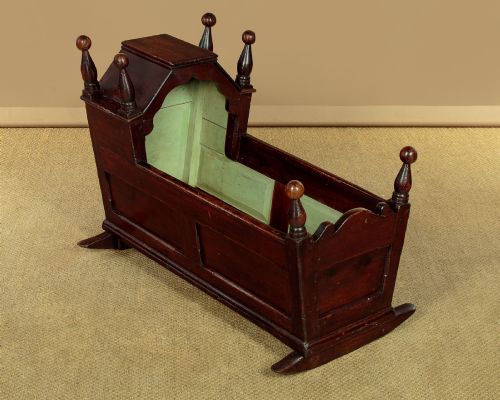
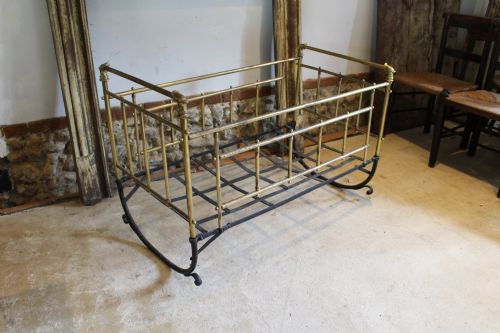
A vintage rocking crib provides a traditional sleeping place for infants, combining historical timber or metal construction with curved rocking bases. When exploring a vintage rocking crib, buyers encounter pieces spanning from the seventeenth century through the Edwardian era, with Victorian and nineteenth-century examples appearing frequently.
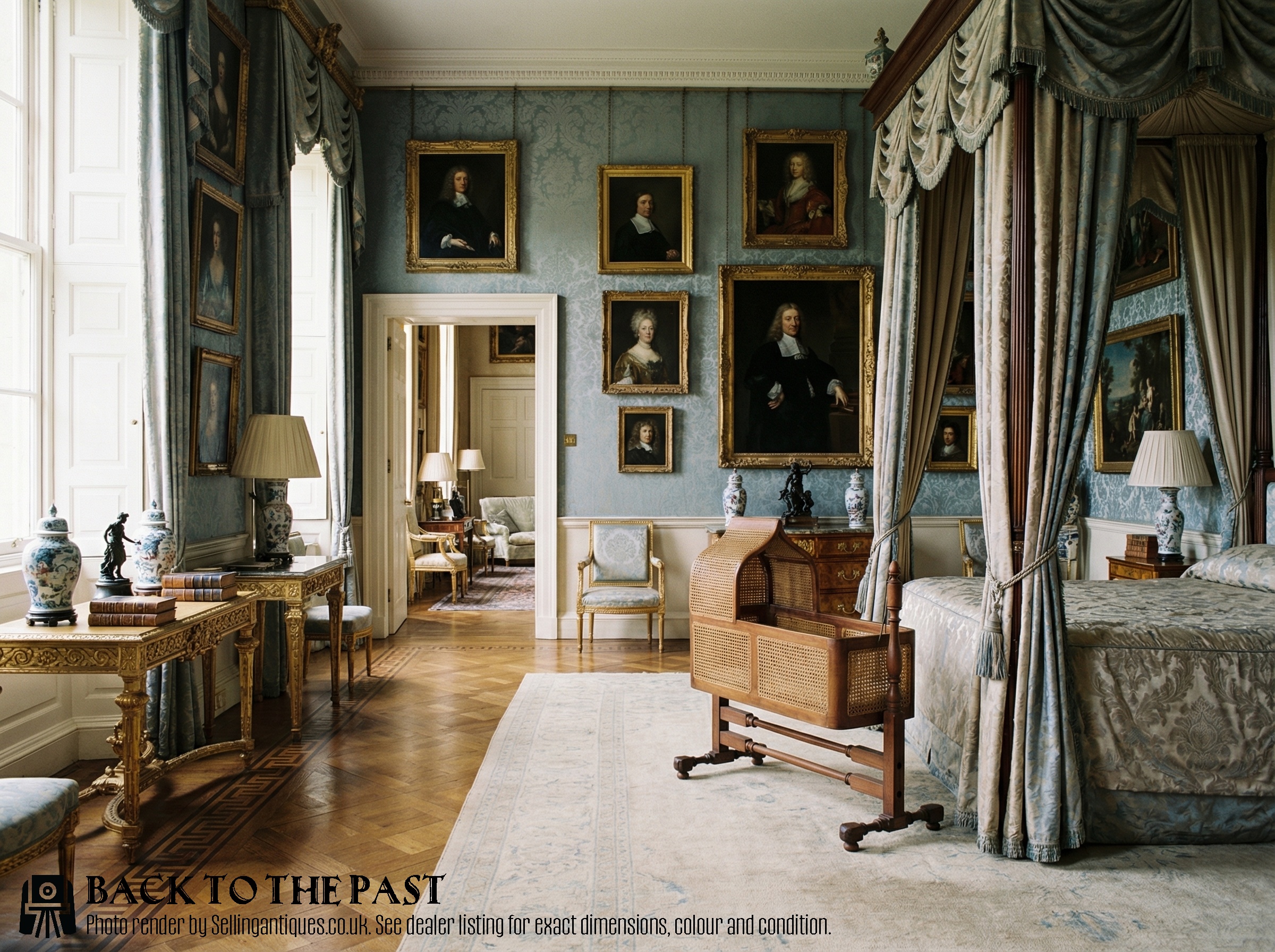
The selection ranges from robust panelled oak and fruitwood styles to painted pine and mahogany designs, sometimes featuring hoods, canopies, or cane work. Formats vary from simple country rockers to more formal regional and period pieces, including metamorphic cots and brass structures.
How they were made
Carpenters and cabinetmakers utilised solid timbers such as oak, mahogany, pine, and fruitwood, often constructing bodies with panelled sides or turned spindles. Iron and brass were also employed for metal frames, while cane and upholstery provided alternative textures.
Surface treatments included natural beeswax finishes, carved detailing, and original decorative paintwork, such as blue schemes on pine country pieces. Rocking mechanisms relied upon integrated curved wooden rockers or mounted metal frameworks to allow smooth motion.
Some pine cribs retain their original cheerful blue paint from around 1800.
What varies in quality
Quality depends upon the choice of timber and the sophistication of the joinery, with finely panelled seventeenth-century styles and detailed carving standing apart from simpler utilitarian boxes. The integrity of the original rocking mechanism and the preservation of early surface treatments, such as untouched paint or polished mahogany, define the finer examples.
Proportion and decorative restraint also separate standard provincial items from pieces showing formal period characteristics like those associated with William and Mary or Georgian cabinetmaking traditions.
Heals and son
The Vintage Rocking Crib Glossary
- Rocking crib
- A low infant bed mounted on curved wooden rockers or a pivoting frame to allow gentle movement.
- Panelling
- Construction method using fitted wooden frames and thin floating central boards, common in early oak pieces.
- Fruitwood
- Dense timber derived from fruit-bearing trees, utilised by period makers for contrasting details or turned elements.
- Metamorphic
- Describing furniture designed to transform into alternative configurations, such as a cot converting into another form.
- Canopy top
- An overhead structure or hood attached to a crib, designed to support fabric hangings for shelter.
Vintage Rocking Crib: Frequently Asked Questions
How do I date a wooden rocking crib?
Dating relies upon timber species, construction joints such as hand-cut dovetails or pegged panels, and stylistic markers associated with specific periods like the Georgian or Victorian eras. Examining tool marks and surface wear helps determine age.
Later Edwardian or nineteenth-century pieces often display machine-sawn components and different assembly methods compared to seventeenth-century joined examples.
Were these cribs used in main living areas?
Historical cradles were kept close to family hearths and workspaces during the day so parents could keep infants settled while tending to household duties. Their portable nature allowed them to be moved between rooms easily.
At night, they typically rested beside parental beds for convenient feeding and tending.
Can I use a vintage crib for a baby today?
Historical cribs do not meet modern safety standards regarding slat spacing, side heights, and structural stability. They are primarily acquired for display, decorative use, or gentle holding of soft toys and blankets.
Collectors and interior designers utilise them to add historic character to nurseries without putting infants to sleep inside them.
What is the difference between a crib and a cot?
Historically, terms like crib, cot, and cradle often overlapped to describe infant sleeping furniture, though cradles specifically denote rocking designs. Cots frequently indicate stationary or larger enclosed frames on legs.
Evidence from different centuries shows varied regional naming conventions for these children's beds.