


Vintage Retail Cabinet
These vintage retail cabinets bring commercial pedigree and glazed display into domestic rooms, offering genuine shop heritage and practical storage.
Vintage Retail Cabinet
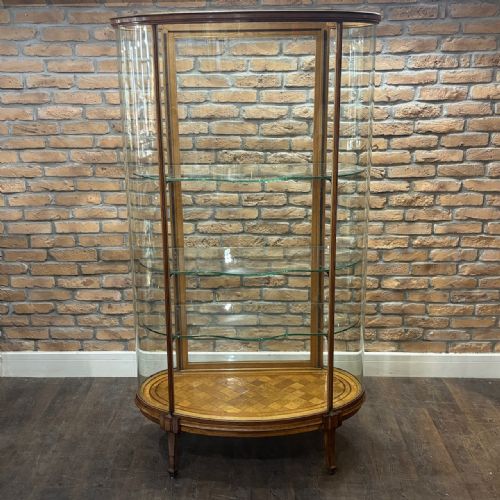
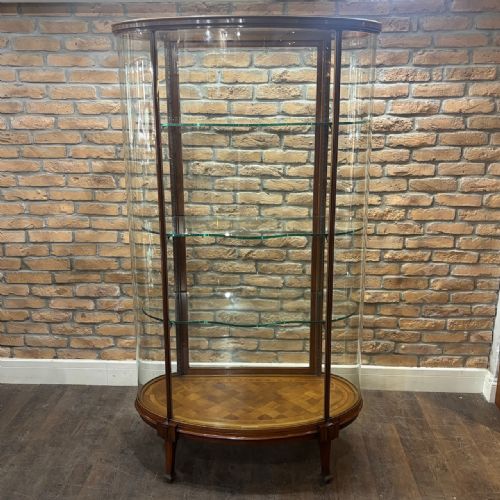
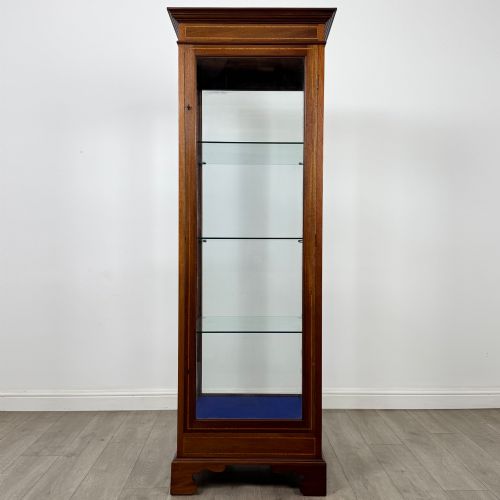
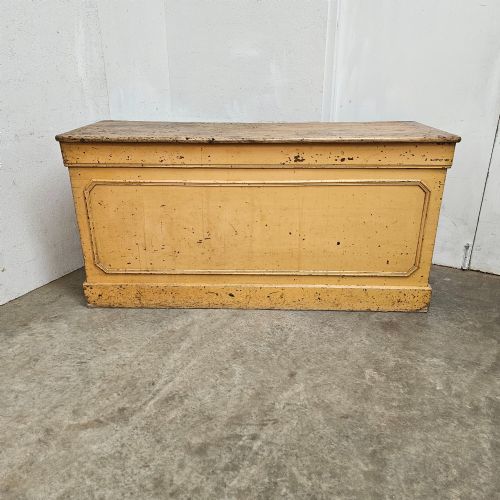
A vintage retail cabinet provides functional display space derived from old shops, pharmacies and department stores, built to showcase goods securely. Buyers searching this phrase meet freestanding display units, countertop cases and haberdashery counters originating from the Victorian era through the 1930s.
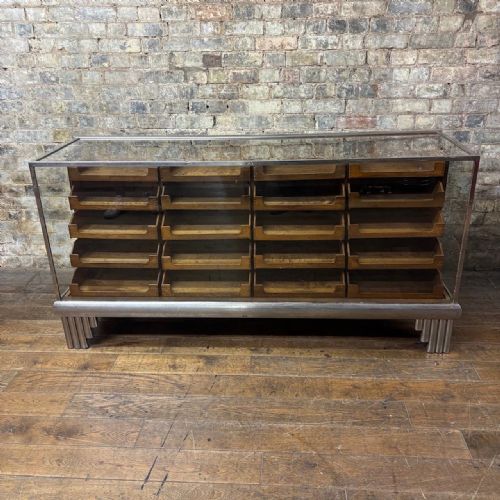
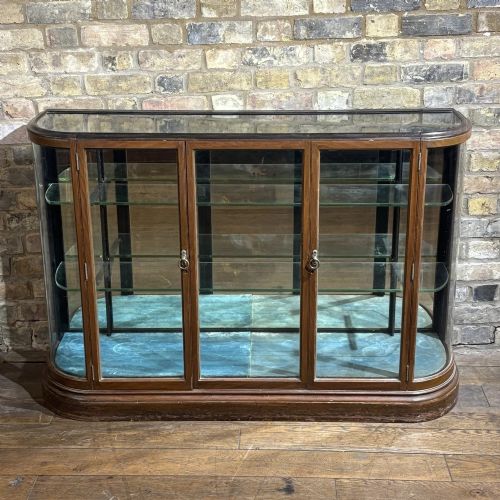
The selection on this page centres on mahogany and oak framing fitted with large glass panels, alongside specialised pieces like chocolate advertising units and apothecary counters. Edwardian and 1920s commercial forms dominate, alongside French provincial counters and multi-drawer pine shop fittings.
Materials and Construction
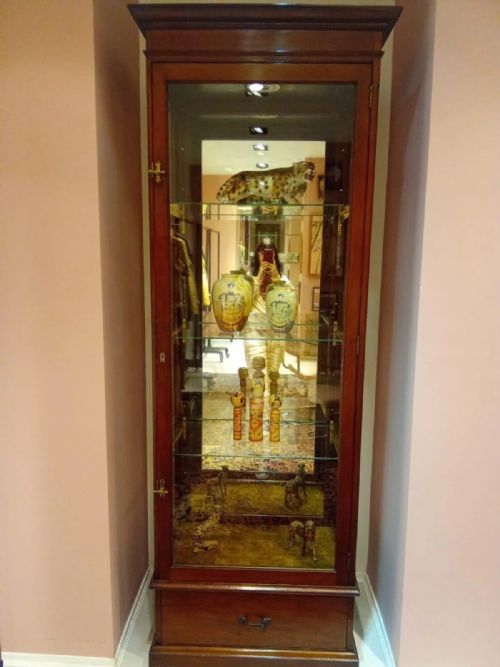
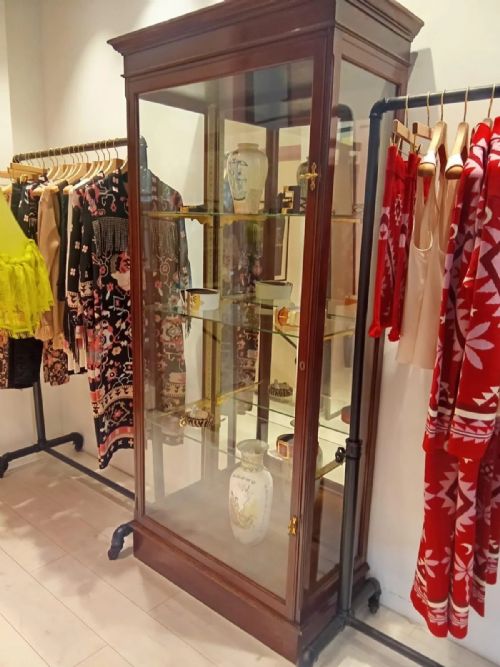
Maker workshops utilised dense hardwoods like mahogany and oak for structural frames, pairing them with expansive glass panes to maximise visibility for merchandise. Brass and chrome hardware secured doors and sliding panels, while mirrored interiors amplified light within display compartments.
Interior shelving relied on adjustable glass sheets supported by wooden or metal tracks, allowing merchants to alter tier heights depending on stock. Painted pine and ebonised timber provided alternative finishes for specific commercial environments, often retaining original signage or distressed surfaces.
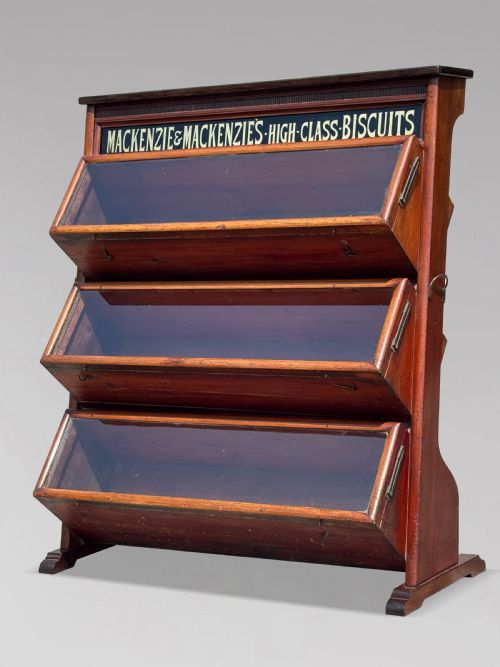
Several cabinets retain original chocolate and paint advertisements, ensuring your living room doubles as a sweet shop from a century ago.
Evaluating Build and Provenance
Quality rests in the integrity of the original framing, the clarity of the glass panels and the survival of maker details such as manufacturer plaques or etched brand lettering. Superior examples retain working locks, original brass or chrome hardware, and unblemished mirrored backs.
Commercial provenance elevates a piece, distinguished by maker signatures from established shopfitters or branded confectionery and pharmaceutical lettering on the woodwork. Finer pieces demonstrate precise joinery in bow-end curves and well-balanced sliding doors that move without binding.
F. Sage & Co.·Dudley & Co·Saml. Elliott & Sons
The Vintage Retail Cabinet Glossary
- Haberdashery counter
- A shop fitting featuring numerous shallow drawers or glass-fronted compartments designed for organising small textiles and notions.
- Bow end
- A curved glass or timber termination at the end of a cabinet or counter that softens the linear profile.
- Bijouterie table
- A glass-topped display table intended for small valuable items, jewellery or curiosities.
- Ebonised
- Timber treated with a chemical process or dark stain to imitate the dense black appearance of ebony.
- Apothecary counter
- A specialised retail unit housing ingredients, medicines and remedies, often fitted with numerous small drawers or shelving tiers.
Vintage Retail Cabinet: Frequently Asked Questions
What is a vintage retail cabinet?
A vintage retail cabinet is a glazed commercial display case or counter sourced from old shops, pharmacies and department stores, adapted for domestic display.
These pieces range from tall freestanding floor units and countertop cases to multi-drawer haberdashery counters built from oak, mahogany and metal.
How were retail cabinets used originally?
Merchants used these cabinets to protect valuable goods from dust and handling while keeping merchandise clearly visible to customers.
Specialised versions served specific trades, such as chemist counters for medicines, haberdashery banks for textiles, and branded confectionery cases for chocolate display.
How do I style a shop counter at home?
A shop counter or display cabinet serves as a focal point in a dining room, kitchen or living space, providing enclosed surface area for collections.
Glass shelves and mirrored backs allow natural light to pass through the contents, making them ideal for displaying ceramics, glassware and books.
How do I identify the period of a display cabinet?
Dating relies on timber selection, hardware materials, construction techniques and commercial branding present on the piece.
Victorian and Edwardian examples typically feature heavy mahogany or oak frames, whereas 1930s pieces often incorporate chromium or aluminium framing and Art Deco decorative lines.