


Retail Shop Fitting
A retail shop fitting brings practical commercial architecture and display into domestic interiors with enduring period character.
Retail Shop Fitting
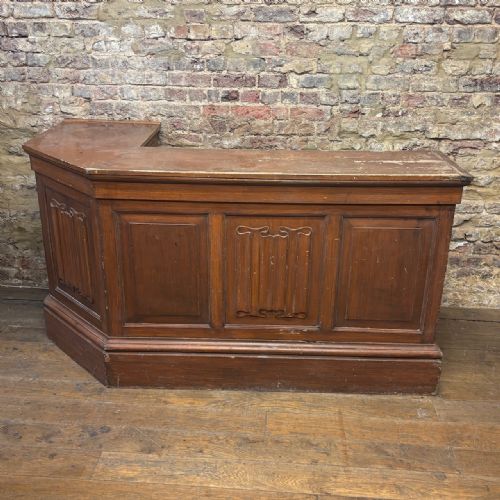
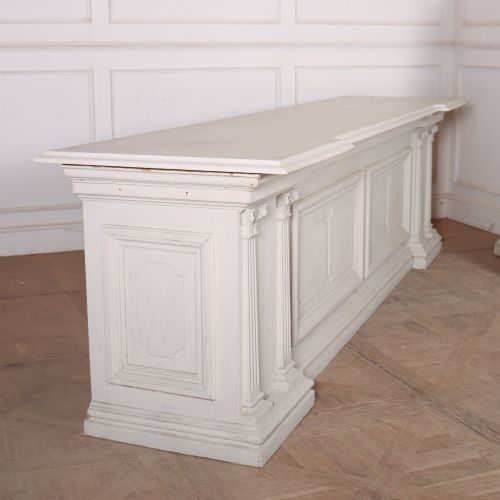
When searching for a retail shop fitting, a buyer encounters pieces designed for trade use from the nineteenth and twentieth centuries, ranging from expansive counters to smaller countertop display cases. The selection relies heavily on utilitarian forms produced during the Victorian, Edwardian, and Art Deco periods for commercial premises.
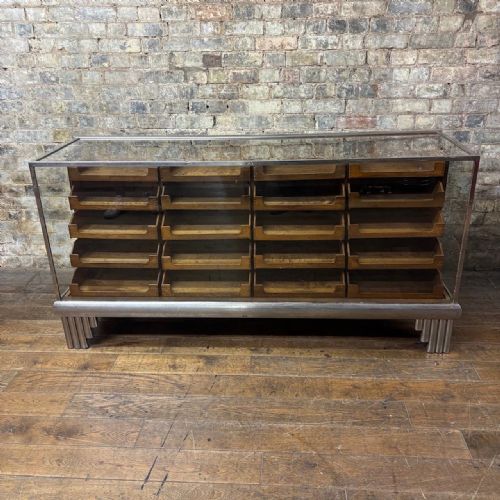
The most common versions met on this page include mahogany and oak display cabinets, large counters, and multi-drawer haberdashery units. These items were originally built to withstand heavy daily use while showcasing merchandise clearly to customers.
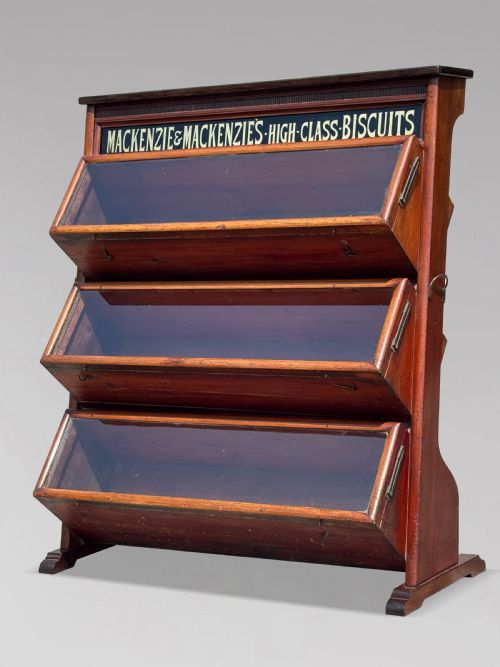
Origins vary from English commercial workshops to French provincial settings, encompassing specialist items like chocolate advertising cabinets and cotton reel display trees. Each object reflects the specific merchandising needs of historical shops, from confectioners to drapers.
Materials and construction
Timbers like mahogany, oak, and pine provide the structural framework for most counters and cabinets, frequently joined with sturdy construction methods to support heavy plate glass. Hardwoods offer resilience, whilst softer pine serves for large multi-drawer banks and provincial pieces.
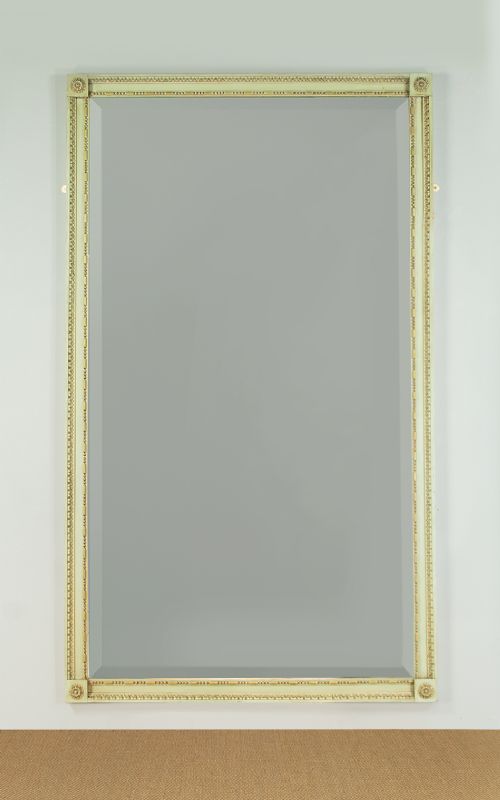
Glazing forms a central component, utilising large sheets of clear glass alongside mirrored interiors and occasionally etched panels to maximise light distribution around displayed goods. Metal elements such as brass, bronze, aluminium, and chrome appear on frames, handles, and display stands.
Finishes range from polished mahogany and ebonised wood to painted surfaces found on French and Hungarian examples. Structural hardware, including adjustable glass shelves and specialised till mechanisms, demonstrates the functional engineering of commercial interiors.
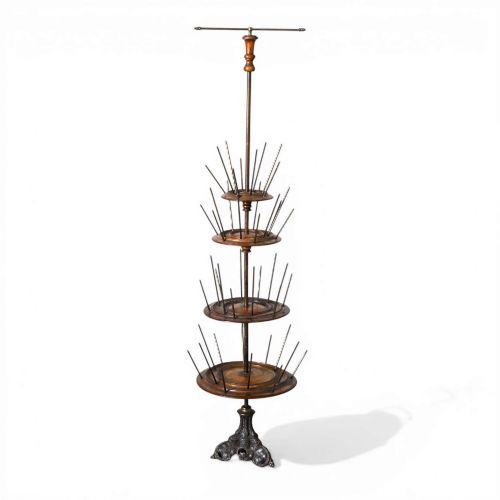
Cotton reel display trees once brought order to sewing notions, turning mundane haberdashery storage into tiered wooden sculptures.
Markers of quality
The calibre of a retail shop fitting depends upon the integrity of its timber framing and the proportion of original glazed panels. Superior examples employ dense hardwoods and complex joinery that maintain structural stability under heavy daily demands.
Originality of internal components, such as adjustable glass shelving, mirrored backs, and maker's plaques, distinguishes higher-grade pieces from later alterations. Finer manufacturing shows in the smooth operation of multiple drawers and the crisp casting of metal framing members.
The balance between utilitarian strength and refined detailing separates standard commercial stock from exceptional display pieces. Well-executed glazing bars and intact advertising signage elevate the significance of individual cabinets.
Dudley & Co·G H Gledhill Halifax·John Stow Ltd of Bradford·Saml Elliott & Sons
The Retail Shop Fitting Glossary
- Haberdashery counter
- A long shop unit traditionally featuring numerous shallow drawers with glass fronts or pulls for sorting small sewing goods. These multi-drawer banks offer substantial compartmentalised storage.
- Display cabinet
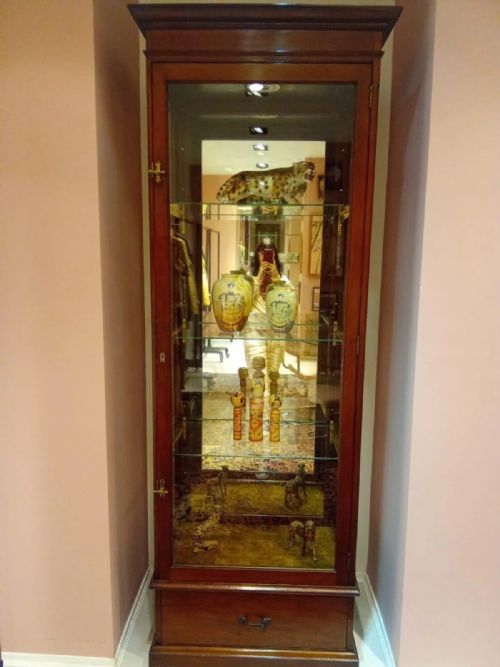
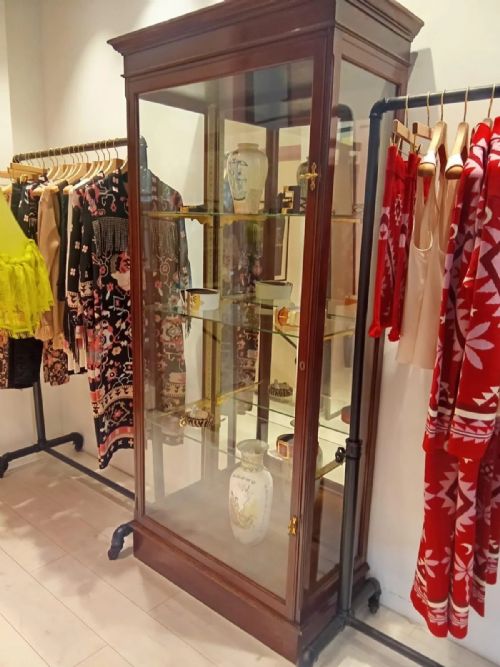
- A glazed piece of furniture engineered to showcase merchandise securely whilst protecting items from dust and handling. They frequently incorporate mirrored backs to reflect light.
- Countertop display case
- A smaller tabletop enclosure designed for placement directly on a serving counter to draw customer attention to high-value goods. Fry's and chocolate cabinets are typical examples.
- Advertising cabinet
- A branded display unit commissioned by manufacturers like Cadbury or Rowntree to promote specific confectionery lines inside retail stores. They often feature painted lettering or glazed branding.
- Display stand
- An open vertical structure or multi-tiered tree utilised for holding items such as cotton reels or small wares without enclosed glass protection.
Retail Shop Fitting: Frequently Asked Questions
How do I use a shop counter at home?
A shop counter serves effectively as a kitchen island, a hallway console, or a room divider. The generous surface area and internal shelving provide practical utility for modern domestic living.
Larger timber counters anchor open-plan spaces, whilst glass-topped display variants allow for the exhibition of personal collections or tableware within a living area.
How are display cabinets best cleaned?
Regular maintenance involves dusting wooden surfaces with a dry cloth and applying appropriate beeswax to nourish vintage timber. Glass panels require gentle cleaning with standard glass solution applied to a cloth rather than sprayed directly.
Care must be taken around original painted lettering, metal frames, and mirrored interiors to avoid abrasive contact with historic finishes.
Can I adjust the shelves in these cabinets?
Many Edwardian and Victorian display cabinets feature adjustable glass shelving supported by metal ratchets or wooden slots. This flexibility permits the accommodation of taller objects inside the glazed display area.
Care is required when repositioning heavy glass panes to prevent chipping the edges against the internal cabinet walls.
What distinguishes Victorian from Art Deco fittings?
Victorian shop fittings typically feature darker timbers such as mahogany, heavier mouldings, and ornate brass hardware. They emphasise traditional craftsmanship and robust, formal proportions.
Art Deco pieces from the nineteen-thirties introduce streamlined metal frames, aluminium components, and geometric forms that reflect modern industrial design trends of the period.