
Vintage Refectory Dining Table
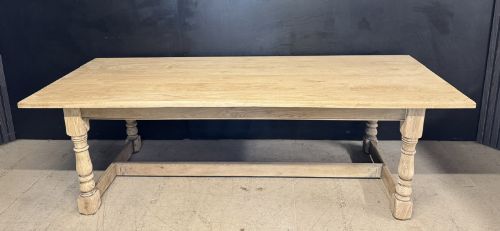
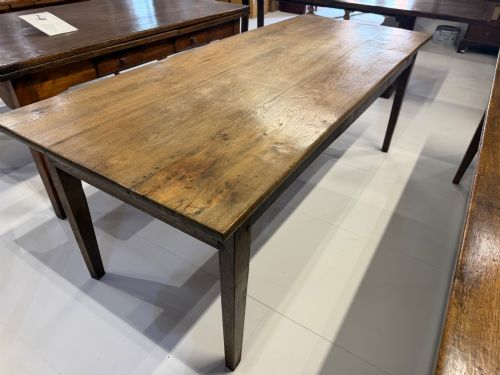
A vintage refectory dining table brings solid timber construction and long, sociable proportions straight into a modern kitchen or dining room.
Vintage Refectory Dining Table
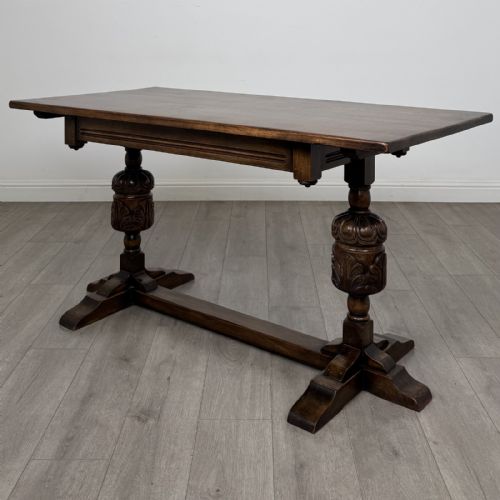
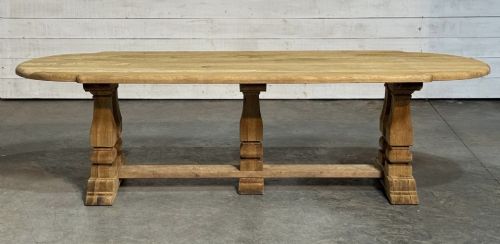
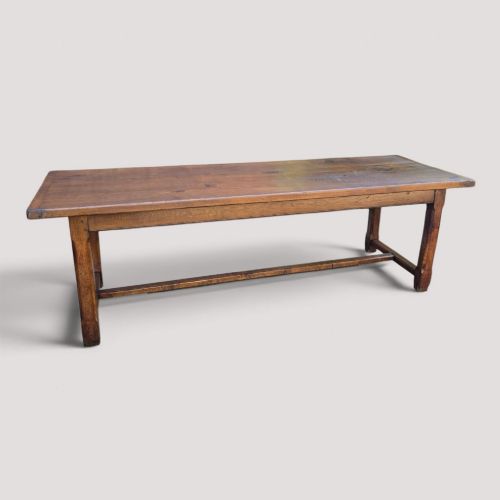
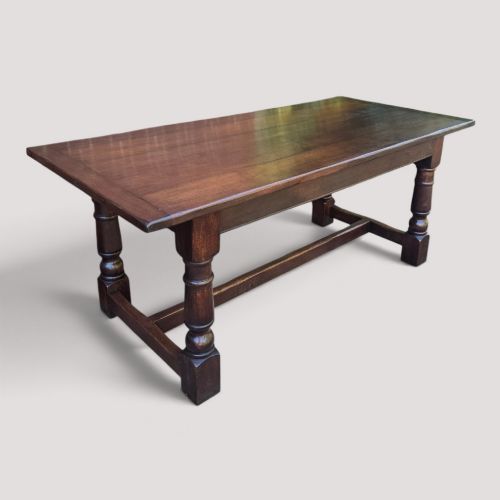
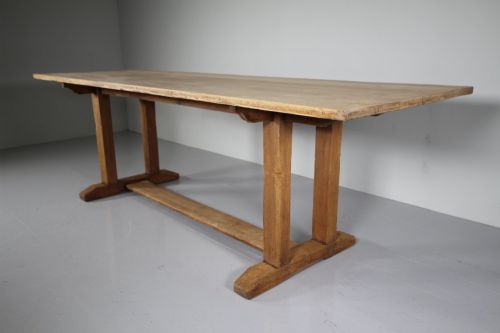
A vintage refectory dining table serves as a sturdy centrepiece for gathering people together over meals. When searching this phrase, a buyer encounters long, rectangular surfaces designed originally for communal dining in large halls or farmhouses.
The versions most commonly met on this page span the nineteenth century through the nineteen-thirties, taking inspiration from earlier Tudor, Elizabethan, and Jacobean styles. Many examples incorporate clever mechanisms like draw leaves or double extensions to expand the seating capacity.
Alongside standard tables, the selection includes related forms such as farmhouse tables, harvest tables, and matching benches with trestle ends. These pieces originate from British and French domestic traditions, prioritising practical everyday use over delicate ornamentation.
Evaluating quality and proportion
Quality in these tables rests primarily upon the integrity of the timber and the weight of the construction. Superior examples utilise thick, stable boards for the top and substantial joints that prevent wobble over long spans.
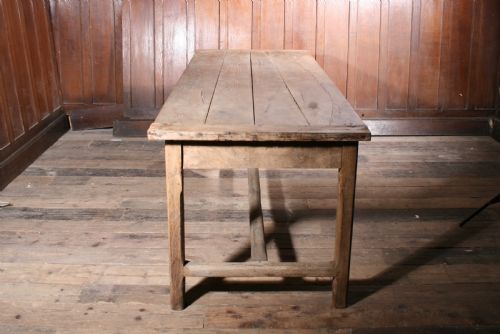
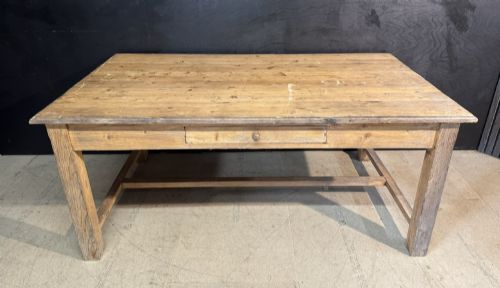
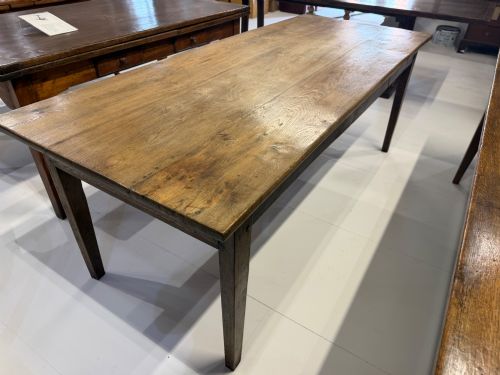
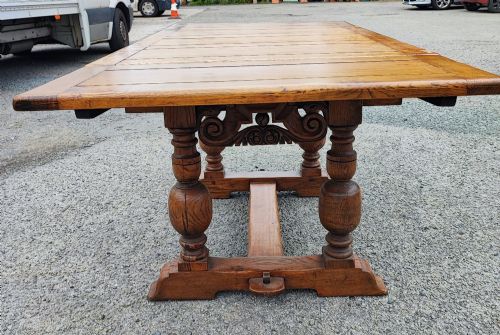
The refinement of the legs and trestle ends also distinguishes finer pieces, whether through balanced proportions, clean carving, or well-executed draw-leaf mechanisms that operate smoothly. Simpler utility tables rely on robust pine or plain oak planks, offering a functional charm without decorative flourishes.
Listings feature oak, pine, elm, beech, and walnut tables spanning the Victorian, Edwardian, and early twentieth-century periods.
Heals of London
The Vintage Refectory Dining Table Glossary
- Draw-leaf table
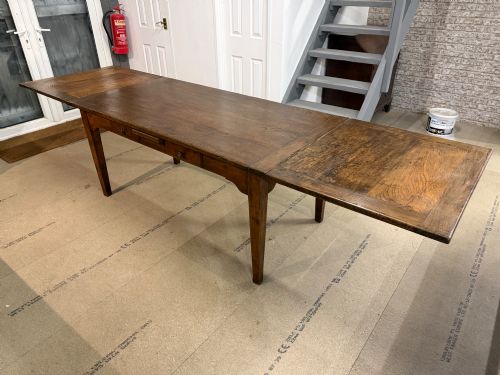
- An extending table equipped with two hidden leaves stored beneath the main top. These pull out from each end to lengthen the surface area quickly.
- Trestle ends
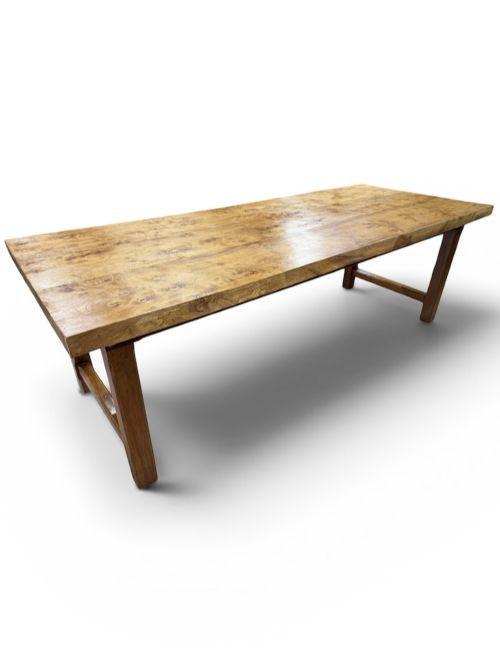
- Support structures positioned at each end of a table rather than corner legs. They distribute weight evenly and allow more legroom along the sides.
- Bobbin legs
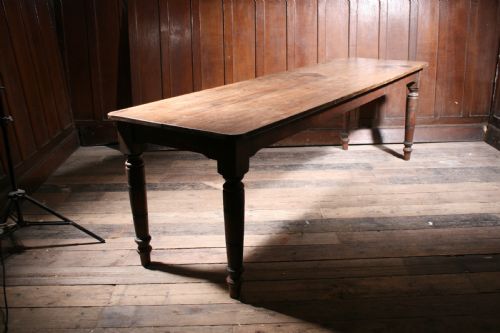
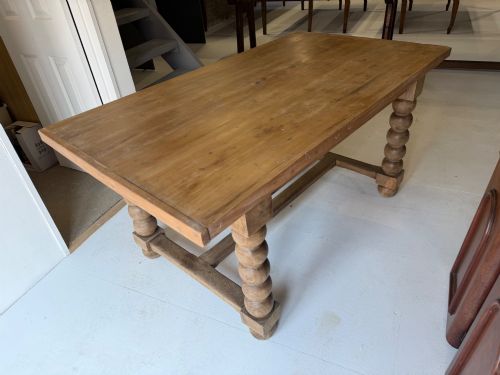
- Turned furniture legs shaped with a series of rounded, spherical swellings resembling bobbins of thread. This decorative turning appears frequently on nineteenth-century pieces.
- Harvest table
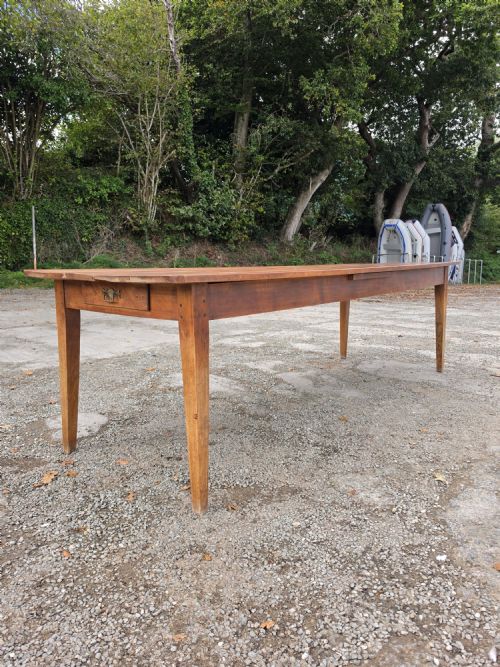
- A long, narrow utilitarian table traditionally used during agricultural seasons. They are commonly constructed from pine or fruitwood with straightforward tapered legs.
Vintage Refectory Dining Table: Frequently Asked Questions
How many people does a refectory table seat?
These long tables easily accommodate six to eight diners, while larger examples or those with extension leaves can seat even more.
The absence of corner legs allows chairs or benches to tuck neatly along the full length of the sides.
What is the difference between a refectory table and a farmhouse table?
Refectory tables traditionally feature long proportions supported by trestles or specific leg assemblies connected by floor stretchers.
Farmhouse tables often utilise standard vertical legs positioned closer to the corners and may originate from everyday kitchen or harvest use.
How do draw-leaf extension tables work?
Draw-leaf tables contain two additional panels hidden neatly beneath the main surface at either end.
To extend the table, you pull the main leaves apart slightly so the hidden leaves rise up and slide smoothly into place.
How do I care for a vintage wooden dining table?
Protect the timber surface by using placemats and coasters to guard against heat and moisture marks.
Regular dusting and occasional application of appropriate wax or oil will maintain the natural lustre of the oak or pine.