


Carved French Dining Table
A carved french dining table brings heft and timber character to a room, ranging from pale oak refectories to walnut draw leafs.
Carved French Dining Table
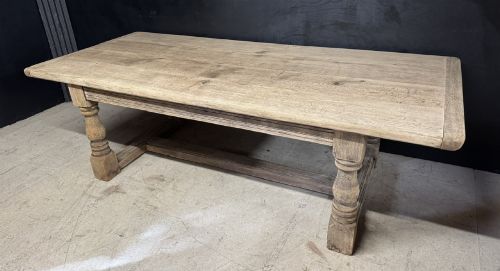
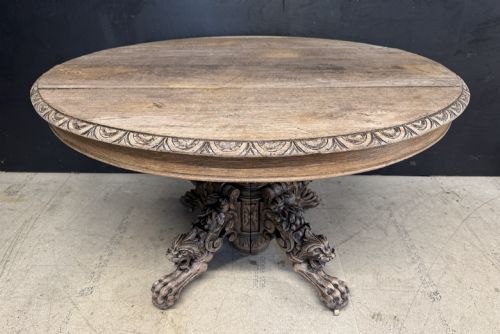
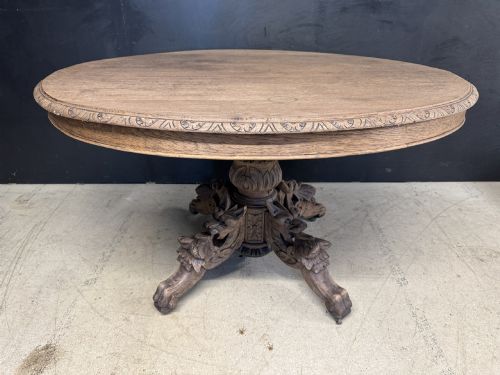
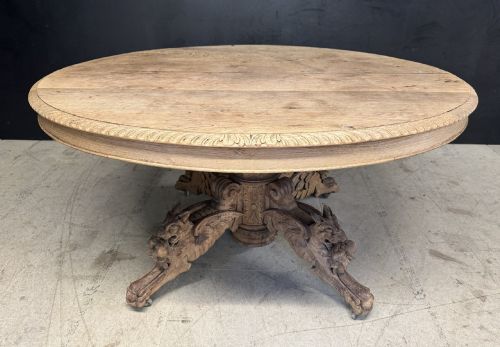
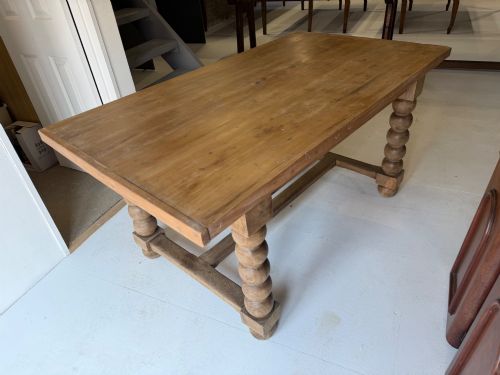
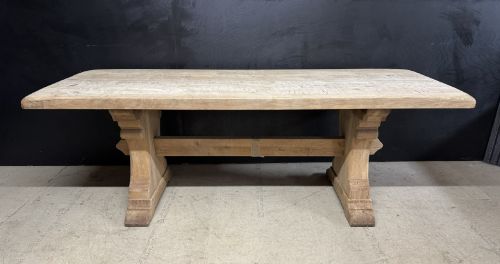
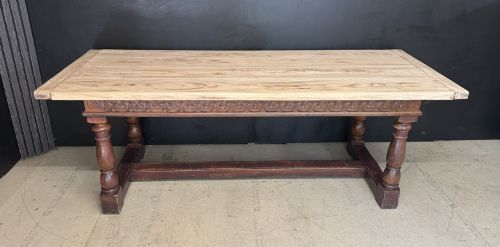
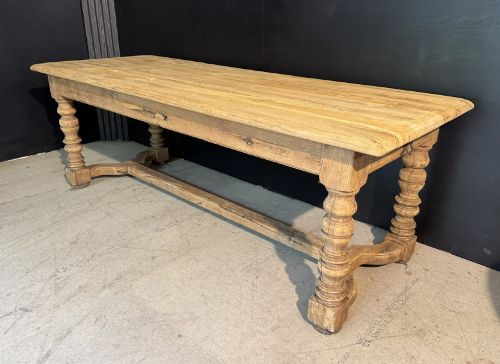
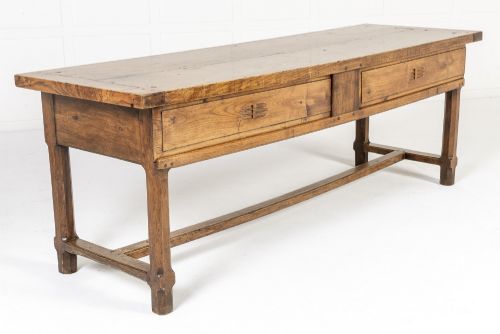
When you search for a carved french dining table, you meet heavy timber boards built for gatherings, most commonly represented by oak farmhouse and refectory formats from the nineteenth and twentieth centuries.
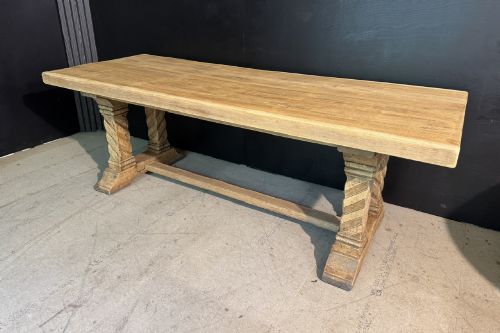
The selection extends from plain timber boards on trestle supports to extending walnut surfaces with parquetry tops and draw leaf mechanisms.
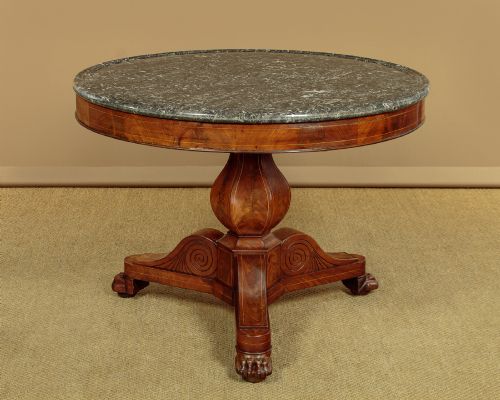
Alongside standard dining formats, the selection includes round centre tables topped with marble and smaller fruitwood gateleg designs.
Grade and execution
Quality rests in the selection of the timber grain, the depth and crispness of the hand carving, and the integrity of the original joints.
Examples finished in walnut or featuring complex parquetry and draw leaf systems demonstrate greater joinery ambition than simpler softwood or beech variants.
Listings span from eighteenth-century gatelegs to 1930s walnut parquetry, utilising oak, fruitwood, marble, and brass.
The Carved French Dining Table Glossary
- Parquetry
- Geometric wood inlay forming patterned surfaces on tabletops. This technique creates visual texture using contrasting timber tones.
- Refectory table
- A long, narrow dining table traditionally used in communal halls. These pieces often feature stretcher bases for added stability.
- Draw leaf
- An extension system where auxiliary leaves slide out from beneath the main top. This mechanism expands seating capacity without removing the central surface.
- Gueridon
- A small round occasional or centre table supported by a central pillar or legs. These tables often feature inset marble slabs.
- Trestle table
- A board resting on two or more support frames rather than four legs. This construction allows unhindered legroom along the length.
Carved French Dining Table: Frequently Asked Questions
How do I seat twelve people?
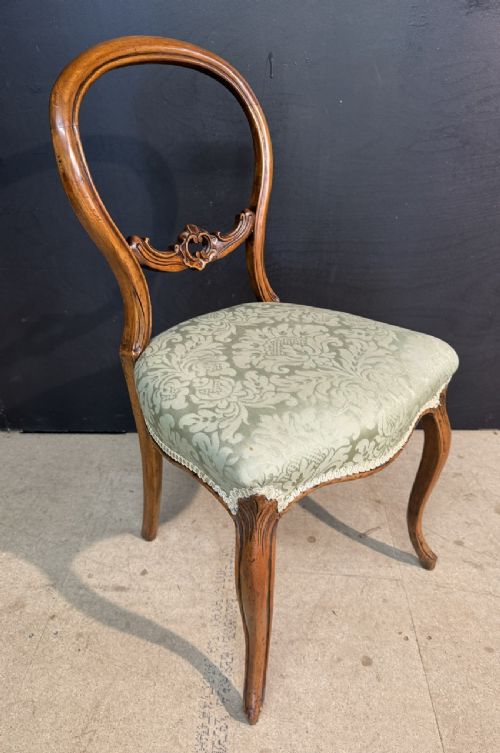
Look to large refectory formats or draw leaf designs that extend at the ends. These longer pieces accommodate additional chairs comfortably along the timber flanks.
Check the clearance beneath the apron to ensure diners have adequate legroom while seated.
How do I care for oak surfaces?
Wipe timber surfaces with a damp cloth and dry them immediately. Avoid excessive moisture on antique finishes.
Apply natural beeswax occasionally to nourish the grain and protect the wood.
Are marble top tables practical?
Marble top centre tables provide a cool, hard surface suited to serving food or display. They wipe clean easily after use.
Protect the stone from acidic spills which can etch the polished surface over time.