
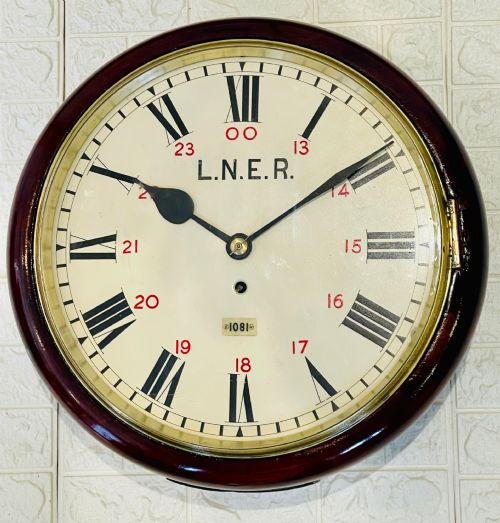
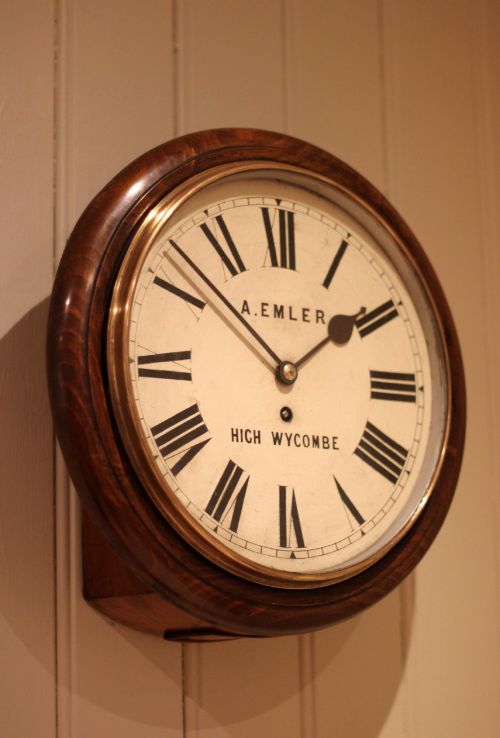
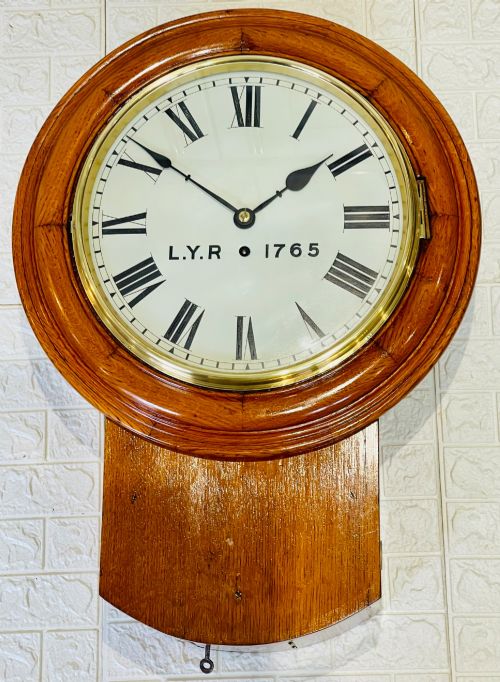
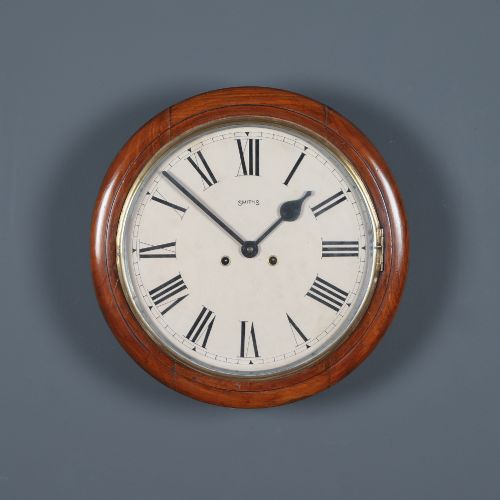
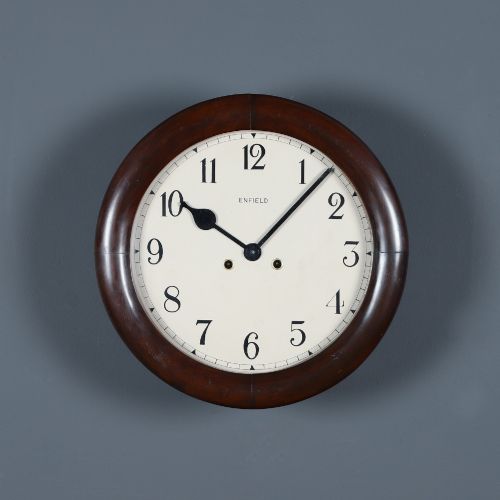
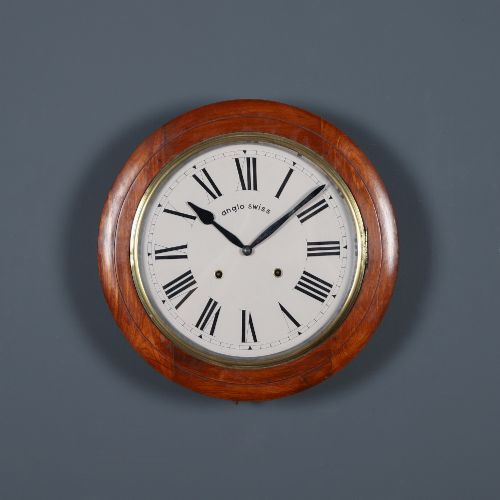
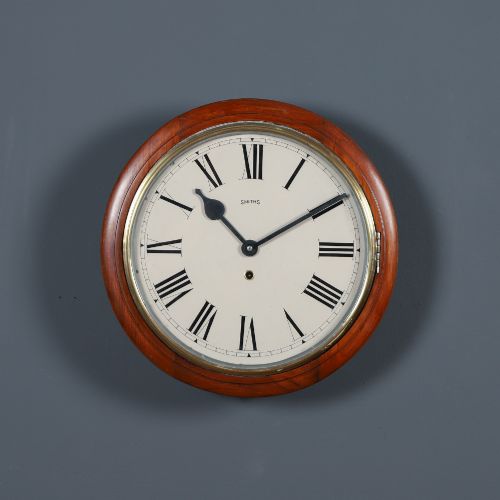
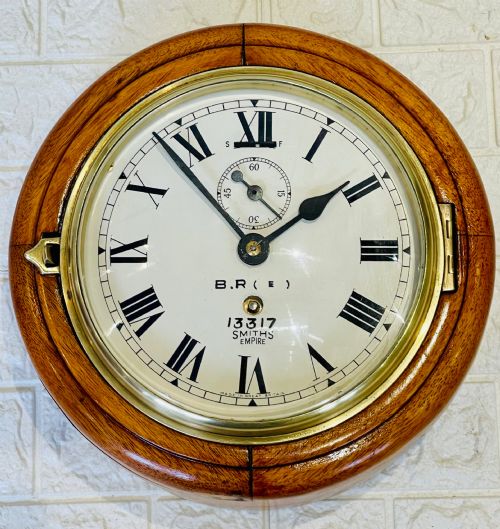
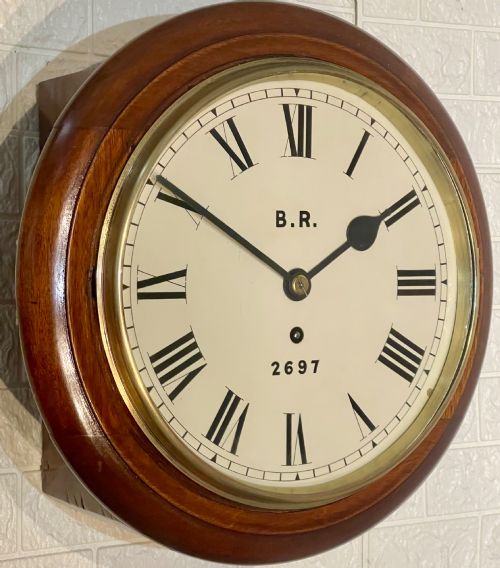
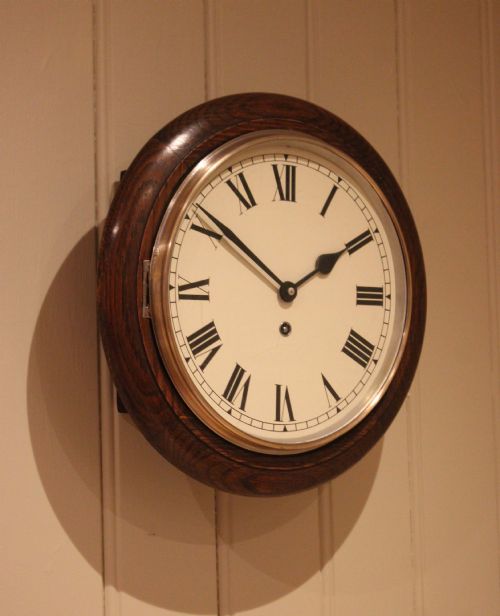
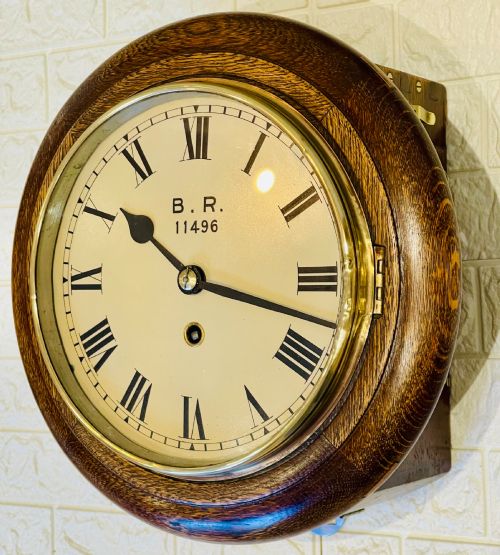
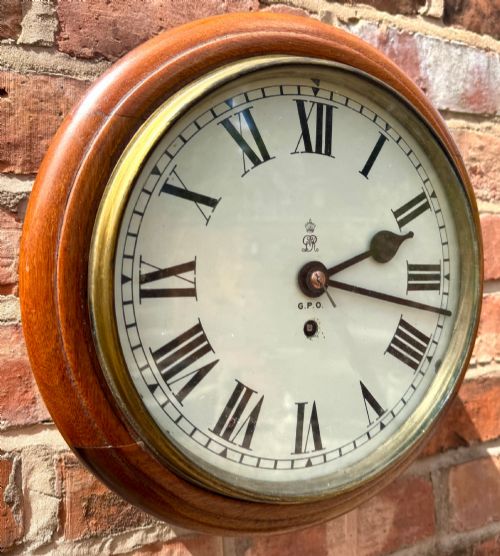

Vintage Railway Dial Clock
A vintage railway dial clock brings utilitarian British history into a room with its bold face and sturdy case.
Vintage Railway Dial Clock
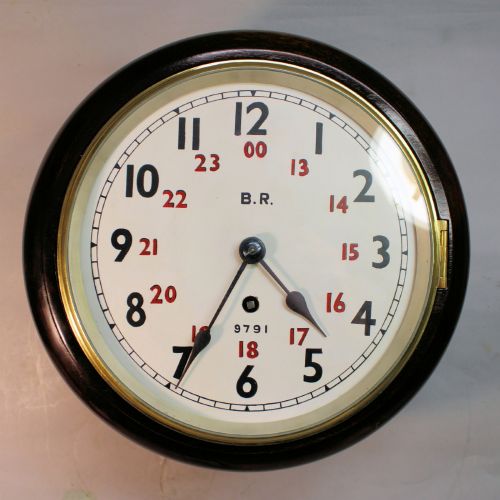
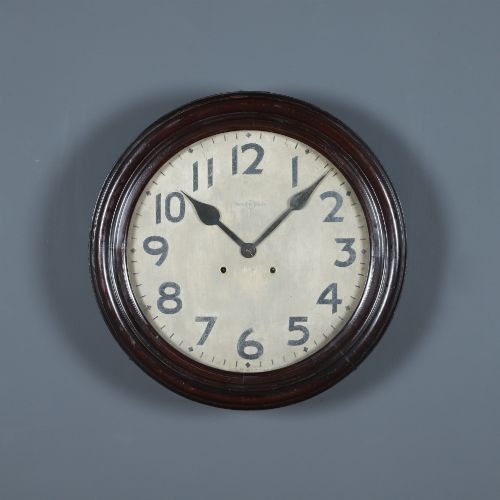
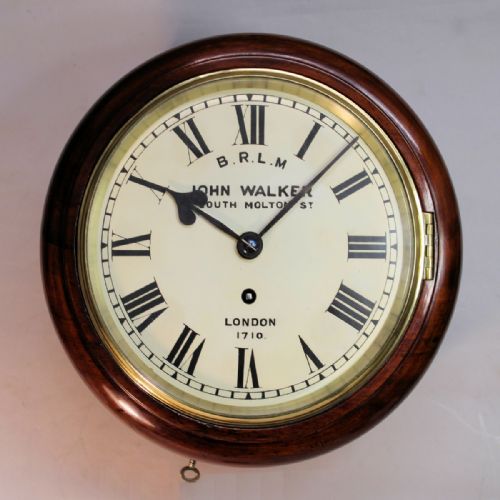
A vintage railway dial clock is a heavy-duty wall timekeeper originally made for station platforms, offices, and operational rooms across the network. These pieces combine simple, legible circular faces with robust timber housings designed to withstand decades of heavy use and vibrations.
The versions met on this page span the Victorian era through the mid-twentieth century, bearing company initials such as L.N.E.R., G.W.R., or British Railways. They survive in various timber casings, notably mahogany and oak, reflecting the standards of regional transport offices.
Materials and construction
Makers constructed the primary housings from dense hardwoods like mahogany, oak, and beech, often utilising a deep box frame to enclose the heavy movement and pendulum. Brass components form the internal gears and bezels, while thick glass protects the painted paper or metal dials.
Many examples rely on a fusee movement, a specialised mechanical setup designed to maintain even tension on the gear train as the mainspring unwinds, ensuring reliable timekeeping over long operational shifts.
Many station clocks carry subtle scratch marks inside their cases where meticulous Victorian watchmakers recorded their maintenance visits in pencil.
Judging quality in station timepieces
Quality rests in the precision and complexity of the movement, where a clean chain fusee mechanism commands greater respect than a standard spring-driven alternative. The integrity of the timber case, original painted dial numerals, and crisp station lettering further distinguish standard utility models from exceptional pieces.
The reputation of the maker inscribed on the dial plate also influences standing, as does the clarity of railway company stampings on the timber or brass bezel which confirm authentic service lineage.
John Walker·Smiths·Camerer Cuss And Co·Enfield·Anglo Swiss Watch Co
The Vintage Railway Dial Clock Glossary
- Fusee
- A conical pulley mechanism connected to the mainspring by a chain or cord, designed to equalize the driving force as the spring runs down.
- Drop dial
- A clock case featuring an extended lower trunk below the circular face, providing space for a swinging pendulum.
- Bezel
- The brass or wooden ring that holds the protective glass cover in place over the clock face.
- Timepiece
- A clock movement that indicates hours and minutes without an audible striking train for the hours.
- Dial
- The circular visible face of the clock where numerals indicate the passing hours.
Vintage Railway Dial Clock: Frequently Asked Questions
How do I wind a fusee railway clock?
Wind the clock using a proper key inserted into the winding hole on the dial face, turning it gently until resistance meets the stop. Take care not to overwind the mechanism, as this puts undue stress on the chain and mainspring.
Most fusee movements require attention roughly once a week or every eight days depending on the specific gear ratio. Ensure you support the pendulum if the clock is moved after winding.
Where were these clocks originally hung?
Railway clocks hung in prominent locations such as station master offices, ticket halls, platform waiting rooms, and signal boxes where staff and passengers needed reliable time. Their bold faces ensured high visibility across large, bustling public spaces.
Later examples served administrative buildings, regional headquarters, and maintenance depots associated with the expanding transport network.
How do I date a station clock?
Examine the lettering and company initials painted on the dial or stamped into the timber case, matching them to known periods of railway amalgamation or nationalization. The construction methods, such as dovetailed mahogany boxes versus later beech frames, provide further chronological clues.
Maker signatures and serial numbers recorded on the movement backplate often allow for precise tracing against historical maker records.
Can I hang these clocks on modern walls?
Mounting a heavy railway clock requires securing a strong screw or fixing directly into a wall stud or masonry anchor rather than relying on standard plasterboard hooks. The combined weight of the hardwood case and brass movement demands a robust support.
Check that the wall surface is flat so the deep box case hangs plumb, allowing the pendulum to swing freely without catching the interior sides.