
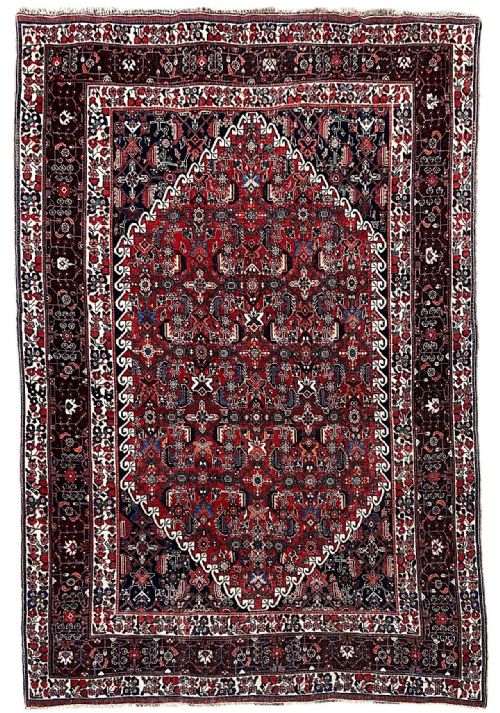
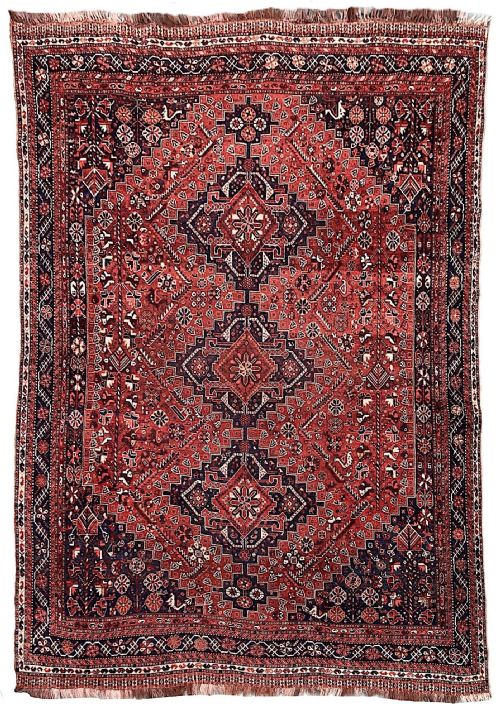


Vintage Qashqai Carpet
When you search for a vintage qashqai carpet, you are looking for a South Persian tribal floor covering woven with rich wool and characteristic motifs.
Vintage Qashqai Carpet
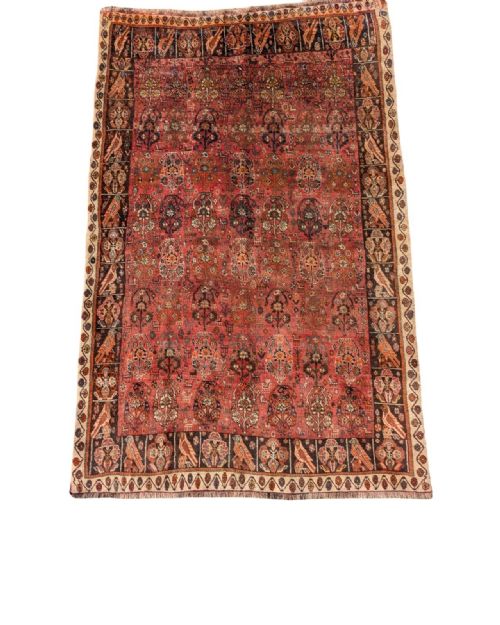
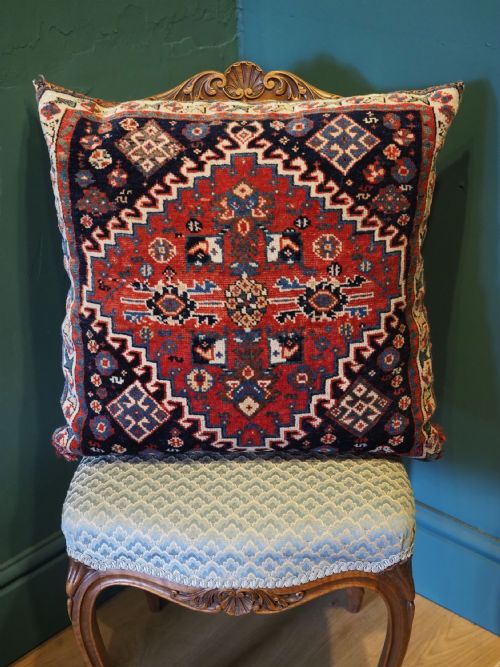
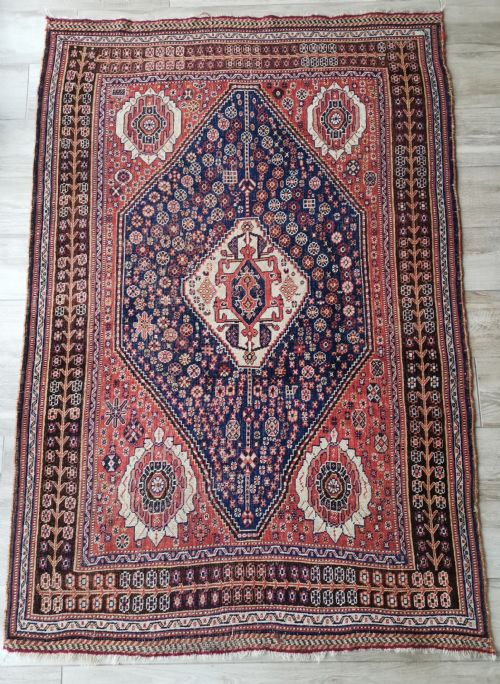
These textiles originate from the nomadic and village weavers of South Persia, encompassing regional styles such as Shekarlu, Kashkuli, and Gabbeh. The selection spans floor rugs, large carpets, flatwoven kilims, and smaller utility items like saddle bags.
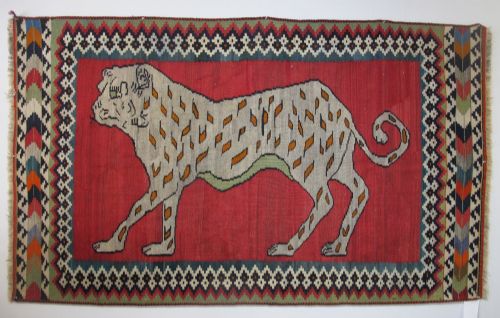
The aesthetic is defined by tribal iconography, including geometric medallions, tree of life designs, lion figures, and peacocks. Pieces date from the nineteenth and early twentieth centuries, reflecting traditional nomadic weaving practices.
Buyers encounter formats ranging from intimate hearth rugs to expansive main carpets suitable for large rooms. Related tribal groups such as Luri and Khamseh frequently share similar design vocabularies and weaving structures.
Materials and construction
Weavers utilised hand-spun wool for both the pile and the structural foundations, often combining it with cotton in later or larger examples. This wool retains natural lanolin, contributing to a resilient and tactile surface texture.
Colour derives predominantly from natural dyes applied to the fleece before knotting. Flatwoven kilims and pile rugs alike demonstrate traditional South Persian loom techniques passed down through generations.
Look closely for whimsical peacock motifs and stylized lions hiding among the geometric fields of these nomadic weaves.
Factors that define quality
Knot density and the precision of the geometric layout dictate the refinement of the weaving. Finer examples display meticulous execution of intricate tribal motifs and balanced proportions.
The depth and clarity of the natural dye palette contribute significantly to visual success. Subtle variations in tone, known as abrash, indicate natural dyeing processes and add depth to the field.
The Vintage Qashqai Carpet Glossary
- Gabbeh
- A coarse, thick pile rug traditionally woven for household use by nomadic groups, featuring sparse geometric designs.
- Kilim
- A flatwoven textile produced without a pile, utilising slit-tapestry techniques to create sharp geometric patterns.
- Kelleh
- A rectangular format of carpet longer than it is wide, designed specifically for traditional Persian room layouts.
- Kashkuli
- A sub-group associated with fine Qashqai weaving, known for particularly supple wool and intricate detail.
- Shekarlu
- A specific tribal design tradition within Qashqai weaving, frequently characterised by distinctive border arrangements and motifs.
Vintage Qashqai Carpet: Frequently Asked Questions
How do I care for my rug?
Vacuum gently without a rotating brush to prevent fibre damage. Professional cleaning by a specialist in antique textiles is recommended when required.
Keep the piece away from direct, prolonged sunlight to protect the natural dyes. Rotating the rug periodically ensures even wear across the surface.
Are these pieces made with natural dyes?
The pieces from this period rely predominantly on traditional natural dye sources. These materials yield rich, complex tones that mellow gracefully over decades.
Subtle shifts in colour within a single field area often indicate the use of natural dye batches. This characteristic variation is a mark of authenticity rather than a fault.
Where were these textiles produced?
The pieces originate from the Fars province of South West Persia, home to the confederation of Qashqai tribes. Nomadic and village weavers produced them for personal use and regional trade.
Related tribal groups such as the Luri and Khamseh inhabited neighbouring areas and shared overlapping design traditions. This geographical proximity explains the stylistic similarities found across the regional output.