

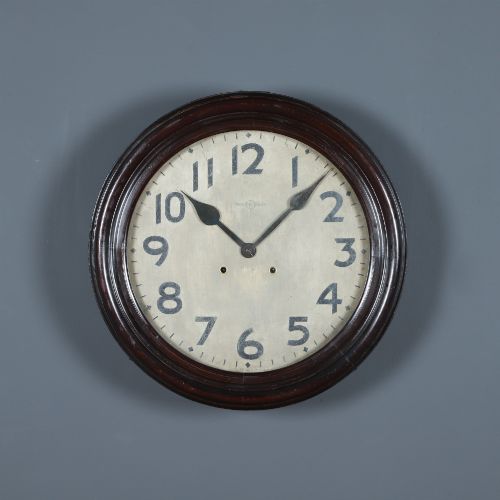


Vintage Pub Clock
A vintage pub clock brings robust timber cases and bold painted dials into domestic rooms, offering practical timekeeping with strong architectural presence.
Vintage Pub Clock
When you search for a vintage pub clock, you encounter substantial dial timepieces designed for public spaces, railway stations, and taverns rather than domestic mantelpieces. The pieces listed here span the Georgian, Victorian, and Edwardian eras, alongside later twentieth-century examples.
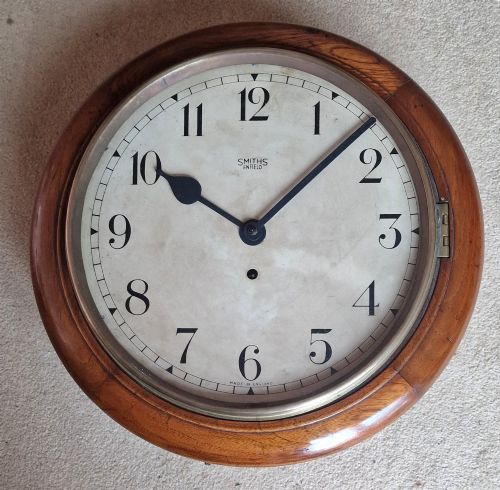
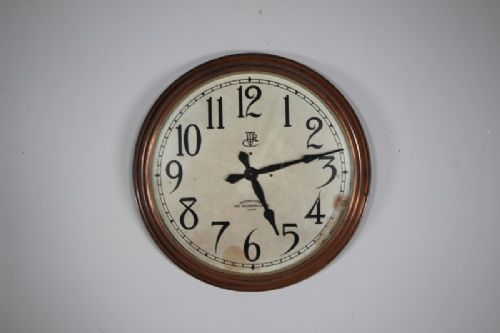
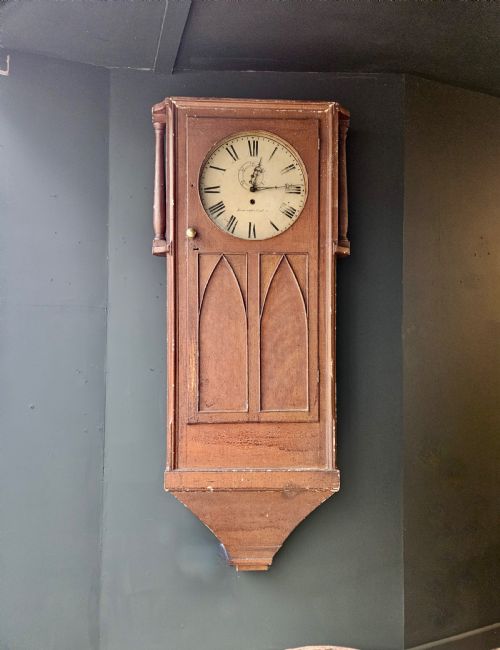
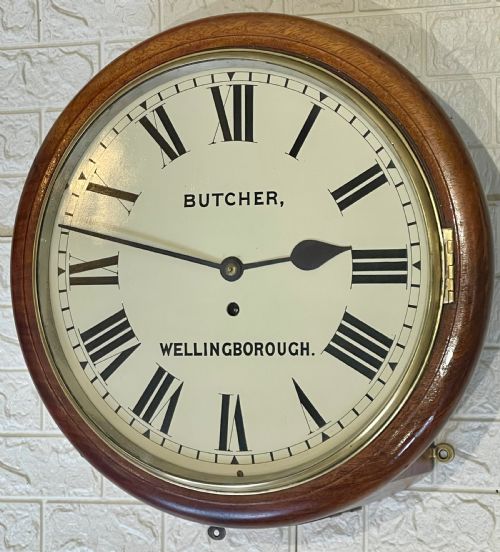
You are most likely to meet wall clocks housed in round timber surrounds with hinged bezels for easy winding and setting. These robust timekeepers include simple dial clocks alongside drop dial variants and painted face displays.
Origins vary across English workshops and specific retail outlets, while certain items show broader international trade influences such as Japanese Meiji production. The primary forms remain wall-mounted, prioritising clear legibility across a busy room.
How they were made
Cabinet makers utilised dense native hardwoods like mahogany and oak for the robust outer cases, frequently employing pine for secondary framing and backboards. Brass frames the glazed doors on many examples, protecting the paper or painted iron dials within.
Movements rely upon mechanical fusee designs driven by chains or cords to maintain even tension as the mainspring unwinds. Dials feature hand-painted numerals and minute tracks applied directly to metal or timber substrates.
Vintage Pub Clock Retail Price Guide 2026
Typical asking prices for vintage pub clock among the pieces listed under this phrase on Sellingantiques today, from the lower quarter to the upper quarter. They describe what is for sale here now, not the wider market.
Recorded styles range from Gothic Revival and Regency to industrial factory timepieces and Japanese Meiji railway station clocks.
What varies in quality
The refinement of the cabinet work dictates the initial impression, separating plain utilitarian boxes from pieces with carefully matched wood veneers and moulded bezels. Subtleties in the dial painting, such as crisp hand-lettering and clean chapter rings, distinguish superior examples from simpler alternatives.
The sophistication of the internal movement matters greatly, with chain-driven fusee mechanisms representing a higher standard of clockmaking than basic timepieces. Originality of components and survival of early paint finishes or patinated brass further elevate the standing of an individual clock.
The Vintage Pub Clock Glossary
- Fusee
- A conical pulley used in mechanical clocks to equalise the power of the mainspring as it unwinds. This mechanism ensures consistent force is delivered to the gear train.
- Drop dial
- A clock case featuring an extended lower trunk beneath the circular dial. This shape accommodates the pendulum swing in wall-mounted timepieces.
- Bezel
- The ring of brass or wood that holds the glass protecting the dial. It typically hinges open to allow access for setting the hands.
- Chapter ring
- The circular band on a clock face bearing the hour numerals. It frames the central area where the hands are mounted.
Vintage Pub Clock: Frequently Asked Questions
Where should I hang a pub clock?
These clocks demand generous wall space and a sturdy fixing point to support their considerable weight. They suit high-ceilinged rooms where their bold dials can be read from a distance.
Avoid placing them in areas subject to dampness or direct sunlight, which can damage the timber cases and delicate painted dial surfaces.
How do fusee movements work?
A fusee movement uses a conical pulley connected to the mainspring by a chain or cord. As the spring loses tension, the chain moves to a wider section of the cone, maintaining steady power.
This clever mechanical arrangement helps the clock maintain accurate time throughout its running cycle between winds.
Are these clocks noisy?
Most wall dial clocks produce a steady, audible ticking sound due to their heavy pendulums and straightforward gear trains. Some examples also incorporate striking mechanisms that sound the hours.
Consider the acoustic environment of the room before mounting a ticking clock in a quiet bedroom or study.
How do I wind the clock?
Winding involves inserting a key into the small aperture on the dial face and turning it gently until resistance is felt. You must avoid over-winding, which can strain the mainspring.
Regular winding at consistent intervals keeps the mechanism functioning smoothly and maintains reliable timekeeping.