
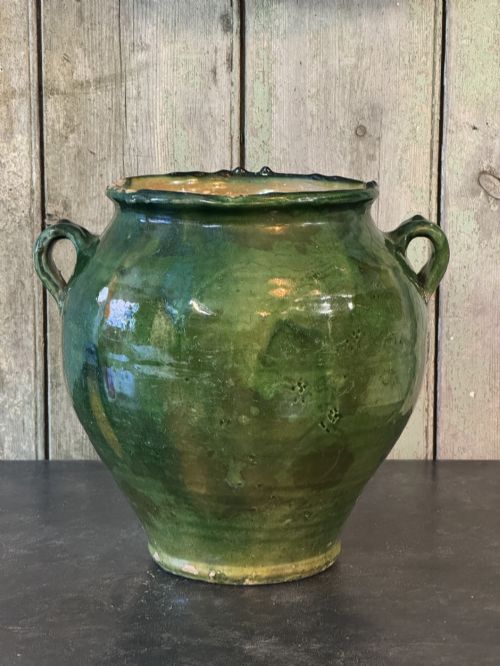


Vintage Preserve Jar
These vintage preserve jar examples span French confit pots to silver-mounted crystal tableware, offering practical charm for the modern kitchen.
Vintage Preserve Jar
A vintage preserve jar covers a broad spectrum of vessels, from humble French terracotta and glazed earthenware confit pots to refined silver-mounted cut glass tableware. Buyers exploring this category encounter storage jars, pickling jars, and lidded condiment pots originating across various historical periods.
The selections on this page lean heavily toward nineteenth-century French green glazed earthenware alongside early twentieth-century British silver plate and cut glass designs. Examples range from simple confit pots and blown glass pickling jars to elaborate jam dishes and figural silver pots shaped like fruit.
How they were made
Makers utilised traditional forming methods, throwing terracotta on the wheel or blowing glass by hand to create sturdy vessels intended for daily domestic utility. Confit jars received lead or alkaline glazes applied by hand before firing in kilns to ensure liquid containment.
Silversmiths and metalworkers added mounts, stands, and swing handles in sterling silver and silver plate, often pairing these metal fittings with heavy cut glass, lead crystal, or ceramic bodies.
A silver jam pot sculpted precisely in the form of an apple ensures breakfast comes with an unexpected orchard twist.
What varies in quality
Quality rests in the crispness of the glass cutting, the weight and purity of the crystal or glass body, and the durability of the earthenware glaze. Simpler utilitarian pickling jars show the tool marks of their manual production, whereas finer tableware exhibits refined polishing and geometric facet cutting.
The integration of metal components dictates upper-tier examples, where hallmarked sterling silver mounts fit precisely against the glass or ceramic rim without gaps or wobble.
Hukin and Heath·Asprey and Co·Plichta Pottery·Richard Ginori·Walker and Hall
The Vintage Preserve Jar Glossary
- Confit Pot
- A traditional French earthenware vessel originally utilised for storing and preserving meats or fruits. These pieces typically feature partial or full green glaze and sturdy side handles.
- Cut Glass
- Glassware decorated by hand with wheel-cut geometric patterns that refract light. This technique provides distinct surface texture and weight.
- Silver Plate
- A base metal coated with a thin layer of silver. Many twentieth-century condiment stands and jam dish frames utilise this method for decorative gleam.
- Jasper Ware
- A fine-grained stoneware developed in the eighteenth century, notable for its matte texture and contrasting applied white relief decorations.
- Lead Crystal
- Glass manufactured with the addition of metallic oxide to increase brilliance and weight. This material yields a clear ring when struck.
Vintage Preserve Jar: Frequently Asked Questions
How were these jars originally used?
Many of these vessels served practical kitchen roles, such as storing preserved fruits, confit meats, or pickled vegetables in French and English homes.
Finer examples transitioned to the dining table as lidded jam pots, honey jars, or condiment servers accompanied by dedicated silver spoons.
How do I clean an antique silver mounted jar?
Clean the glass or ceramic body with warm soapy water while avoiding harsh abrasives that might scratch the glaze or crystal surface.
Polish the sterling silver or silver-plated mounts gently with a specialised cloth, taking care to keep polish residue away from the glass joints.
Can I use these for modern food storage?
Glazed earthenware and glass vessels remain suitable for holding dry goods, condiments, or preserves on the kitchen counter.
Inspect older vessels for hairline cracks or historical glaze wear before storing wet foodstuffs for extended periods.
How do I date a silver and glass preserve pot?
Silver mounts on British pieces frequently bear hallmarks that indicate the assay office, standard mark, and date letter corresponding to the exact year of manufacture.
Glass style, cutting depth, and the presence of pontil marks provide additional clues to differentiate nineteenth-century pieces from later twentieth-century productions.