


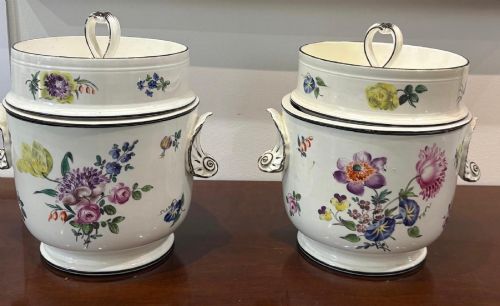
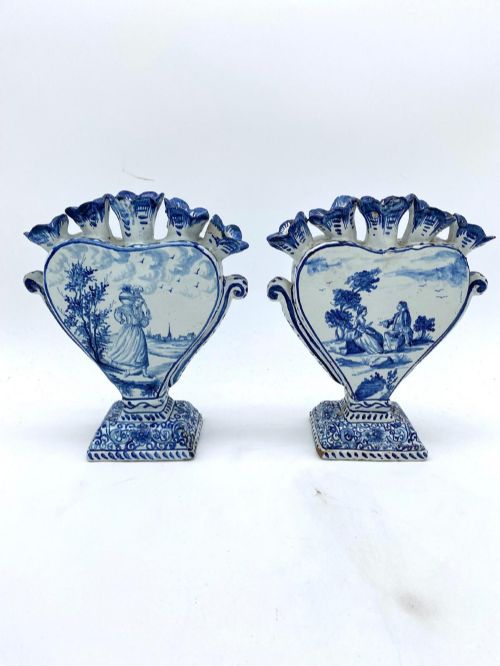
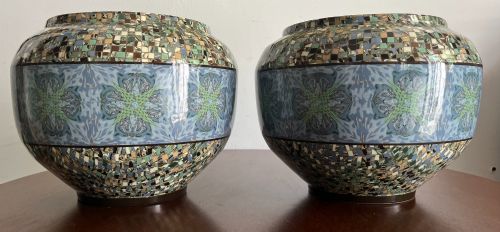


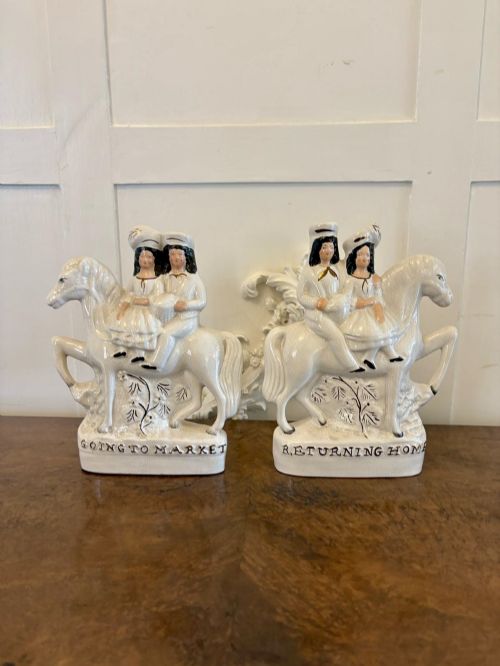

Vintage Pottery Pair
These vintage pottery pair selections span Victorian Staffordshire figures to Japanese Satsuma vessels, offering symmetrical balance and period charm for interior display.
Vintage Pottery Pair
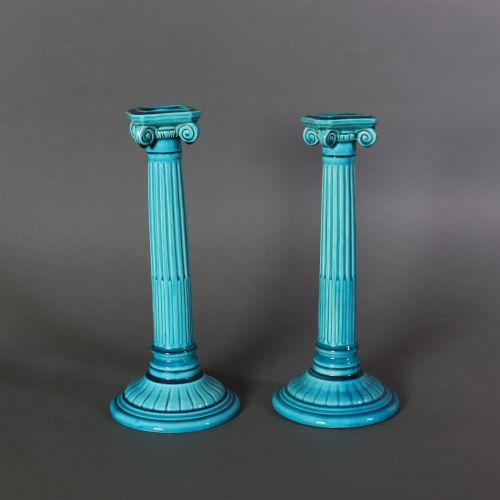
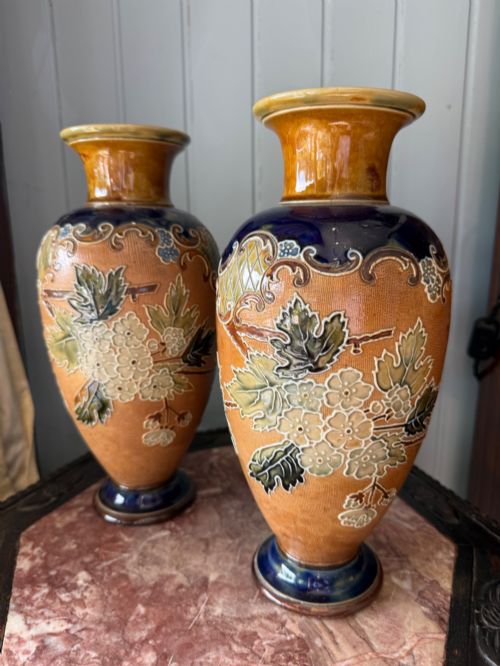
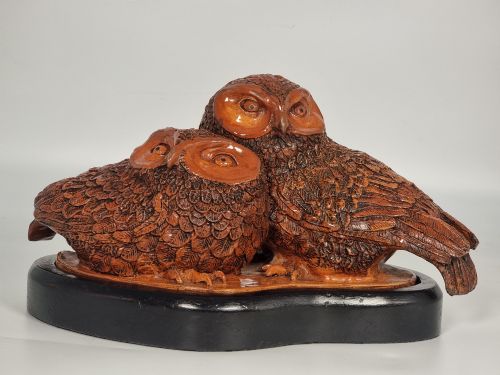
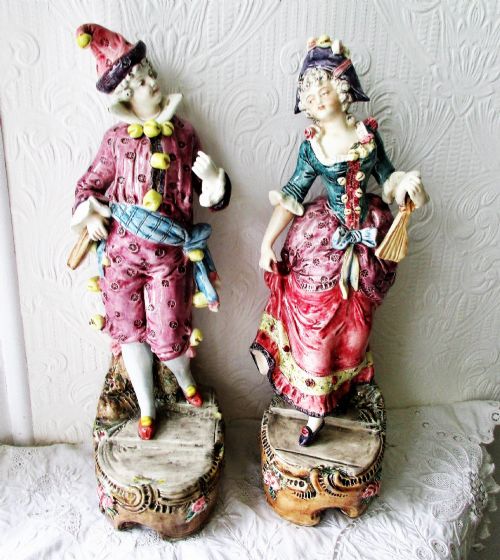
A vintage pottery pair brings matching symmetry to interior spaces, uniting two corresponding vessels or figures created as a matched set. When searching this phrase, collectors encounter diverse forms including decorative vases, animal figures, candlesticks, and table lamps.
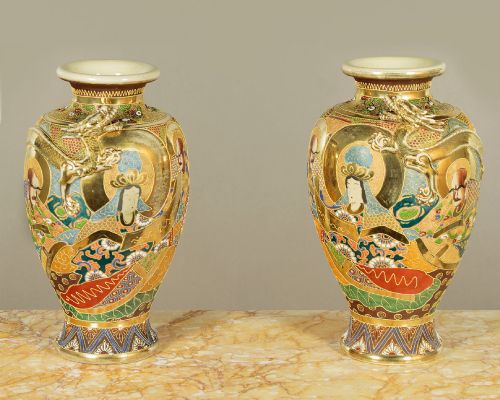
The selections span European earthenware and Asian porcelain traditions, originating from nineteenth-century Staffordshire potteries, Meiji period Japan, and continental workshops. Victorian mantel dogs, Dutch delftware cows, and Japanese Satsuma vases represent the dominant styles found within this category.
How they were made
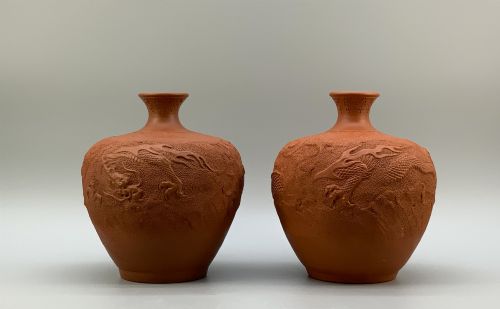
Potters shaped these pieces using earthenware, stoneware, terracotta, and porcelain, often applying intricate glazes, enamel colours, and occasional gold leaf detailing. Manufacturing techniques combined hand-sculpting, moulding, and wheel-throwing depending on whether the object was a figural group or a thrown vessel.
Surface decoration frequently involved hand-painted blue and white pigments, polychrome enamels, drip glazes, or transfer printing. Kiln firing fixed these pigments into durable ceramic bodies, while specialised workshops utilised specialised slipcasting and earthenware moulding.
Vintage Pottery Pair Retail Price Guide 2026
Typical asking prices for vintage pottery pair among the pieces listed under this phrase on Sellingantiques today, from the lower quarter to the upper quarter. They describe what is for sale here now, not the wider market.
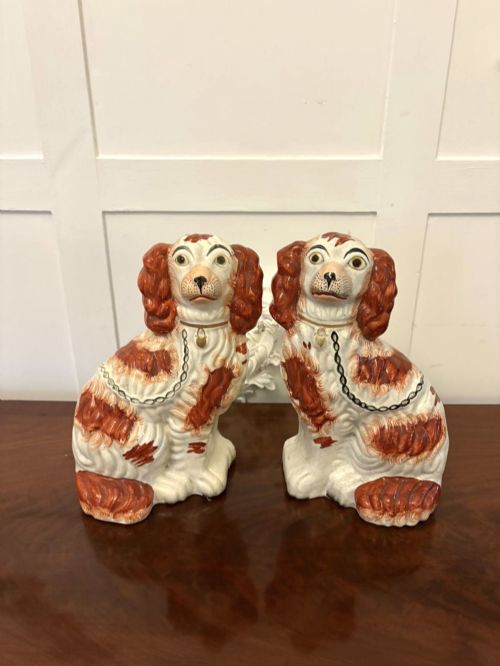
Staffordshire spaniels were traditionally placed facing inward on mantelpieces to keep watch over the hearth.
What varies in quality
Quality rests in the crispness of the modelling, the precision of the hand-painted details, and the depth of the glaze. Master artisans achieved superior definition in figural subjects and refined brushwork on porcelain surfaces.
Factory reputation and period attribution also influence standing. Pieces bearing recognisable factory marks from makers like Minton, Royal Doulton, or Burmantofts demonstrate higher manufacturing standards than unmarked vernacular wares.
Burmantofts Faience·Royal Doulton·Boch Freres·Sherwin and Cotton·Royal Dux Bohemia·TG Green·Minton Hollins·Mettlach·Minton·Carlton Ware
The Vintage Pottery Pair Glossary
- Earthenware
- A porous ceramic fired at lower temperatures, requiring a glaze to become impermeable to liquids. It forms the body of most Staffordshire figures and European majolica.
- Imari
- A style of Japanese porcelain decorated in underglaze blue and overglaze red, green, and gold. These colourful wares were widely exported during the Meiji period.
- Faience
- European tin-glazed earthenware modelled on imported Chinese porcelain designs. French and English workshops produced decorative urns and vases using this technique.
- Staffordshire
- A major English pottery region known for producing earthenware figures, dogs, and mantel ornaments during the nineteenth century. These items were typically slipcast or pressed in moulds and hand-painted.
Vintage Pottery Pair: Frequently Asked Questions
How should I clean vintage pottery pairs?
Dust these items gently with a dry, soft brush to remove surface particles without disturbing delicate enamel or gold leaf decorations.
Avoid submerging porous earthenware or antique pieces in water, as moisture can penetrate unglazed bases or damage old repairs.
Are these ceramic pairs always identical?
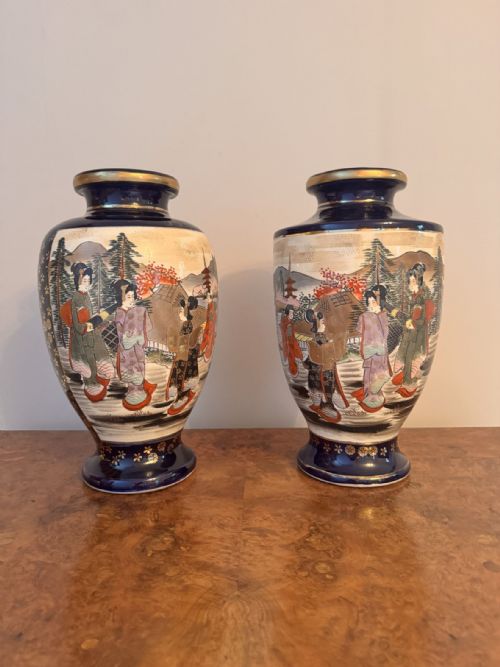
Many sets are matched rather than strictly identical, particularly in hand-modelled Staffordshire figures or Japanese Satsuma vases where each piece was individually painted.
Pairs often display slight variations in height, stance, or brushwork that reflect traditional hand-crafting methods.
How do I identify Victorian Staffordshire dogs?
Staffordshire spaniels and greyhounds typically feature hollow earthenware bodies with hand-painted facial expressions, gold lockets, and distinct patch markings. They were designed as symmetrical mantel ornaments.
Look for crazing in the glaze and proper weight distribution to determine age and authenticity.
What is the difference between earthenware and porcelain?
Earthenware is an opaque, porous ceramic fired at lower temperatures, common in nineteenth-century European decorative figures and planters. Porcelain is denser, vitrified, and rings when struck, frequently seen in Japanese Satsuma and Imari vessels.
Porcelain withstands liquid without a complete glaze layer, whereas earthenware relies entirely on its glazed surface for waterproofing.