


Vintage Porcelain Tea Service
A vintage porcelain tea service brings domestic history to the table, offering matched sets for hosting that span periods from the nineteenth century to the twentieth.
Vintage Porcelain Tea Service
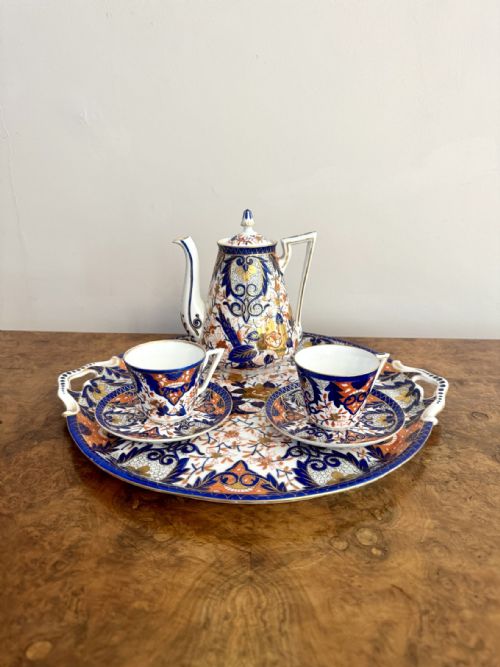
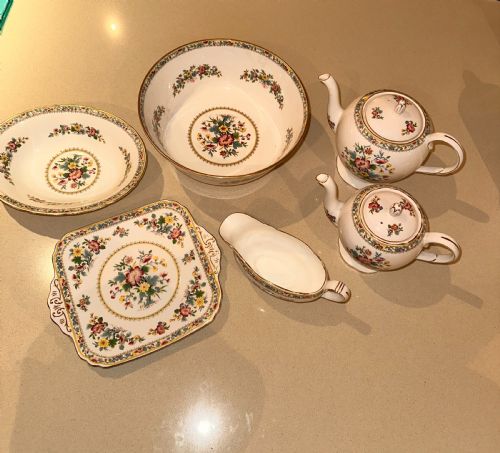
A vintage porcelain tea service comprises coordinated vessels and tableware designed for the ritual of serving tea and coffee, frequently appearing in configurations for six or ten persons. Buyers seeking a vintage porcelain tea service encounter diverse forms including traditional English sets, bachelor teasets, and larger breakfast services originating from Victorian, Edwardian, and Art Deco periods.
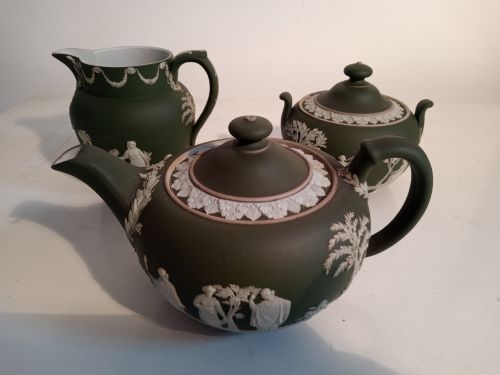
The selections span comprehensive multi-piece settings, such as large dinner and tea services, alongside compact three-piece or twenty-piece groupings. Makers from Staffordshire potteries, Worcester, and continental workshops dominate these assemblies, utilising bone china, porcelain, and ironstone.
Dating ranges from the nineteenth century through the early twentieth century, showing stylistic shifts from neoclassical influences and ornate gilding to cleaner geometric lines of the 1920s and 1930s. Each set reflects the social dining customs of its era, preserved in porcelain, bone china, and ceramic forms.
Materials and Manufacture
Craftsmen utilised fine porcelain, bone china, and patent ironstone as the primary ceramic bodies, shaping vessels either by hand or through industrial moulding techniques. These pieces received smooth glazes before undergoing high-temperature kiln firings to achieve durable, vitrified surfaces.
Decoration relied heavily on hand-painted pigments, enamel detailing, and applied gold leaf or gilding to highlight rims, handles, and intricate motifs. Specific patterns emerged from transfer printing or specialised glazing methods, such as the bat-printing technique seen on early pieces or delicate hand-applied floral and fruit subjects.
Listings feature periods spanning from the eighteenth-century Flight Worcester period through Victorian, Edwardian, and Art Deco eras up to the mid-twentieth century.
Assessing Quality and Execution
Superior sets demonstrate precision in the ceramic forming stage, resulting in uniform wall thickness, balanced handles, and stable bases across every cup, saucer, and pot. The refinement of the paste itself distinguishes standard wares from finer bone china or translucent porcelain.
The application of artistry dictates the upper tier of the range, visible in meticulous hand-painted details, crisp transfer printing, and heavy, polished gold leaf gilding that resists wear. Completeness and factory matching across all constituent parts elevate the integrity of a service.
Wedgwood·Royal Doulton·Spode·Coalport·Royal Davenport·Shelley·Royal Albert·Doric China·Worcester·Masons·Copeland Spode·Sutherland·Gladstone potteries
The Vintage Porcelain Tea Service Glossary
- Bone china
- A type of porcelain incorporating bone ash, known for its high strength, opacity, and milky white body. It allows for thinner-walled vessels while maintaining durability.
- Gilding
- The application of gold leaf or gold paint to ceramic surfaces, particularly rims and handles. It provides a decorative metallic finish characteristic of formal dining wares.
- Ironstone
- A heavy, durable type of vitreous ceramic patented in the nineteenth century. It bridges the gap between earthenware and porcelain.
- Enamel
- Opaque glass-like pigments fused to the glazed ceramic surface during a secondary low-temperature firing. This technique produces vibrant, raised coloured designs.
Vintage Porcelain Tea Service: Frequently Asked Questions
How do I date a tea service?
Dating relies on factory backstamps stamped or printed underneath the base, alongside stylistic clues such as handle shapes and decorative motifs. Comparing the pattern registration numbers with historical pottery archives provides narrower production years.
Changes in material composition, like the shift from soft-paste to bone china or ironstone, also help bracket the manufacturing era of the pieces.
Can I use these sets daily?
Daily use is possible with durable ironstone or robust bone china sets, provided they receive careful hand washing rather than machine cleaning. Over time, friction from modern dishwashers can erode delicate overglaze enamel painting and gold leaf gilding.
Many collectors prefer to reserve these antique and vintage services for occasional entertaining to preserve their hand-painted decoration and historical glaze surfaces.
What is a bachelor teaset?
A bachelor teaset is a compact, single-person tea service designed for individual use, typically comprising a teapot that nests directly on top of a matching cup and saucer. These scaled-down sets gained popularity in the late nineteenth century for private parlours or morning rooms.
They offer the same decorative refinement as larger services, including hand-painted floral motifs and gilding, scaled for a single user.
How are mismatched sets assembled?
Assembled services combine individual cups, saucers, and serving pieces sharing a similar period, palette, or maker style rather than issuing from a single original factory box. Collectors often curate these groupings to achieve a coordinated table setting across larger piece counts.
Matching is guided by complementary decorative elements, such as consistent floral patterns, similar gold leaf borders, or matching ceramic bodies like bone china.