


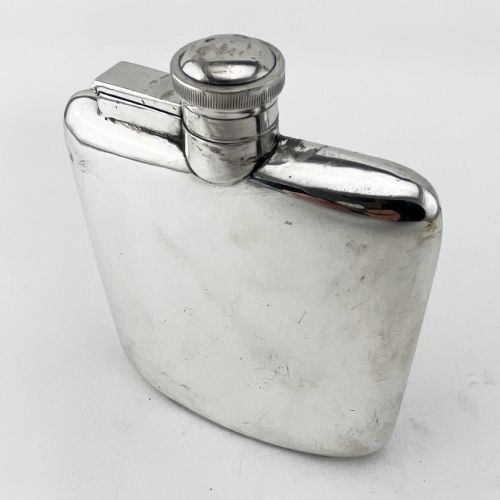


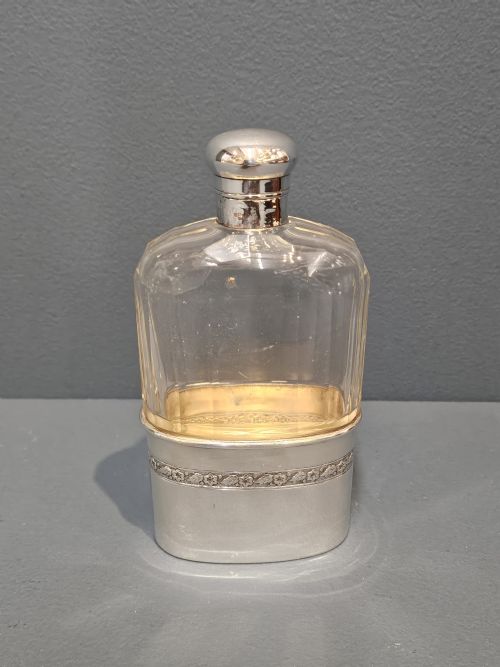

Vintage Pocket Spirit Flask
A vintage pocket spirit flask travels easily in a pocket or hunting coat, offering a discreet dram of liquor during outdoor pursuits.
Vintage Pocket Spirit Flask
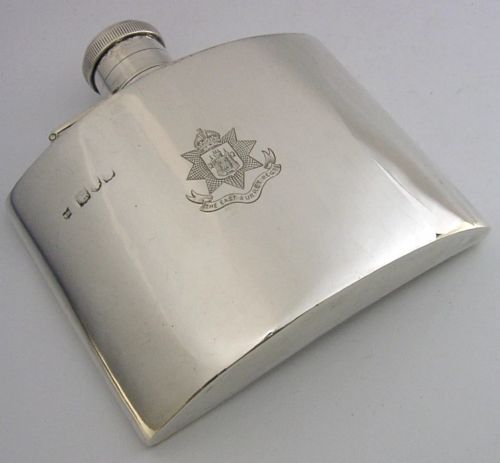
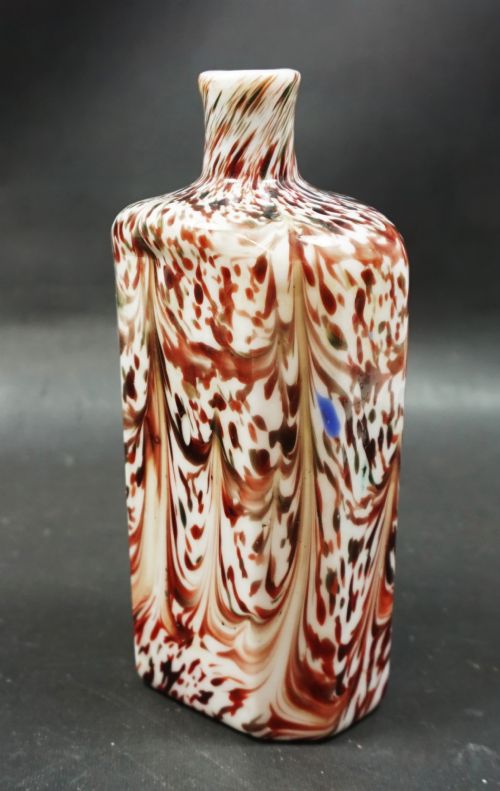
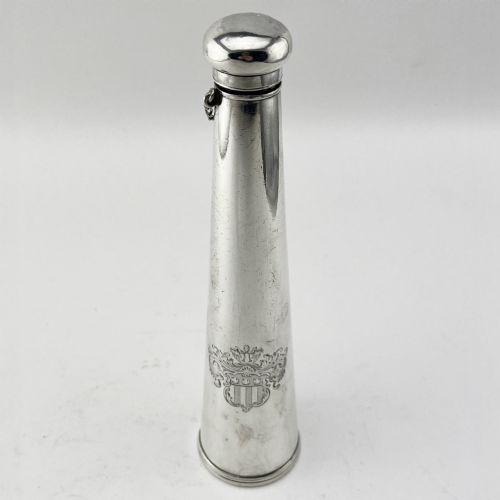
A vintage pocket spirit flask encompasses a range of portable liquor containers designed to slide into a pocket, often taking a curved profile to sit comfortably against the body. The selections on this page span from the late Victorian and Edwardian eras through the Art Deco period, alongside occasional eighteenth-century Swiss glass examples.
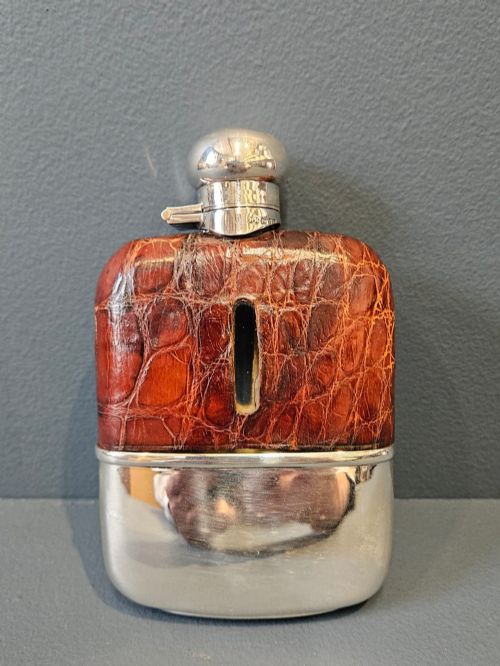
The dominant forms are hip flasks and spirit flasks, which appear in solid sterling silver, silver plate, or combinations of glass and metal. Many include removable cups at the base or feature fitted leather and crocodile skin coverings.
Makers and assay offices across England produced these drinking vessels for hunting, military campaigns, and everyday travel, leaving behind hallmarks that date Birmingham, Sheffield, London, and Chester pieces precisely.
Materials and Technique
Silversmiths formed the metal bodies from sterling silver or silver plate, frequently employing hammering techniques to create textured finishes or leaving surfaces plain for personal engraving. Glass bodies utilised cut glass and milk glass, sometimes paired with Mary Gregory decoration or encased in protective leather and crocodile skin.
Hinged caps and removable cups required precise engineering to maintain a secure seal against leaks, while gilt interiors protected the metal from acidic spirits. Makers applied collars and mounts tightly to glass bottles using cork and metal threading.
Materials span sterling silver, silver plate, cut glass, and crocodile leather across Victorian, Edwardian, and Art Deco periods.
Craftsmanship and Proportion
The distinction between ordinary production and finer work lies in the weight of the metal, the crispness of the hallmarks, and the precision with which a removable cup fits the base of the flask. Thicker gauge sterling silver resists dents better than thin plate, maintaining structural integrity over decades of use.
Detailing such as hand-hammered surfaces, secure bayonet or screw caps, and genuine crocodile leather rather than embossed cowhide elevate certain pieces. The integration of gilt interiors and finely cut glass bodies indicates higher workshop standards.
Hukin & Heath·J Dixon·Asprey London·William Neale·JB Chatterley & Sons·Mappin & Webb·James Dixon & Sons·WA Ellwick Ltd
The Vintage Pocket Spirit Flask Glossary
- Hallmark
- Official marks stamped into precious metals to indicate the maker, assay office, standard of purity, and year of manufacture. These stamps provide the most reliable means of dating a silver flask.
- Gilt
- A thin layer of gold applied to the interior of a silver flask to prevent the spirit from reacting with the metal. This treatment preserves the taste of the liquor and protects the interior walls.
- Removable cup
- A small drinking vessel that slides over the lower portion of the flask body, held in place by friction or a spring clip. It allowed the owner to pour a measure without carrying separate glassware.
- Silver plate
- A layer of silver fused to a base metal, commonly used to produce durable drinking vessels at a lower cost than solid silver. Plated pieces often bear maker marks indicating alternative manufacturing houses.
- Cut glass
- Glass decorated by cutting facets or patterns into the surface using a rotating wheel, creating reflective depth on spirit bottles. This technique added considerable weight and visual texture to the piece.
Vintage Pocket Spirit Flask: Frequently Asked Questions
How do I date a silver flask?
Dating relies primarily on the stamped hallmarks found on the metal mounts, caps, or bodies, which indicate the specific assay office and year letter.
Stylistic markers like Edwardian leather wrapping or geometric Art Deco lines also help narrow down the decade of production when hallmarks are rubbed.
Are these flasks still leakproof?
Many vintage flasks retain functional screw caps or bayonet fittings with original cork seals that still perform adequately, though older closures may require new washers for daily use.
Testing the seal with water before filling it with spirits is standard practice to check the integrity of the neck and cap.
Why do some flasks have cups?
Flasks featuring a removable cup at the base were designed for shared hospitality in the field, allowing the owner to pour a measure rather than drinking directly from the neck.
This practical addition turned a personal container into sociable barware during shoots and equestrian outings.