
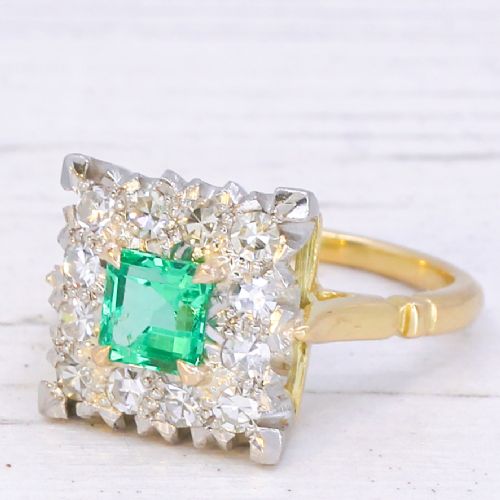
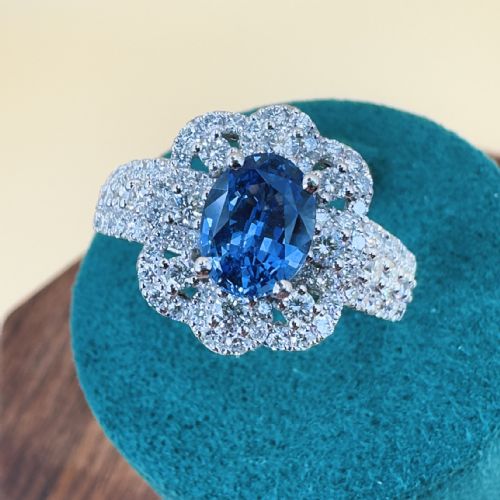
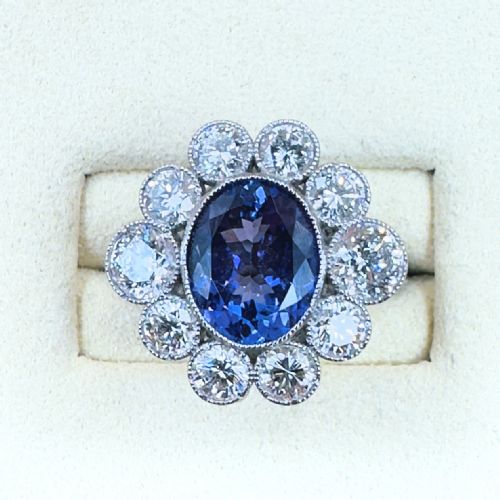
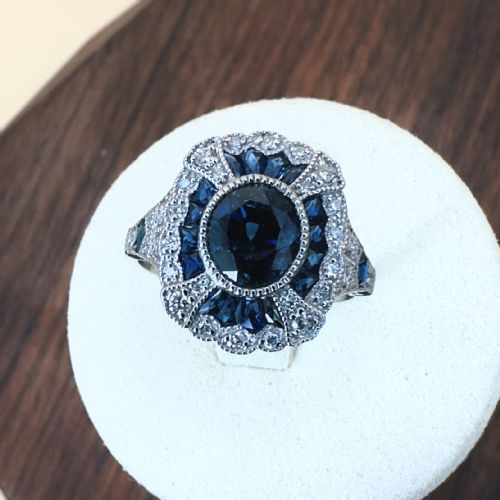
Vintage Platinum Cocktail Ring
When you search for a vintage platinum cocktail ring, you are looking at substantial statement jewellery designed to catch the eye across a crowded room.
Vintage Platinum Cocktail Ring
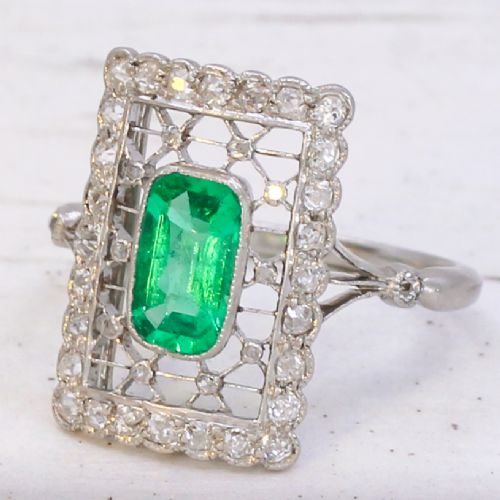
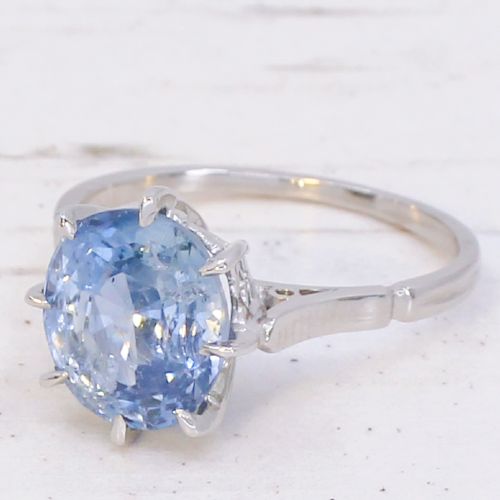
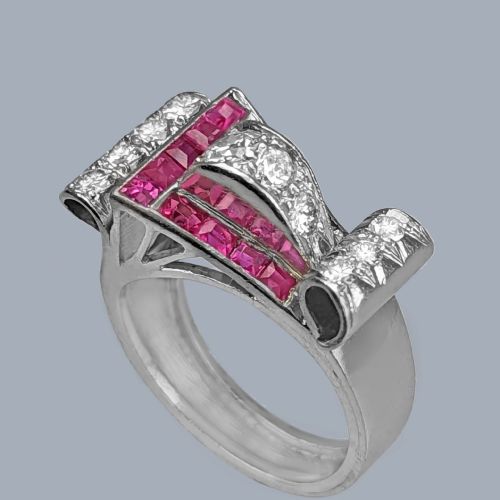
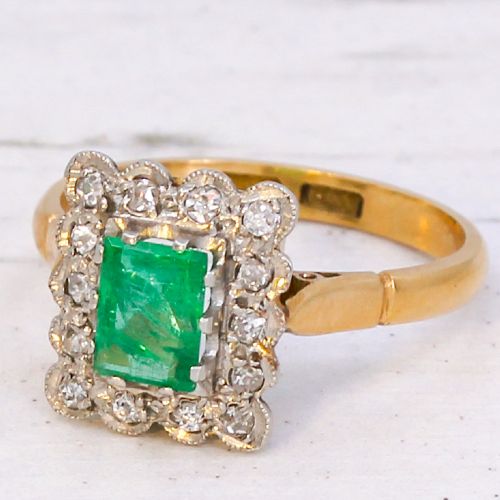
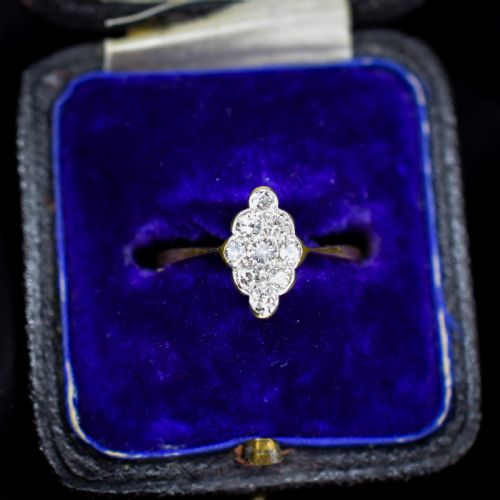
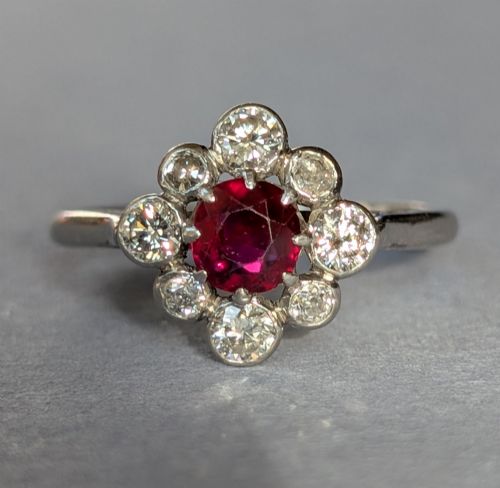
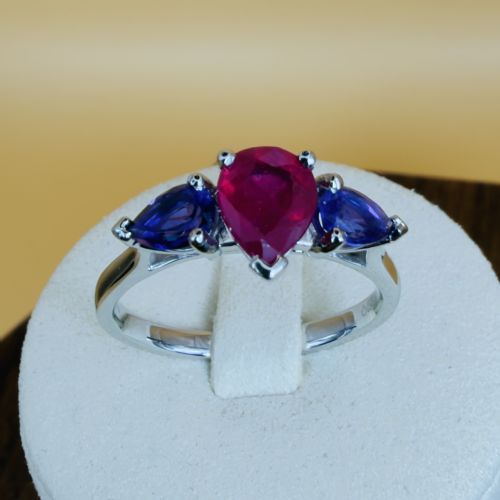
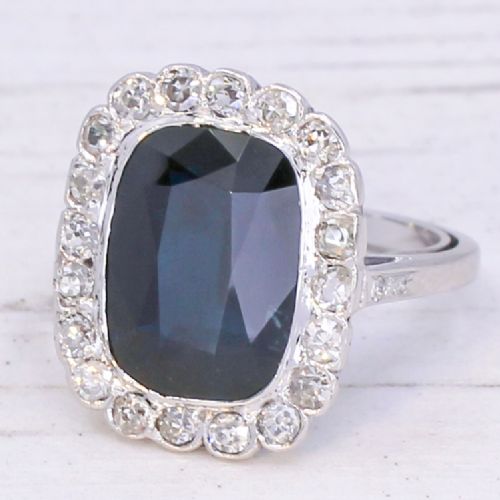
A vintage platinum cocktail ring combines heavy precious metal with large central gemstones and surrounding diamond work, built primarily for evening wear during the twentieth century.
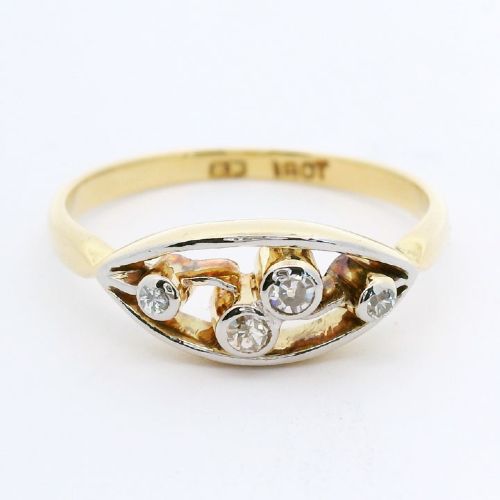
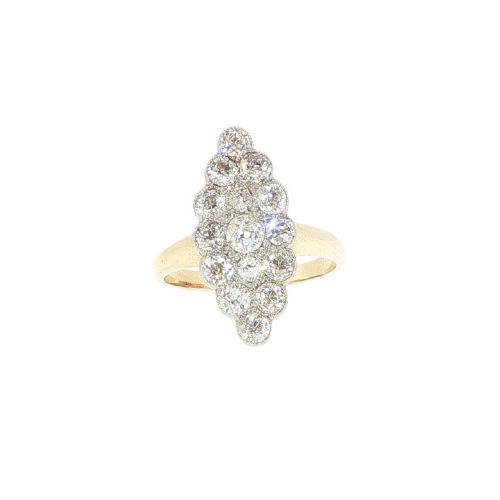
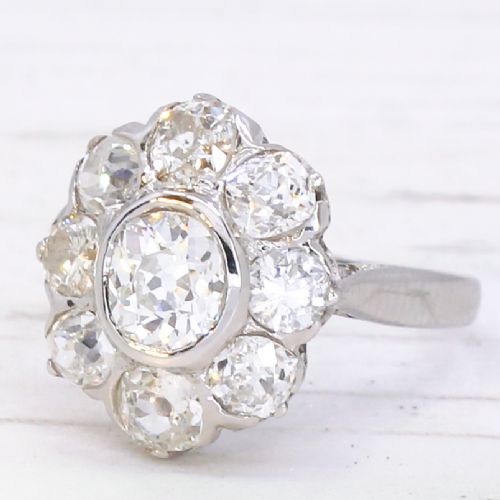
You will most commonly meet pieces spanning the Art Deco and Mid-Century periods, often taking the form of cluster rings, navette shapes, or dramatic dress rings.
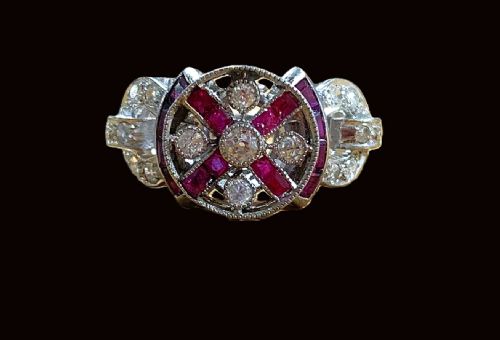
The evidence shows origins stretching from the Edwardian era through the 1920s, 1930s, 1940s, and 1950s up to the 1960s, frequently featuring prominent sapphires, emeralds, and rubies set alongside diamonds.
What varies in quality
Quality rests in the proportional balance between the central stone and its supporting diamonds, alongside the architectural precision of the metalwork itself.
The pedigree of the gemstones, such as unheated sapphires or emeralds with minimal oil treatment, elevates a piece well above standard commercial examples from the same period.
Listings demonstrate a strong presence of Art Deco and Mid-Century aesthetics, frequently pairing heavy platinum with significant coloured gemstones and old cut diamonds.
Le Vian
The Vintage Platinum Cocktail Ring Glossary
- Platinum
- A dense, durable white precious metal favoured for fine jewellery because it holds delicate settings securely without tarnishing.
- Cluster ring
- A ring design featuring a prominent central gemstone encircled by a tight border of smaller stones, typically diamonds.
- Navette
- A boat-shaped gemstone or ring setting that tapers gracefully to sharp points at either end, also known as a marquise shape.
- Old cut diamond
- A diamond cut by hand before modern machinery, characterised by a smaller table, higher crown, and open culet that creates a soft candlelight sparkle.
- Millegrain
- A decorative technique involving a row of tiny raised metal beads along the edge of a setting, common in Edwardian and Art Deco pieces.
Vintage Platinum Cocktail Ring: Frequently Asked Questions
What is a cocktail ring?
A cocktail ring is an oversized, decorative piece of hand jewellery originally worn at evening parties during the prohibition era and subsequent decades. These rings were specifically created to draw attention during social gestures involving drinks.
They break traditional rules of subtlety by employing large central gems, substantial platinum settings, and generous diamond clusters. Today, buyers wear them to add immediate drama and personality to everyday or evening attire.
How do I style a cocktail ring?
Because these rings carry significant visual weight and large carat sizes, they work best as the sole hand ornament on a given hand. Pairing them with simple clothing lets the intricate platinum work and central gemstones take centre stage.
Many collectors prefer wearing them on the middle or ring finger to balance the elongated navette or cluster shapes properly. They transition easily from formal evening wear to dressing up a simple daytime knit or tailored jacket.
How do I tell Art Deco from Retro pieces?
Art Deco pieces, typically spanning the 1920s and 1930s, lean towards geometric symmetry, sharp angles, and flat planes of diamonds and calibrated sapphires or emeralds. Platinum was used extensively to create lightweight yet immensely strong openwork structures.
Retro pieces from the 1940s and 1950s introduce bolder, three-dimensional curves, often incorporating yellow gold alongside platinum. They favour large star sapphires, aquamarines, or opals with heavier, more sculptural mountings.
Are these rings suitable for daily wear?
Platinum provides an exceptionally durable and secure foundation for old cut diamonds and coloured stones, making these rings structurally robust. However, softer stones like opals or pearls require mindful care during everyday activities.
Checking the security of the claws and settings with a jeweller periodically ensures that large centre stones remain firmly anchored. With sensible care, these historic pieces withstand regular rotation in a modern jewellery collection.