



1920s Diamond Cocktail Ring
A 1920s diamond cocktail ring brings unapologetic geometric drama and brilliant stones to the hand.
1920s Diamond Cocktail Ring
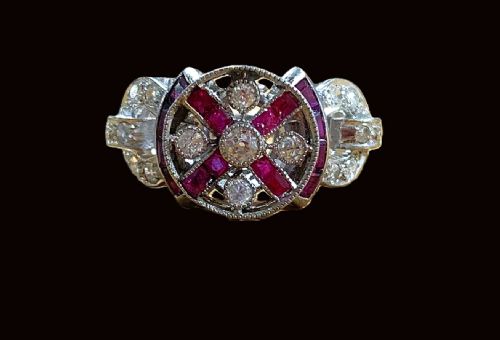
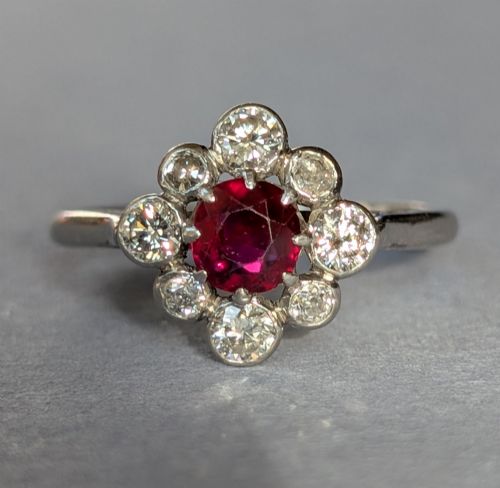
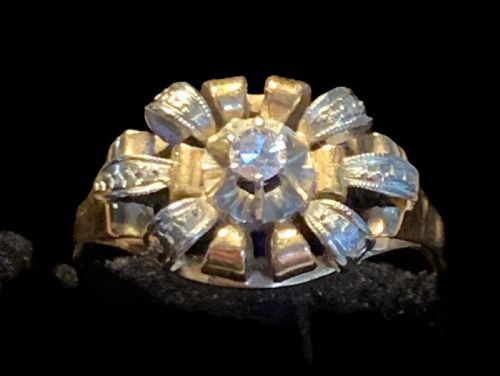
A 1920s diamond cocktail ring is a bold statement piece designed to catch the eye under evening light. You will find these jewels rooted firmly in the Art Deco period, spanning the 1920s, 1930s, and occasionally touching Edwardian or 1940s aesthetics.
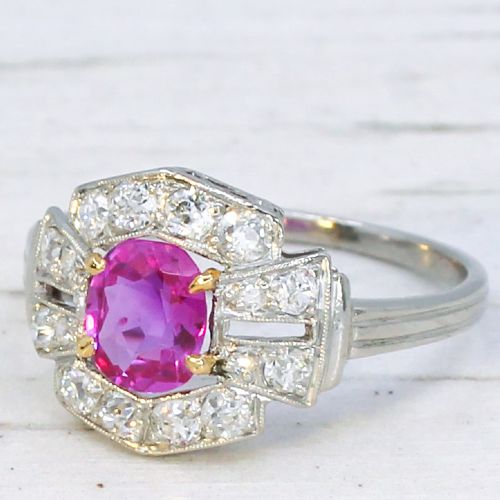
The dominant forms on this page include elongated navette, marquise, plaque, and cluster settings that command significant finger coverage. These designs served as symbols of modernism and liberation during the jazz age, often paired with vibrant coloured gems.
The version you are most likely to meet pairs central old cut diamonds with calibre cut sapphires, rubies, or emeralds. Platinum and 18ct white gold provide the crisp, monochromatic backdrop that defines the era's architectural silhouettes.
How they were made
Platinum and 18ct white gold form the structural backbone of these jewels, chosen for their strength in holding intricate, pierced gallery work. Goldsmiths utilised durable metal to set stones closely together without heavy bezels, maximising light return.
Gemstones were cut specifically to fit geometric channel and pavé settings, including distinctive calibre cuts that snap together like a puzzle. Old cut diamonds provide softer, deeper fire compared to modern brilliant cuts, paired with calibre rubies, sapphires, and emeralds.
1920s Diamond Cocktail Ring Retail Price Guide 2026
Typical asking prices for 1920s diamond cocktail ring among the pieces listed under this phrase on Sellingantiques today, from the lower quarter to the upper quarter. They describe what is for sale here now, not the wider market.
The selection spans pieces originating across the 1920s, 1930s, 1940s, and Edwardian eras.
What varies in quality
The architectural precision of the metalwork separates ordinary production from exceptional atelier output. Pierced openwork, hand engraving, and millegrain edges require immense skill to execute without softening the geometric lines.
Gemstone selection and matching dictate the upper tier of the market, particularly when unheated Burmese rubies, Colombian emeralds, or large natural pearls are involved. Calibre cut side stones must align seamlessly without gaps in the channel settings.
The 1920s Diamond Cocktail Ring Glossary
- Calibré cut
- Small gemstones cut precisely in square, rectangular, or tailored shapes to fit tightly into geometric channels.
- Old cut
- Diamonds faceted by hand with smaller tables, higher crowns, and larger culets, producing broad flashes of light.
- Navette
- A boat shaped ring setting that tapers to a point at both ends, offering elongated coverage across the finger.
- Millegrain
- A decorative technique featuring a tiny beaded border along the edges of platinum or white gold settings.
- Plaque ring
- A flat, disc shaped or geometric panel ring that sits low on the hand and showcases dense stone arrangements.
1920s Diamond Cocktail Ring: Frequently Asked Questions
Are these rings durable for daily wear?
Platinum and white gold provide a robust foundation for daily use, yet the delicate millegrain edges and intricate pierced galleries require care. Removing the ring during heavy manual tasks prevents unnecessary stress on the antique settings.
Prongs holding old cut diamonds and calibre side stones benefit from professional checks every year. Gentle cleaning with warm soapy water maintains the sparkle without harming softer gems like opals or pearls.
How do I identify an authentic Art Deco ring?
Authentic pieces display distinct architectural symmetry, linear motifs, and a clear transition away from Edwardian floral curves. Platinum was the metal of choice for top tier makers, frequently paired with contrasting calibre cut sapphires or rubies.
Construction methods inside the gallery often reveal hand pierced openwork rather than modern casting. Examining the facets of old cut diamonds provides further reassurance of period manufacture.
Can these rings be resized easily?
Resizing depends heavily on the specific band construction and whether geometric shoulder patterns extend down the shank. Plain platinum or white gold shanks allow jewellers to adjust the diameter with relative ease.
Intricate filigree work or continuous calibre channel settings around the band complicate the process. Consulting a specialist familiar with antique jewellery ensures the structural integrity remains intact.