
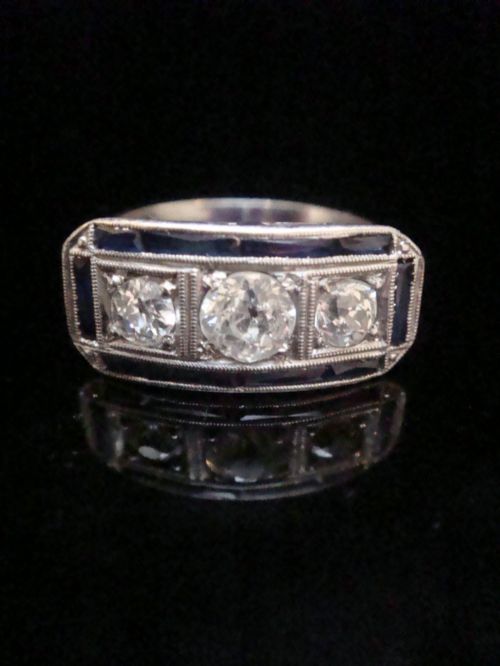


Vintage Platinum Panel Ring
A vintage platinum panel ring is a geometric masterpiece of the early twentieth century, offering unmistakable period elegance and brilliant diamond work.
Vintage Platinum Panel Ring
A vintage platinum panel ring brings together geometric design and fine gemstone arrangement from the Edwardian and Art Deco periods. These pieces showcase flat or slightly domed faces shaped as rectangles, plaques, or elongated clusters.
Most examples found here date from the 1910s, 1920s, and 1930s, reflecting the shift from delicate Edwardian filigree to bold Art Deco symmetry. Dress rings dominate the selection, often combining diamonds with sapphires, emeralds, or rubies.
Buyers seek out these specific forms for their low profile and intricate metalwork. The combination of platinum settings and contrasting gemstones defines the classic appearance of the vintage platinum panel ring.
Factors that distinguish the work
The precision of the piercing and the crispness of the millegrain edge define the standard of the metalwork. Superior pieces display hand-worked openwork that remains sharp and even across the entire face.
Stone selection and matching create the difference between standard production and exceptional examples. Graduated old-cut diamonds and precisely fitted calibré-cut sapphires or emeralds demonstrate superior workshop execution.
The listings span three distinct decades: the 1910s, 1920s, and 1930s.
The Vintage Platinum Panel Ring Glossary
- Panel ring
- A ring featuring a flat or low-profile geometric surface decorated with gemstones. These designs sit flush against the finger.
- Plaque ring
- A style of ring dominated by a wide, flat face of pierced metalwork resembling a small plaque. It often showcases intricate filigree and numerous small diamonds.
- Millegrain
- A decorative technique featuring a row of tiny raised metal beads along the edges of a setting. This softens the metal outline and adds texture.
- Old cut
- A diamond cutting style used before modern brilliant facets were standardised. These stones feature high crowns and small tables that catch candlelight.
- Calibré cut
- Gemstones specifically shaped and cut to fit tightly into a geometric channel or pattern. This technique requires expert stone-cutting.
Vintage Platinum Panel Ring: Frequently Asked Questions
How do I care for a vintage platinum panel ring?
Clean the metal and stones gently with warm soapy water and a soft brush to remove daily residue. Avoid harsh ultrasonic cleaners that can loosen old millegrain settings.
Store the ring separately in a fabric-lined box to prevent the platinum and softer gemstones from scratching against other jewellery.
Can a panel ring be resized easily?
Resizing depends entirely on the openwork and side gallery design of the specific band. Simple shanks in platinum or gold allow for straightforward adjustments by a skilled jeweller.
Intricate pierced shoulders that extend along the band require careful laser welding to preserve the original period craftsmanship.
What is the difference between Edwardian and Art Deco panel rings?
Edwardian panel rings, dating from around 1910, focus on lacy platinum filigree and delicate floral or garland motifs. They emphasise softness and intricate wirework.
Art Deco rings from the 1920s and 1930s shift towards bold geometric shapes, sharp lines, and strong colour contrasts using sapphires, emeralds, or rubies.
Are these rings suitable for daily wear?
Platinum provides a durable base that withstands regular use better than softer white metals. However, the delicate millegrain and small calibré-cut stones require mindful handling.
Remove the ring during heavy physical tasks to protect the flat panel and secure claw settings from impact.