
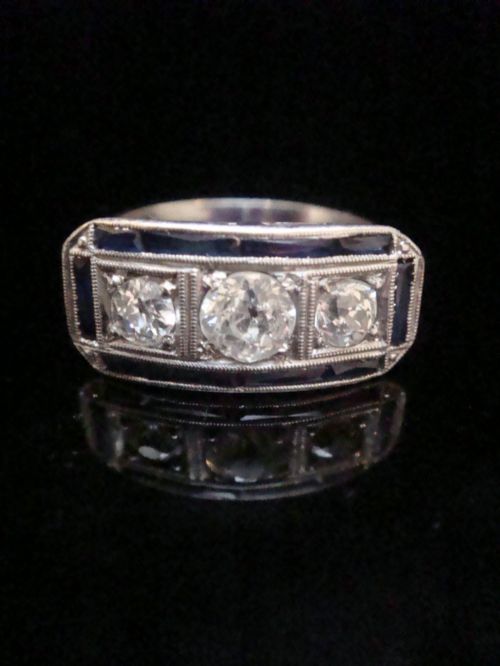


Platinum Diamond Panel Ring
A platinum diamond panel ring brings geometric symmetry and bright old-cut stones straight to your hand.
Platinum Diamond Panel Ring
A platinum diamond panel ring sits flat upon the finger, presenting a structured face of geometric metalwork and brilliant stones. These pieces belong predominantly to the Art Deco and Edwardian periods, capturing the architectural designs popular during the early decades of the twentieth century.
Most examples found here combine platinum settings with diamonds, often accompanied by calibre-cut sapphires, emeralds, or rubies. You will regularly encounter rectangular, square, and elongated plaque forms that showcase intricate millegrain edges and openwork mounting.
What varies in quality
Quality rests in the precision of the piercing work and the crispness of the geometric layout across the panel face. Superior examples display perfectly matched calibre-cut coloured stones that sit flush within their channels alongside well-proportioned old-cut diamonds.
The fineness of the millegrain beaded edges and the structural integrity of the openwork gallery separate standard productions from the finest workshop outputs.
Some multi-stone panel rings hide tiny secret hand-engraved initials worn smooth by a century of gentle palm contact.
The Platinum Diamond Panel Ring Glossary
- Panel ring
- A ring featuring a flat or slightly curved geometric top surface that spans across the finger. These designs often incorporate symmetrical arrangements of smaller stones.
- Plaque ring
- A specific type of panel ring characterised by a broad, flat, and frequently pierced metal plate covered in diamonds. It sits directly on top of the hand like a small decorative plaque.
- Millegrain
- A decorative technique involving a row of tiny, raised metal beads along the edges of a setting. This adds a soft texture that frames the stones.
- Old cut
- A diamond cutting style from the early twentieth century featuring a small table, high crown, and large culet. These stones produce a distinctive softer, broader flash of light compared to modern brilliant cuts.
- Calibre cut
- Coloured gemstones cut specifically in small, uniform geometric shapes to fit tightly together within channels or borders. They form precise coloured lines in multi-stone settings.
Platinum Diamond Panel Ring: Frequently Asked Questions
How do I clean a platinum diamond panel ring?
Use warm water with a mild washing-up liquid and a very soft toothbrush to gently clear away accumulated oils from beneath the intricate openwork gallery. Avoid harsh chemical dips that can damage softer accompanying gems like emeralds.
Dry the piece thoroughly with a lint-free cloth, taking care around delicate millegrain edges where fibres might catch.
Can a panel ring be resized easily?
Resizing depends entirely on the metal composition of the shank and whether the geometric pattern extends down the shoulders. Plain gold or platinum shanks generally allow a jeweller to adjust the circumference without disturbing the central panel.
Take the piece to a specialist who understands antique mounting to ensure the structural integrity of the shoulders remains intact.
What is the difference between Edwardian and Art Deco panel rings?
Edwardian panel rings tend to feature lighter, lace-like platinum work with flowing garlands and soft curves inspired by floral motifs. They often lean towards high-carat yellow gold backs combined with platinum-topped fronts.
Art Deco examples shift sharply towards bold geometric symmetry, straight lines, and stark contrasts created by pairing diamonds with calibre-cut sapphires or rubies.
Are these rings suitable for daily wear?
These rings survived a century precisely because their low-profile panel design keeps the stones secure against daily bumps. Platinum provides a durable base that holds small claw and channel settings firmly in place.
Owners should still remove the ring during heavy manual tasks to protect fragile calibre-cut side stones and intricate openwork metal.