

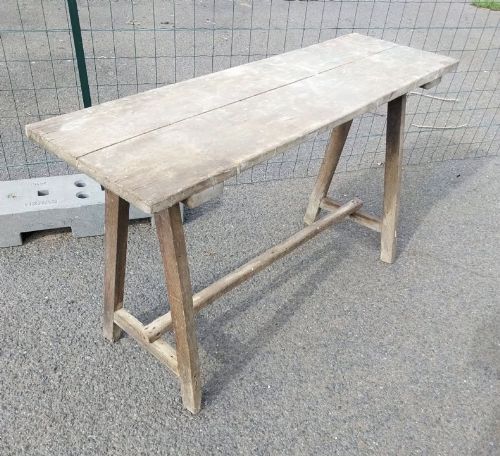
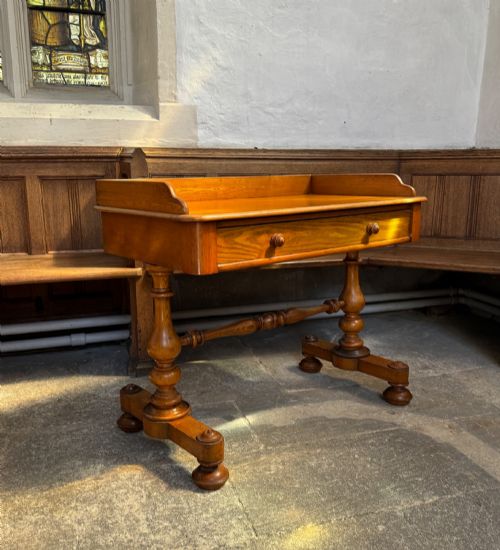
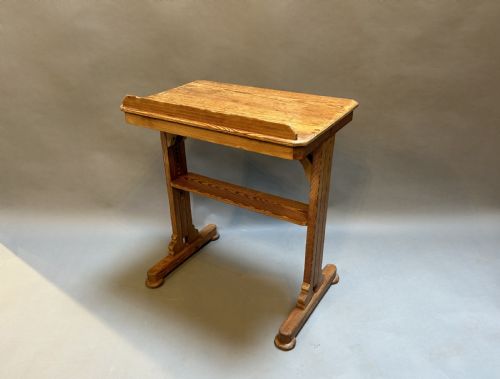


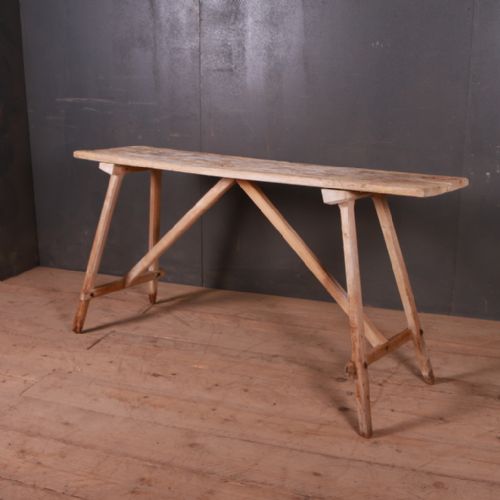
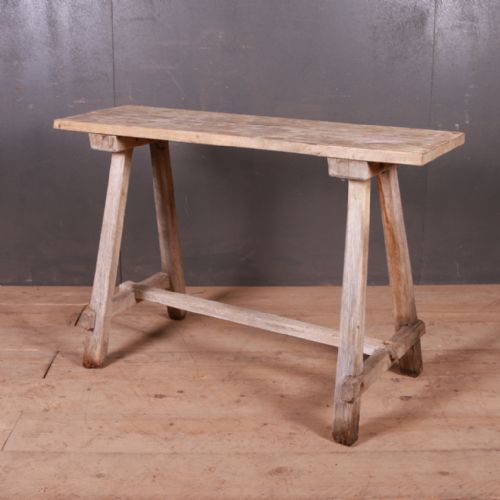


Vintage Pine Trestle Desk
A vintage pine trestle desk offers practical workspace with honest timber character, bringing robust utility and timeless rustic charm straight into a modern study.
Vintage Pine Trestle Desk
A vintage pine trestle desk brings together sturdy timber surfaces and supporting frameworks, often appearing under related guises such as writing tables, work tables, and washstands. These pieces reflect practical domestic or institutional use across the nineteenth and early twentieth centuries. Buyers seeking a vintage pine trestle desk will encounter sturdy utilitarian forms shaped by both English and continental workshops.
The selection frequently draws upon broader categories like tavern tables, farmhouse tables, and lecterns constructed from timber and occasionally iron. Pieces range from straightforward Victorian designs to early twentieth-century industrial or provincial examples. Such variety ensures a workspace with genuine historical footprint rather than modern imitation.
How they were made
Construction relies heavily on solid timber boards paired with supportive frameworks of wood or iron. Craftsmen utilised durable softwoods like pitch pine alongside traditional joinery methods to ensure daily stability. Iron bracing and hardware occasionally feature on industrial or workshop pieces to add structural rigour.
Surface finishes vary from natural timber ageing to traditional coatings like red Falu paint found on Scandinavian pieces. These material choices reflect the functional demands placed on desks, work tables, and washstands during the nineteenth and early twentieth centuries.
Vintage Pine Trestle Desk Retail Price Guide 2026
Typical asking prices for vintage pine trestle desk among the pieces listed under this phrase on Sellingantiques today, from the lower quarter to the upper quarter. They describe what is for sale here now, not the wider market.
Listings span the nineteenth century to nineteen-thirty, uniting English and French workshop traditions across pine, pitch pine, and iron.
What varies in quality
Quality rests primarily in the integrity of the timber boards and the stability of the trestle framework. Desks featuring dense pitch pine or heavy iron elements demonstrate a more robust build than lighter domestic variants. The balance between the top surface and the underframe dictates the overall endurance of the piece.
Proportion and surface wear also define the standing of individual items. Examples retaining authentic surface textures and uncompromised structural joints command greater interest from collectors than heavily altered or overly restored specimens.
The Vintage Pine Trestle Desk Glossary
- Trestle table
- A table supported by two or more upright frames connected by a horizontal beam. This design provides sturdy legroom beneath the top surface.
- Pitch pine
- A durable, resinous softwood commonly utilised in nineteenth-century utilitarian furniture. It resists heavy wear and ages with a deep golden tone.
- Falu paint
- A traditional deep red paint originating in Sweden, traditionally utilised on timber buildings and furniture. It preserves the wood against harsh weather.
- Lectern
- A slanted writing or reading desk designed for standing or seated use. These pieces often originate from ecclesiastical or institutional settings.
Vintage Pine Trestle Desk: Frequently Asked Questions
Are these desks sturdy enough for daily computer work?
Most pieces were built to handle heavy everyday tasks like writing, dining, or workshop labour, making them well-suited for modern laptop placement.
Buyers should examine the specific underframe and joints to confirm the piece remains steady under modern office weights.
How do I care for old pine surfaces?
Maintaining pine requires simple dusting and occasional treatment with natural waxes to keep the dry timber nourished.
Avoiding excessive moisture and direct heat sources prevents the historic wood from warping or cracking over time.
What periods do these pieces typically date from?
The available selection spans the nineteenth century through to the early twentieth century, encompassing Victorian and Edwardian eras.
Maker methods and material choices shifted gradually from purely hand-joined timber towards heavier industrial iron integrations by nineteen-ten.
Can I use a washstand as a writing desk?
Many historic washstands and side tables share identical dimensions and sturdy timber tops with smaller writing desks.
Evaluating the height and leg clearance ensures comfortable seating usage before committing the piece to study work.