

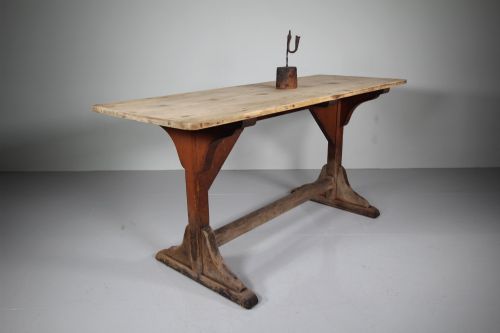
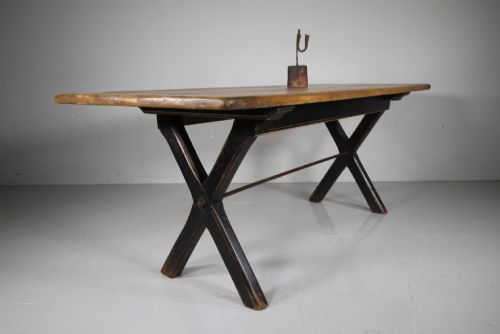
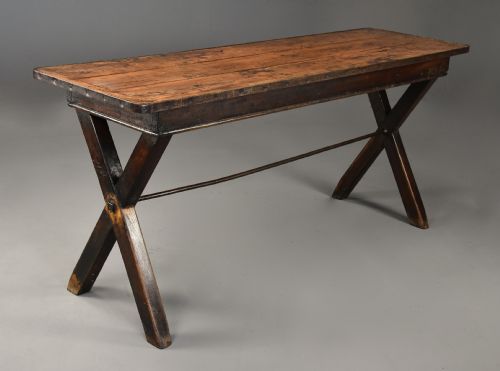
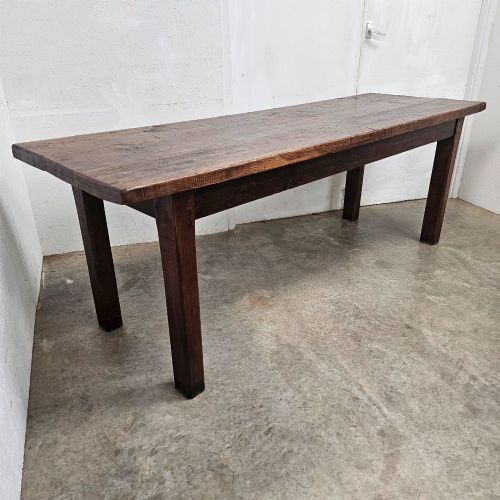


Wooden Pub Dining Table
These wooden pub dining table examples bring sturdy character to a room, offering robust surfaces shaped by decades of hospitality.
Wooden Pub Dining Table
A wooden pub dining table serves as a sturdy gathering surface rooted in centuries of public house and tavern heritage. These pieces range from substantial Georgian elm examples to later pine and oak variations designed for daily communal use.
Buyers frequently encounter nineteenth-century tavern tables featuring thick wooden tops and practical trestle or four-legged bases. Styles span rustic farmhouse and country traditions, reflecting both English and French origins.
The selection on this page centres on tavern and bistro tables built from hard-wearing timbers like oak, pine, elm, and sycamore. These heavy-duty formats suit modern dining spaces seeking an authentic, time-worn aesthetic.
How they were made
Cabinet makers and local joiners utilised durable timbers such as oak, elm, mahogany, and pine to withstand heavy commercial use. Tops were often fashioned from thick planks of solid wood, joined securely to handle constant weight and movement.
Construction techniques include traditional trestle ends, X-legs, and robust four-legged frames occasionally reinforced with iron components. Surfaces show the results of hand-finishing, sometimes retaining original painted finishes or developing deep patinas over generations.
Wooden Pub Dining Table Retail Price Guide 2026
Typical asking prices for wooden pub dining table among the pieces listed under this phrase on Sellingantiques today, from the lower quarter to the upper quarter. They describe what is for sale here now, not the wider market.
Listings feature pieces spanning the Georgian era through to the early twentieth century, utilising pine, oak, elm, mahogany, and sycamore.
What varies in quality
Quality rests upon the selection of timber and the structural integrity of the base, distinguishing heavy elm or oak from simpler pine builds. Superior pieces display thick, well-balanced tops and stable framing that has endured years of heavy service.
Surface character defines the upper tier of these tables, where natural wear creates a rich colour and deep patina. Tables retaining original painted surfaces or superior timber grain command greater appreciation among collectors.
The Wooden Pub Dining Table Glossary
- Tavern Table
- A sturdy wooden table historically used in public houses for drinking and dining. These pieces typically feature heavy timber tops and robust underframes.
- Trestle Table
- A table consisting of two or more supports connected by a horizontal beam, holding a thick top. This design provides excellent legroom and stability.
- Patina
- The surface sheen and colour developed over decades of use, handling, and polishing. It indicates the age and genuine history of the wood.
- Elm
- A tough, interlocking timber frequently used for table tops due to its resistance to splitting. It yields a distinctive grain pattern and rich tone.
Wooden Pub Dining Table: Frequently Asked Questions
What is a wooden pub dining table?
A wooden pub dining table is a heavy-duty communal surface originally built for taverns, inns, and public houses. These tables are constructed from solid timbers designed to withstand continuous daily use.
Today, buyers seek them out for domestic dining rooms and kitchens to introduce robust historic character. Their generous proportions and enduring materials make them practical for modern living.
How do I date a tavern table?
Dating a tavern table involves examining the timber species, construction joints, and overall wear patterns. Earlier Georgian and nineteenth-century examples often feature hand-planed boards and pegged framing.
Changes in leg style, from simple turned supports to trestle ends and X-legs, also help identify the period. The presence of original paint or a deep accumulated patina points towards older origins.
Are these tables suitable for everyday dining?
These tables are exceptionally well-suited for everyday dining because they were originally engineered for heavy commercial hospitality use. Their solid wood construction handles daily meals and gatherings with ease.
Living with these pieces involves accepting marks and minor blemishes as part of their ongoing history. Simple maintenance keeps the timber nourished without erasing the character.
What woods were used for these tables?
Common timbers found in these tables include oak, pine, elm, sycamore, and mahogany. Elm was frequently chosen for its tough, splitting-resistant qualities on table tops.
Pine and oak served widespread structural roles, while occasional pieces incorporated iron brackets or painted finishes. Each wood reacts differently to age, developing unique surface textures over time.