

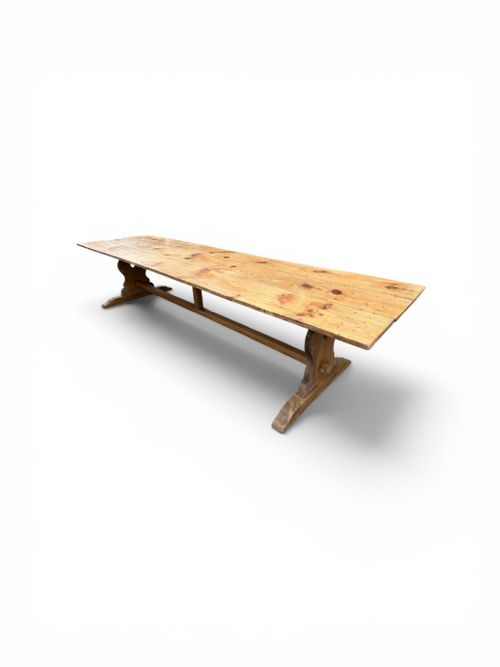


Long Pine Dining Table
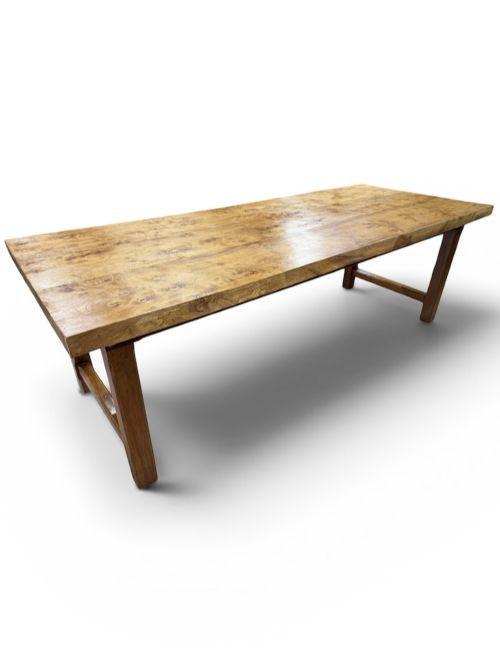
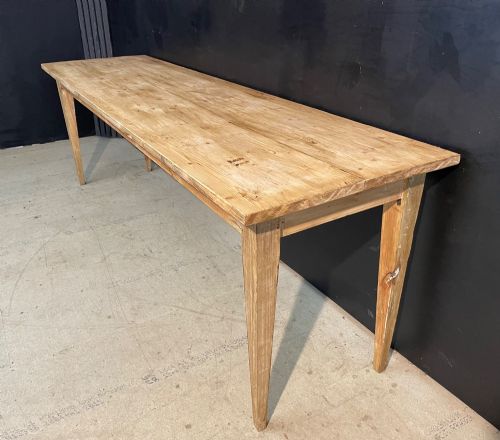
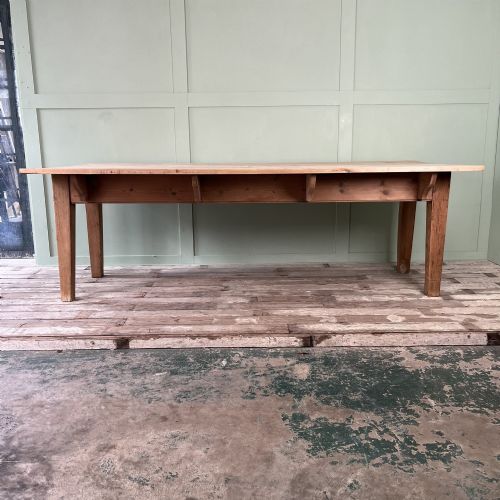
A long pine dining table anchors a room with simple utility and deep, scrubbed timber character.
Long Pine Dining Table
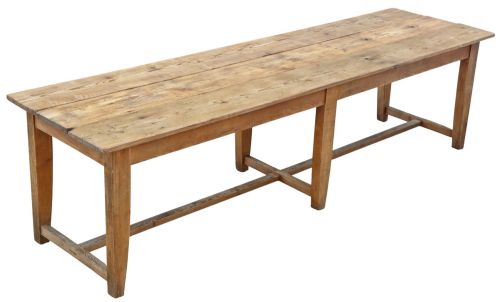
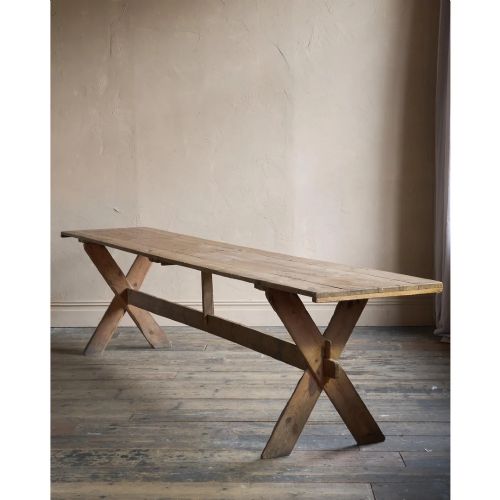
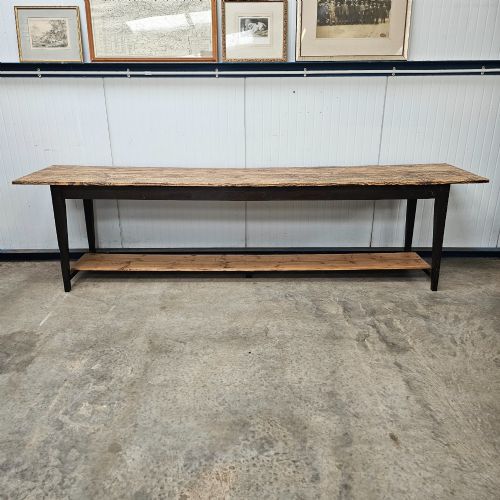
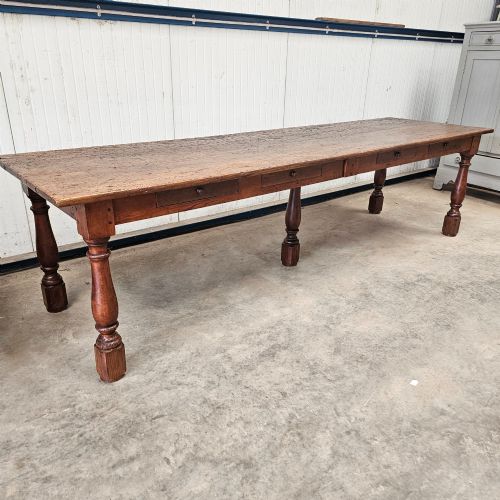
A long pine dining table serves as the central gathering place in a home, combining generous proportions with functional practicality. These pieces take various forms, including traditional refectory tables, harvest tables, preparation tables, and tavern tables.
The selection here draws primarily from nineteenth-century examples alongside early twentieth-century pieces. Makers utilised sturdy construction methods to build surfaces meant for heavy daily use in kitchens, farmhouses, and institutions.
Regional variations appear across the collection, ranging from English vernacular designs and Welsh workshop pieces to Scandinavian country styles and French provincial formats. Each piece reflects the utilitarian demands of its original setting.
Materials and construction methods
Pine forms the primary surface material across these listings, often paired with oak, ash, fruitwood, poplar, or chestnut for structural framing and legs. Timber selection prioritised durability and resistance to warping under constant use.
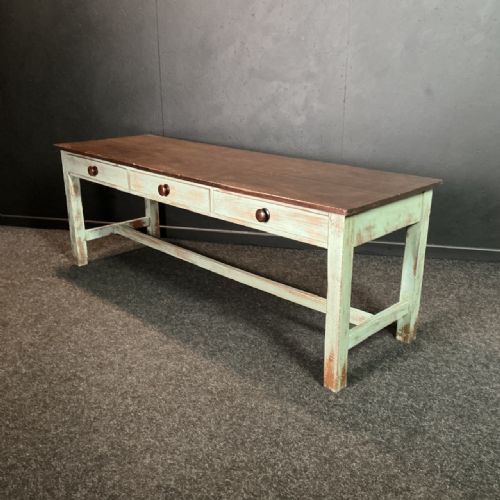
Carpenters joined wide plank tops to robust underframes using traditional joints, sometimes incorporating drawers for storage or trestle bases for stability. Iron and brass components appear in specific functional elements like brackets and feet.
Surfaces frequently show the effects of historic scrubbing and wear, leaving exposed grain and weathered patinas. Painted finishes also occur, preserving layers of historic colour on bases and skirts.
Materials documented across the inventory include solid pine, oak, ash, fruitwood, poplar, chestnut, iron, and brass.
Markers of distinction and build
Proportion and scale dictate much of the presence in a room, with longer, narrower plank tops commanding particular attention. The integrity of the timber joints and the weight of the underframe determine the overall stability of the table.
Surface history separates standard examples from exceptional ones. Tables retaining untouched scrubbed patinas or original painted finishes exhibit a greater depth of character than those with heavily restored or stripped surfaces.
The Long Pine Dining Table Glossary
- Refectory table
- A long, narrow dining table historically used in communal dining halls and monasteries. This form translates well into modern domestic spaces where length is required without excessive width.
- Harvest table
- A long, utilitarian table traditionally used during seasonal farm gatherings. These pieces often feature simplified underframes to maximise legroom along the length.
- Preparation table
- A heavy-duty work table originally utilised in large kitchens for food assembly. They frequently incorporate scrubbed wooden tops and occasional storage drawers.
- Trestle table
- A table design where the top rests on two or more vertical supports connected by a horizontal beam. This construction provides robust stability along extended lengths.
- Vernacular furniture
- Domestic pieces built by local makers using regional traditions and readily available materials. These objects prioritise functional utility over academic architectural styles.
Long Pine Dining Table: Frequently Asked Questions
How do I care for a scrubbed pine top?
Clean the surface with a damp cloth and mild soap, avoiding harsh chemical cleaners that strip natural oils. Regular use builds a deeper patina over time.
Treat spills promptly to prevent staining on unsealed timber. Applying occasional clear beeswax helps protect the grain without adding an artificial gloss.
Are these tables suitable for everyday family use?
These pieces were originally built for heavy daily work in kitchens, farmhouses, and institutions. Their robust construction handles active dining environments with ease.
Marks and dents acquired over decades only add to the working character of the timber. You can live with them comfortably without worrying about minor wear.
How do I determine the age of a pine table?
Examine the underside and joints for tool marks, hand-cut nails, and construction methods that indicate manual woodworking. Timber shrinkage and board widths also offer clues to the period.
Compare the wear patterns around the edges and legs with the overall patina of the top. Consistent ageing across all components generally points to genuine period manufacture.
What is the difference between a refectory and a harvest table?
Refectory tables traditionally feature formal underframes with connecting stretchers running low to the floor. They were designed for long-term communal dining.
Harvest tables often display lighter or simpler framing intended for seasonal utility. The distinction lies primarily in the underframe architecture and regional nomenclature.