
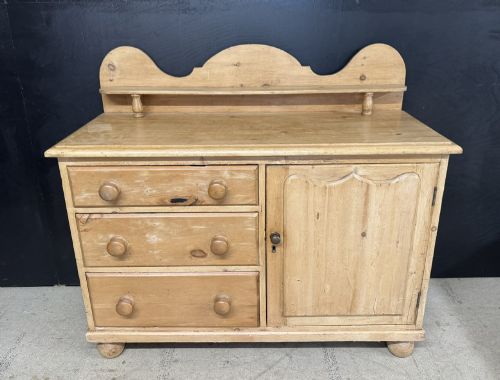
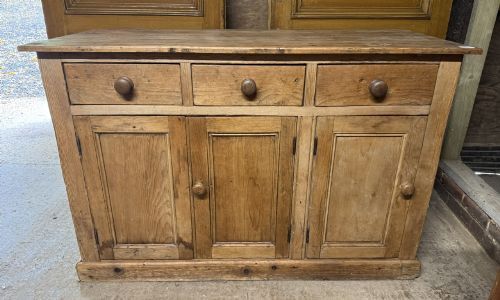
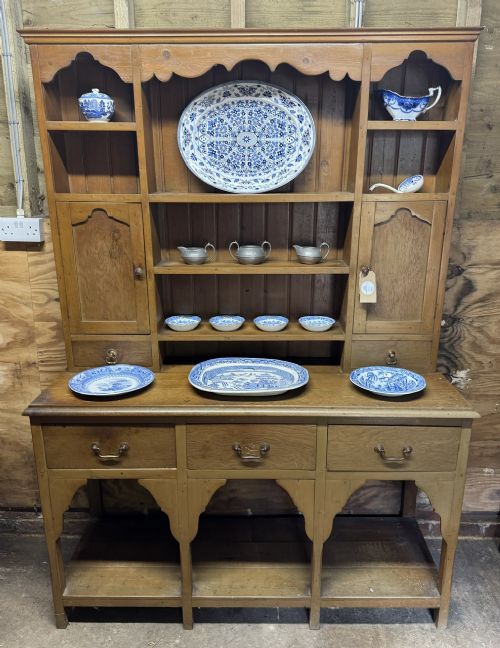
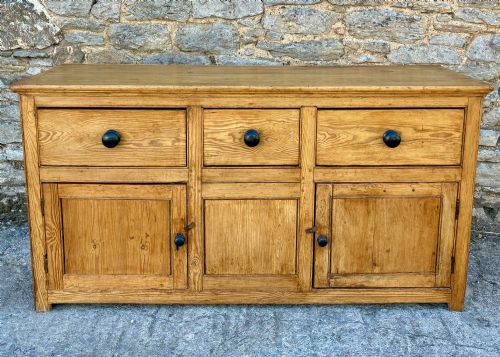
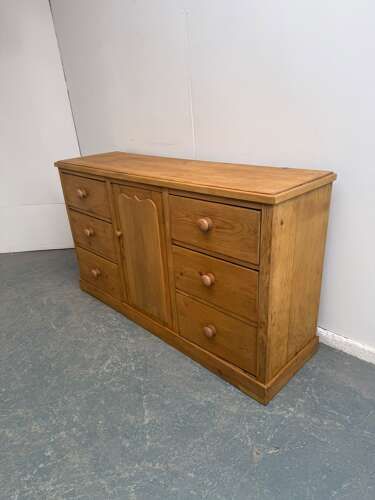
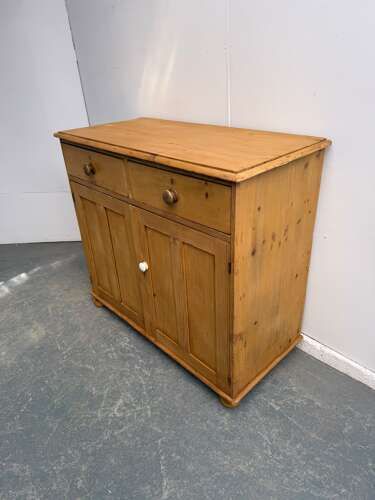
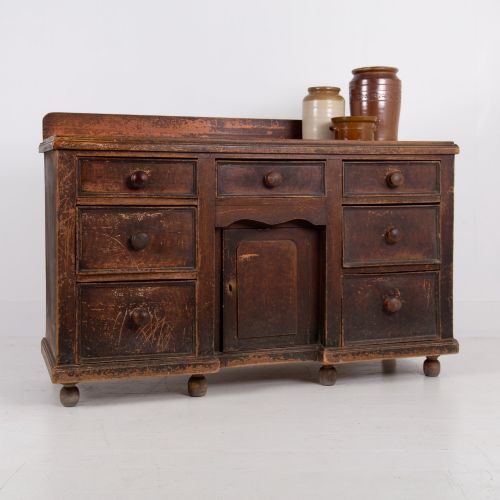
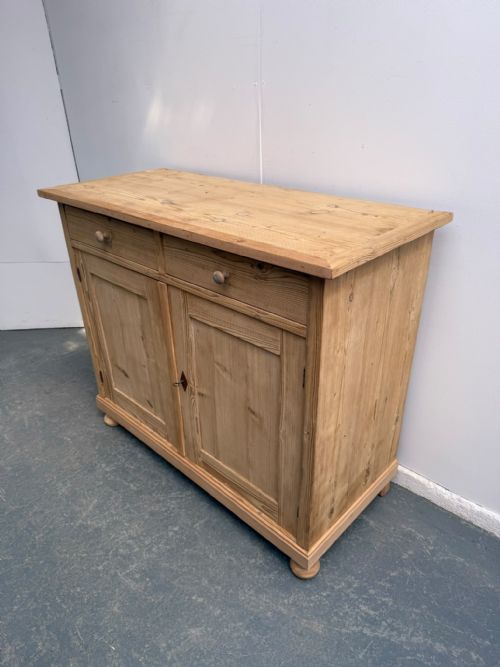
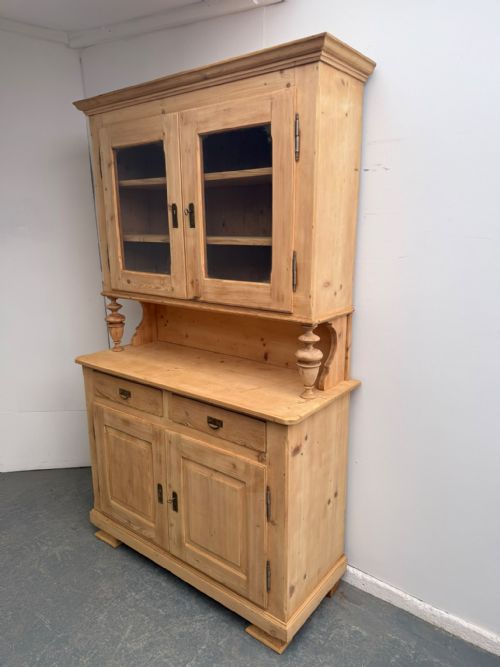
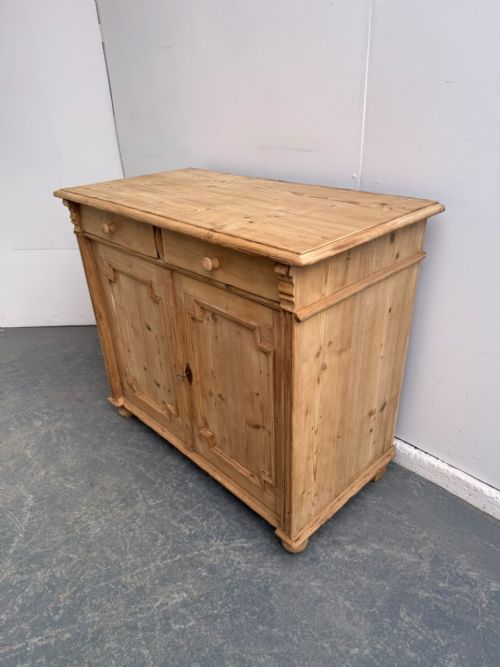
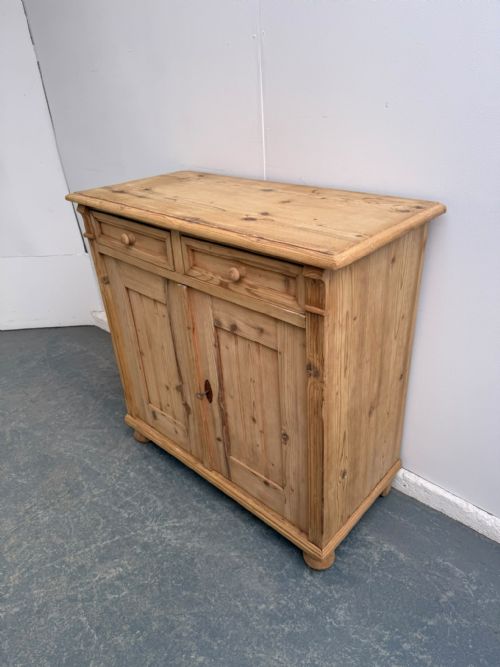
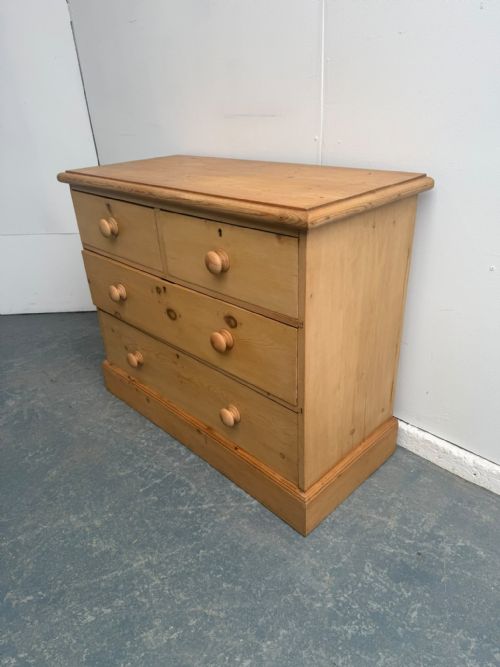
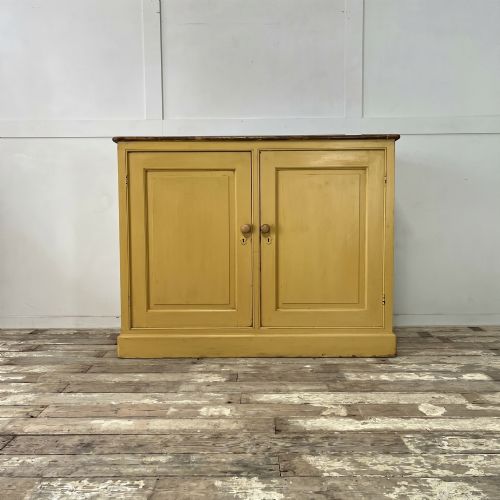

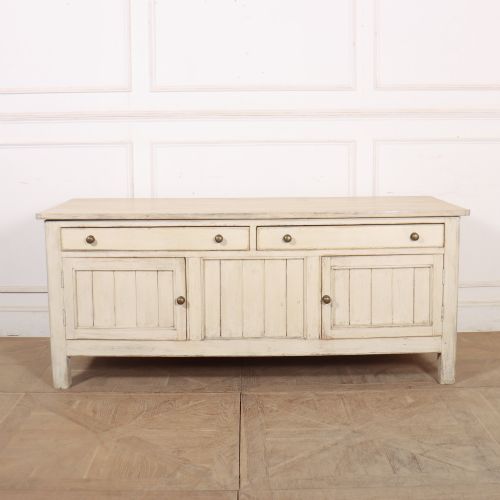
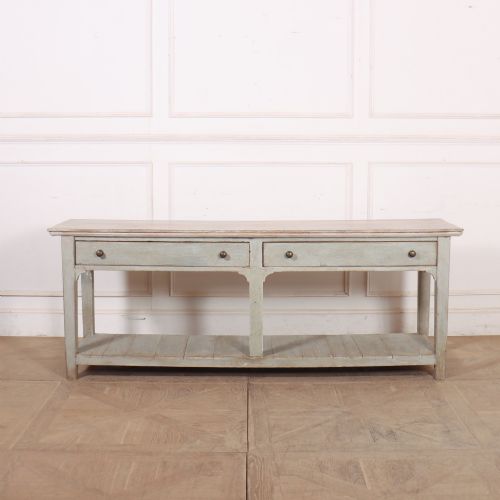
Vintage Pine Sideboard Dresser
A vintage pine sideboard dresser brings honest rural utility and warm, patinated timber into a modern interior.
Vintage Pine Sideboard Dresser
A vintage pine sideboard dresser combines open or enclosed display storage with a sturdy low base, serving historically as the working heart of a kitchen or scullery. When searching this phrase, buyers encounter substantial country furniture designed for heavy domestic service rather than formal entertaining.
The pieces appearing on this page span the eighteenth, nineteenth, and early twentieth centuries, drawing on English, Welsh, Scottish, Scandinavian, and Hungarian vernacular traditions. Dresser bases, potboard units, and kitchen cabinets dominate the selection, offering practical storage through combinations of drawers and cupboards.
Regional variations shape the silhouettes found in domestic collections, from the open potboards of English country workshops to the distinctive two-door formats of Welsh vernacular makers. Buyers regularly choose between surfaces finished in historic paint schemes and bare timber waxed to a deep, mellow lustre.
Materials and construction methods
Makers relied primarily on native pine, valuing the softwood for its straight grain and resilience in everyday furniture. Workshops augmented these wooden structures with iron hinges, brass pulls, and occasional glazed doors to secure everyday provisions and tableware.
Surfaces were either scrubbed clean, sealed with traditional wax finishes, or coated in layers of oil paint that accrued rich patination over decades of domestic use. Construction methods prioritized straightforward utility, utilising sturdy pegged joints, dovetailed drawer construction, and panelled doors built to withstand generations of kitchen work.
Current listings showcase pine and painted wood constructions originating across the nineteenth century alongside Georgian and Edwardian examples.
Judging quality and character
Quality rests in the survival of original surface treatments, whether a historic layer of paint or the deep amber tone of early wax finishes. Pieces that retain their original brass or iron hardware and uncompromised structural timbers stand apart from heavily restored examples.
Proportion and regional carpentry distinguish standard utility items from finer vernacular commissions. A well-balanced base with tight drawer construction and honest patination carries greater integrity than heavily altered carcases.
The Vintage Pine Sideboard Dresser Glossary
- Dresser base
- The lower section of a kitchen dresser, functioning independently as a sideboard or serving table with cupboards and drawers. It provides low-level storage without the upper plate rack.
- Potboard
- An open slatted lower shelf built into a dresser base designed originally for cooling pots and heavy earthenware. This feature marks out traditional English vernacular pieces.
- Dog kennel dresser
- A specific regional dresser format featuring a central open recess positioned between flanking cupboards or drawers. This unusual void historically accommodated working dogs or warming stools.
- Patina
- The accumulated surface texture, softening of edges, and colour shift developed through age and regular use. It serves as a primary indicator of historical authenticity.
- Vernacular furniture
- Domestic pieces built by regional tradesmen for local use rather than high-style urban workshops. These items prioritize local materials and practical function over academic design rules.
Vintage Pine Sideboard Dresser: Frequently Asked Questions
What is the difference between a dresser base and a sideboard?
A dresser base typically originates from a kitchen context, designed with a functional timber top for food preparation and deep storage for culinary wares. Sideboards emerged primarily for dining rooms, leaning towards formal serving surfaces and cutlery storage.
In country houses, the line blurred as utilitarian pieces migrated between rooms to serve general storage needs.
How do I care for a waxed pine finish?
Maintain waxed pine surfaces by applying a natural beeswax polish sparingly and buffing with a soft cloth to preserve the moisture in the timber. Avoid placing these pieces near direct heat sources or in damp environments, which can cause the softwood to warp or split.
Regular light dusting prevents abrasive particles from dulling the historic sheen of the wood.
Are painted pine dressers original?
Many pieces retain early or original paint layers that have survived centuries of domestic redecoration, showing authentic craquelure and wear. Other items have been stripped down to bare timber or painted at later dates to suit changing interior fashions.
Examining the paint in shadowed recesses reveals whether the pigment has aged naturally with the substrate timber.
How do I identify regional styles?
Regional pieces often carry construction traits and proportions unique to their geographic origins, such as the potboards typical of English makers or the distinct door configurations found in Welsh workshops. Scandinavian and Hungarian examples introduce different paint palettes and hardware choices that reflect continental rural traditions.
Comparing the timber density and moulding profiles helps pinpoint where a cabinetmaker worked.