




Antique Wood Plate Rack
An antique wood plate rack brings practical display and centuries of domestic character to a kitchen or dining space.
Antique Wood Plate Rack
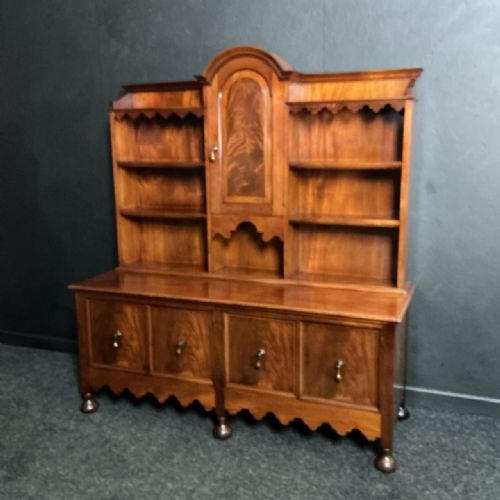
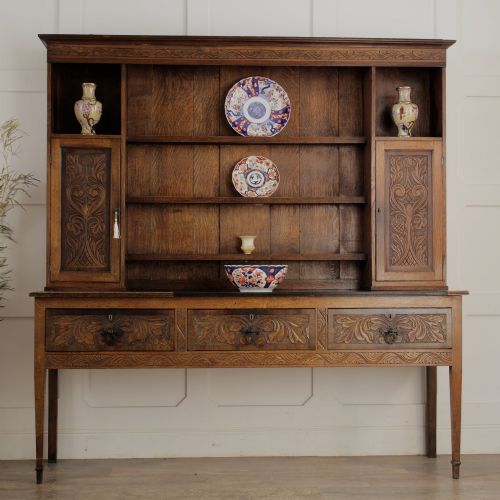
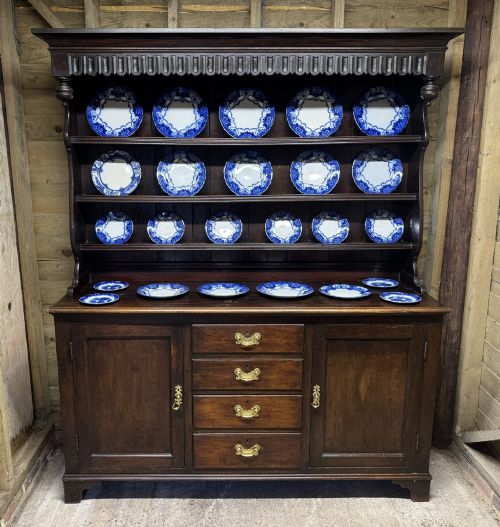
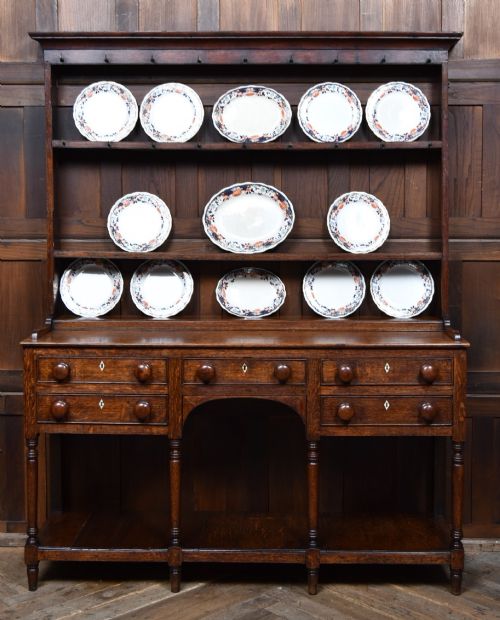
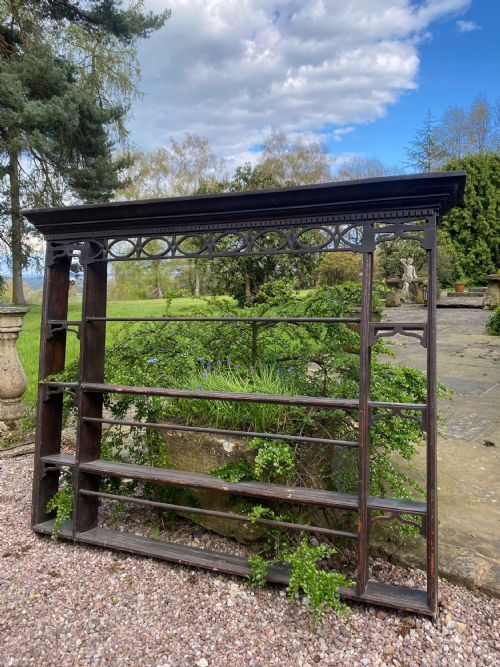
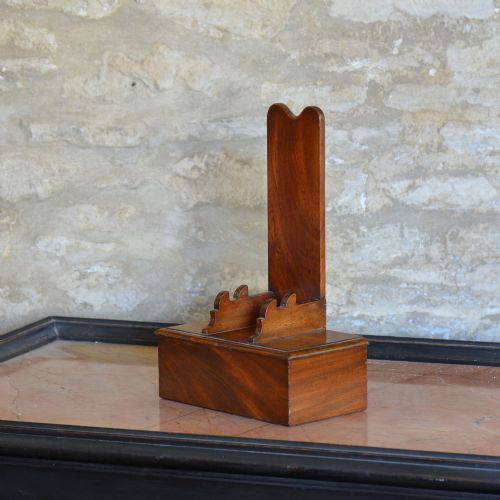
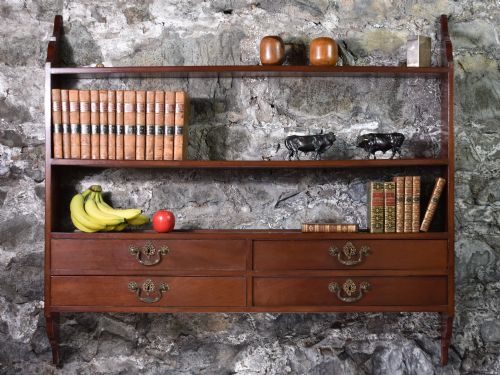
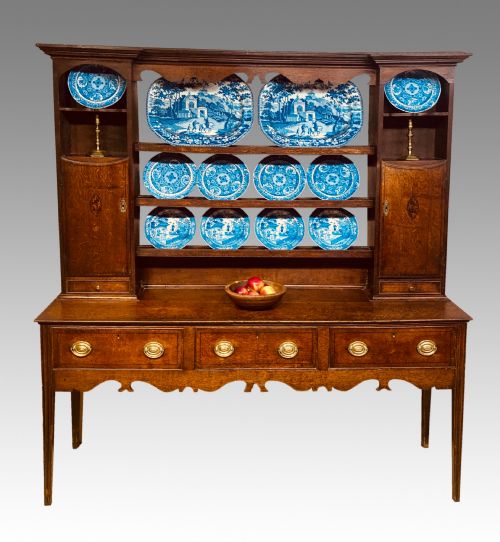
When searching for an antique wood plate rack, you encounter wall-mounted shelves, hanging racks, and large floor-standing dressers incorporating dedicated plate display tiers. The most frequent pieces on this page are country house and farmhouse oak or painted wood racks originating from the eighteenth and nineteenth centuries.
These items were built to store and exhibit ceramic plates, platters, and delftware safely within the kitchen or dining room. Regional variations include Welsh, Shropshire, and West Country pieces, alongside French provincial VAISSELIERE designs.
Some examples survive as independent hanging wall shelves, while others form the upper superstructure of a larger dresser or pot board base. The tradition spans simple utilitarian pine cottages to finely figured mahogany Georgian furniture.
Markers of quality and craftsmanship
Quality rests in the proportion of the timber, the crispness of any carved detailing - such as regional Green Man motifs or fielded panel work - and the preservation of original surfaces. Pieces retaining early paint, undisturbed patination, or untouched backboards command greater interest than those stripped down or heavily rebuilt.
Structural integrity matters significantly because these racks bore heavy loads of ceramic tableware for generations. Original plate retaining strips, sound joints, and well-balanced hanging brackets distinguish superior craftsmanship from later alterations.
The Antique Wood Plate Rack Glossary
- Delft rack
- A wall-mounted wooden shelf specifically designed with grooves and retaining rails to display tin-glazed earthenware plates. These racks typically hung above a dresser base or directly onto kitchen walls.
- Pot board
- The lower open shelf incorporated into a traditional dresser base, originally intended for storing heavy pots and pans. It sits below the main work surface and adds structural stability to the piece.
- Vaisseleiere
- A traditional French regional wooden rack or cabinet built for storing and displaying kitchen tableware. The term shares a direct functional purpose with English plate racks.
- Bowfront
- A convex, curved front profile found on certain dresser bases and cabinets. This stylistic choice softens the rectilinear appearance of utilitarian furniture.
- Waterfall bookcase
- A set of open shelves where each successive tier recedes slightly from the one below it. The stepped profile creates a distinctive cascading silhouette.
Antique Wood Plate Rack: Frequently Asked Questions
How do I hang a heavy wooden plate rack?
Heavy oak and mahogany racks require secure fixing into masonry or direct attachment to internal wall studs using heavy-duty brackets. The substantial weight of the timber combined with ceramic plates demands robust load-bearing support.
Professional installation ensures the safety of both the antique structure and the display collection it holds.
Are these racks suitable for modern plates?
Most antique racks accommodate standard dinner plates, though older grooves can be shallower than modern ceramic thicknesses. Measuring the depth of the display channel helps determine whether contemporary tableware fits securely.
Smaller side plates and shallow bowls generally sit safely within eighteenth and nineteenth-century rail spacings.
How do I tell an 18th-century rack from a later copy?
Eighteenth-century examples display hand-tool marks, pegged joinery, and timber shrinkage consistent with age. Iron fixings and cut nails on older pieces differ noticeably from modern mechanical fasteners.
Patination on oak and pine develops deep warmth over centuries of exposure to kitchen environments, which is difficult to replicate artificially.
Can I use a plate rack in a bathroom?
Kitchen and dining furniture face humidity shifts, but high moisture rooms like bathrooms risk warping historic wood and damaging surface finishes. Maintaining stable atmospheric conditions preserves antique timbers and painted surfaces.
Using these pieces in dry living areas, hallways, or kitchens aligns with their original domestic context.