



Vintage Pigeonhole Desk
A vintage pigeonhole desk offers partitioned sorting space and a writing surface, bringing hands-on character and traditional organisation to a study.
Vintage Pigeonhole Desk
When you search for a vintage pigeonhole desk, you encounter a practical mix of writing surfaces, bureau cabinets, and multi-compartment filing units. The selection spans the nineteenth and early twentieth centuries, drawing on Victorian, Edwardian, and Regency eras.
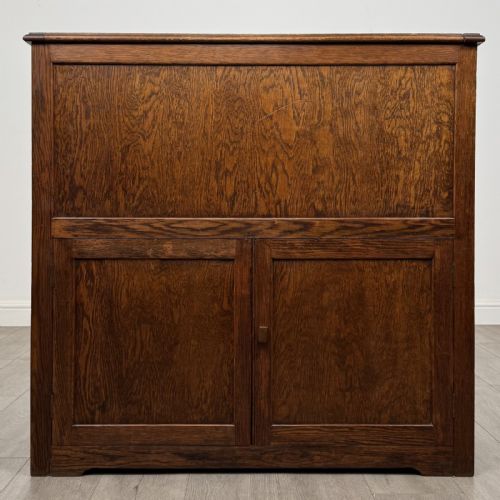
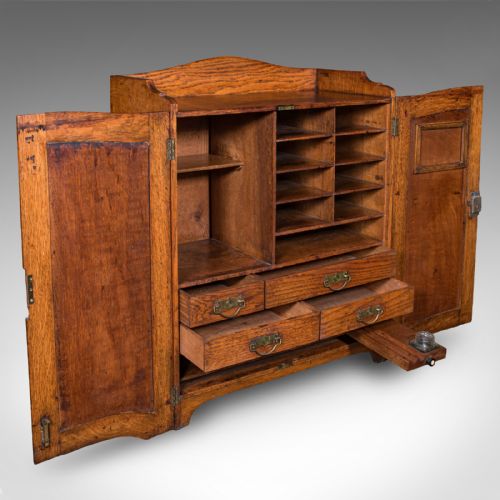
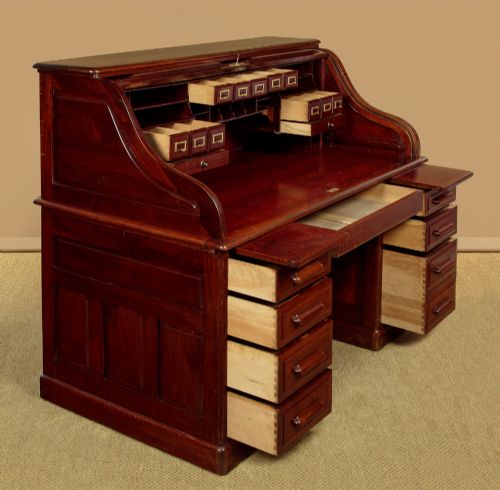
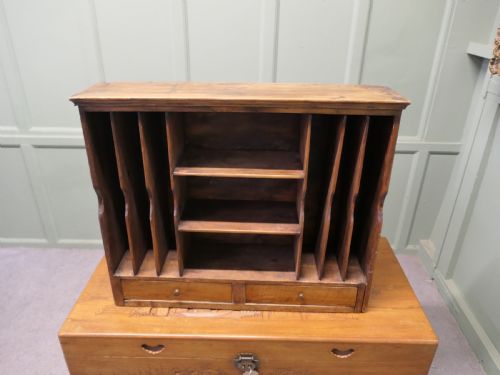
The most common forms on this page include roll top desks, bureau cabinets, and dedicated filing shelves featuring open compartments. These pieces combine fitted internal sorting slots with writing areas, reflecting the administrative and correspondence needs of past offices and estates.
How they were made
Cabinet makers relied predominantly on solid timbers such as oak, mahogany, walnut, and pine to build these robust storage and writing units. Selected surfaces frequently incorporate inset leather or baize to provide a smooth writing plane.
Hardware details typically involve brass fixtures, whilst specialised fittings like bone handles or internal drawers appear in specific compartments. Construction methods range from heavy panelled carcases to flexible tambour shutters on roll top mechanisms.
Some cabinet doors hide tiny compartments once designated purely for postage stamps and sealing wax.
What varies in quality
Quality separates standard utilitarian storage from finer cabinet work through the choice of timber and the precision of internal joinery. Better examples display carefully figured mahogany or walnut veneers alongside robust oak frames.
The complexity of the interior architecture also dictates standing, where fitted banks of pigeonholes, secret compartments, and integrated locking mechanisms elevate a simple writing box into a sophisticated desk.
The Vintage Pigeonhole Desk Glossary
- Pigeonhole
- A small compartment within a desk or cabinet used for sorting letters and documents. These compartments form the defining architectural feature of the style.
- Secretaire
- A piece of furniture containing a built-in writing drawer or fold-down writing flap concealing compartments. This form conceals private correspondence behind decorative exterior panels.
- Tambour
- A flexible shutter made of narrow slats of wood glued to canvas, allowing roll top desks to open and close smoothly. It slides along curved grooves within the desk carcase.
- Baize
- A coarse woolen material resembling felt, traditionally used to line writing surfaces and desk tops. It provides a soft, cushioned plane for pen work.
Vintage Pigeonhole Desk: Frequently Asked Questions
What is a pigeonhole desk?
A pigeonhole desk is a piece of writing furniture incorporating small open compartments for sorting paperwork and letters.
These compartments sit above or within the writing surface, providing organised storage for correspondence.
How do I date a desk?
Dating relies on identifying timber choices, construction techniques, and stylistic markers characteristic of specific eras like the Victorian or Edwardian periods.
Hardware styles and secondary woods hidden inside drawers also offer reliable clues to age.
Are roll top desks heavy?
Most antique roll top desks and bureau cabinets are substantial pieces constructed from solid hardwoods like oak or walnut.
Their internal mechanisms and deep carcases require adequate space and careful placement in a room.
How do I maintain leather inserts?
Leather writing surfaces require gentle cleaning with a damp cloth and occasional treatment with appropriate leather dressings.
Avoid excessive moisture to protect the surrounding timber frame and keep the material supple.